PRODUCT · CRITICAL DATA MANAGER
Agentic governance for the data you have to get right.
Critical Data Manager governs the data behind your most important reports. Agents identify critical data elements (CDEs), draft definitions, and map them to physical assets.
Stewards review and agents continuously enforce.
The entry point is the regulatory filing. CDM agents inherit what the catalog already knows: descriptions, ownership, quality scores, and lineage from filing to source so you're audit-ready, instantly.
WHY IT MATTERS
Your CDE program works.
It just doesn't scale.
CDE programs run on steward time. Regulations keep arriving, but headcount doesn't. The ceiling is that the model is manual.
Start from risk
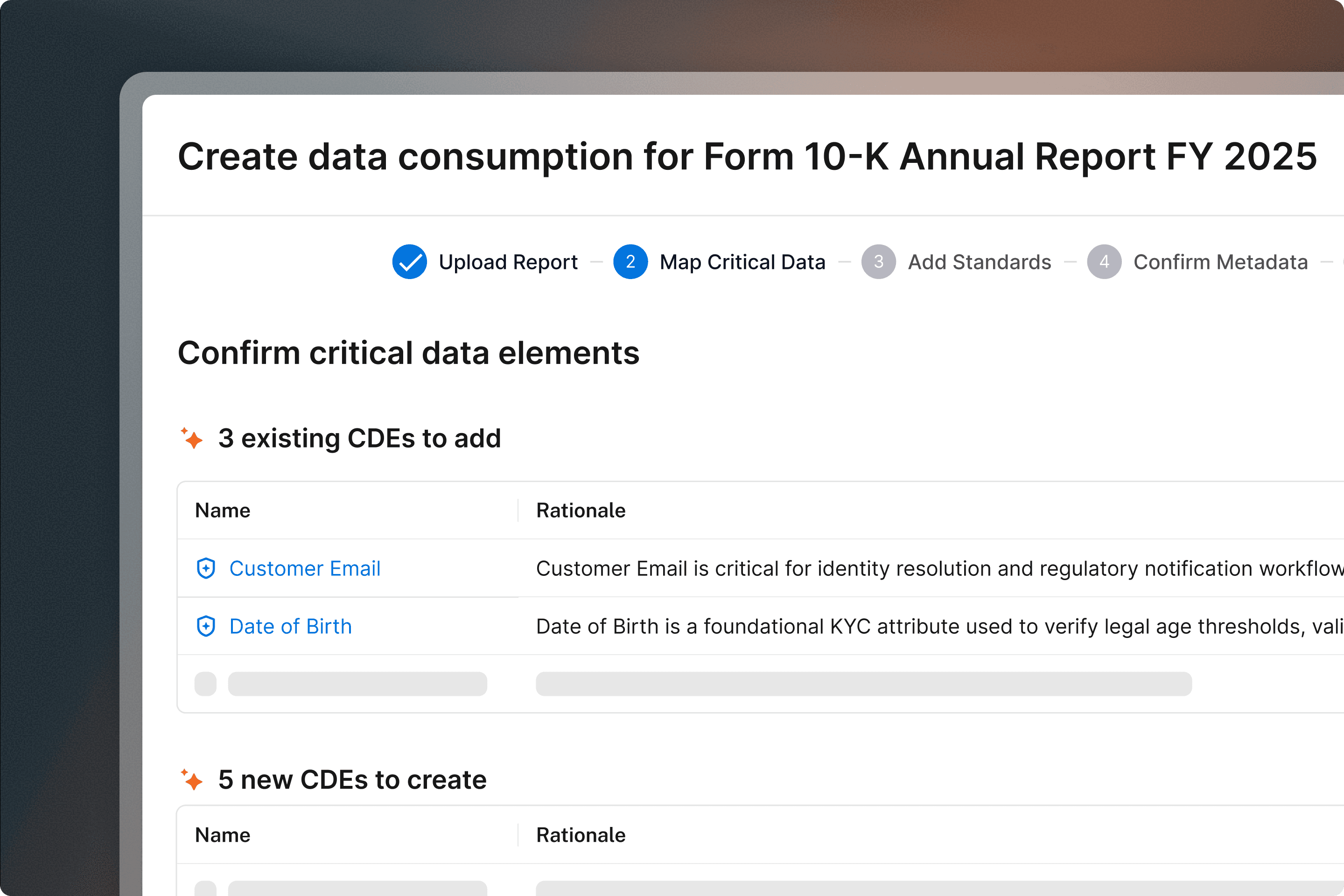
Launch one registry for all critical data: definitions, ownership, risk level, mapped assets, curation status, quality scores, and retire the spreadsheets. Here’s how it works: Upload the report a regulator asks about. Agents extract CDEs and PDEs, draft definitions, and launch the approval workflow, proposing risk levels for every CDE based on regulatory impact and business sensitivity. Stewards approve.
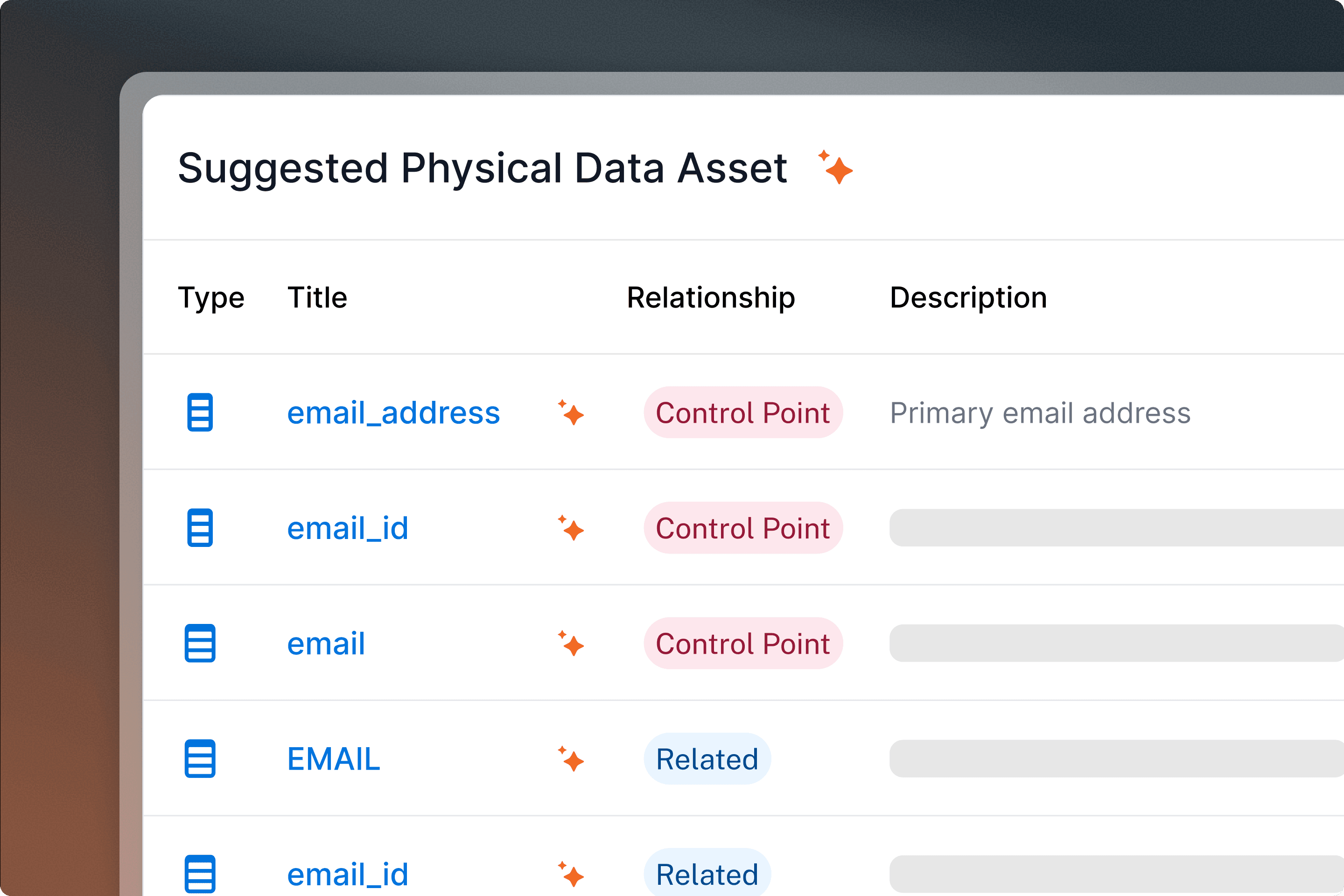
Agents draft it
Agents generate CDE definitions grounded in your catalog's metadata and usage patterns and stewards validate them. Every CDE is mapped to its physical data: columns, tables, and BI fields across your catalog, automatically. Control points flag the authoritative sources, while standards are codified and enforced. If a CDE deviates from your standards, the system flags the issue and provides clear instructions on how to fix it.
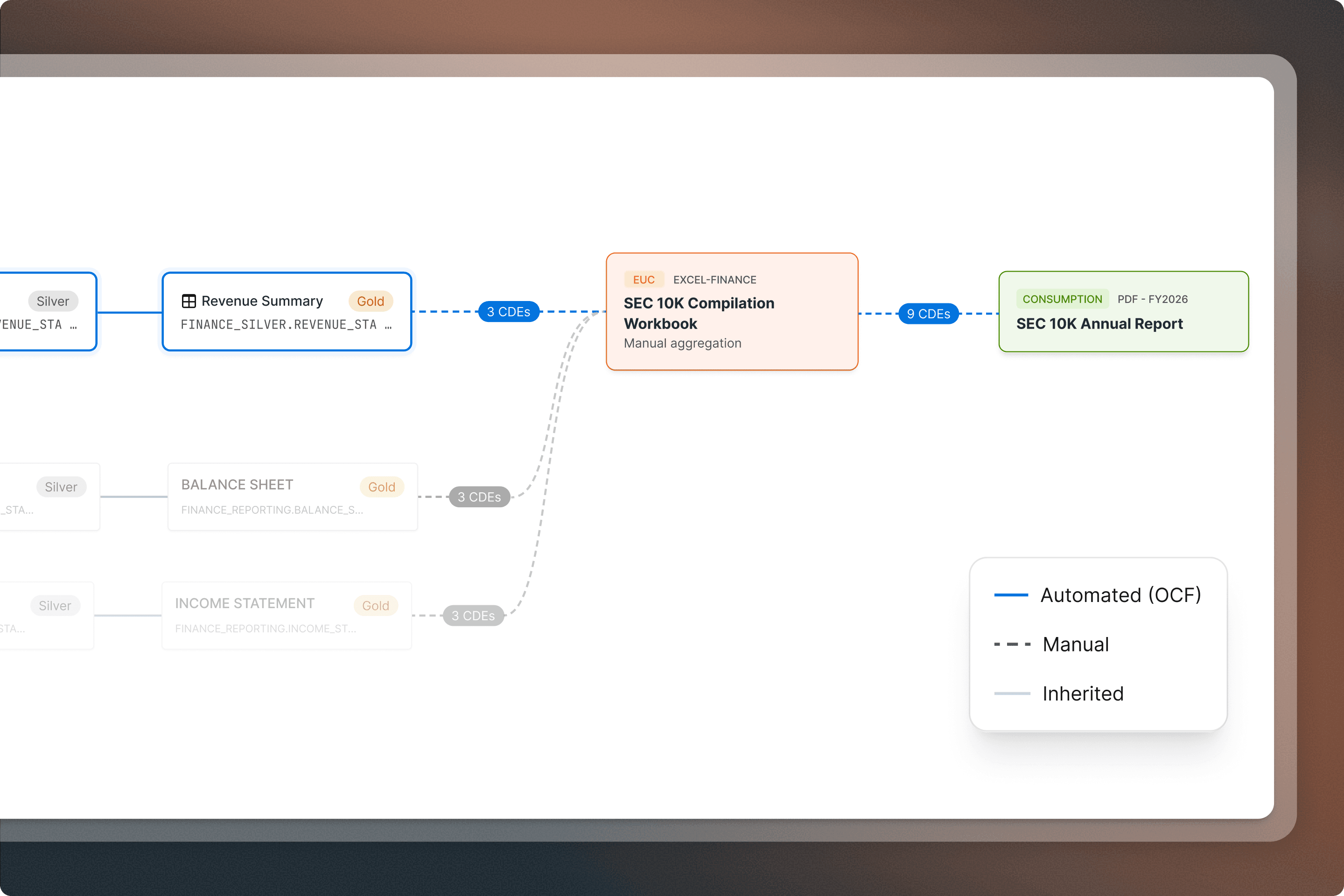
Prove the chain
Most teams keep two pictures of the same data: the technical lineage the platform generates, and the business lineage someone drew for the last audit. They stopped agreeing months ago. Critical Data Manager keeps one graph. It traces lineage automatically through systems, lets stewards fill in the unconnected applications themselves, and marks the gaps where nothing exists yet — so the graph tells you what's actually connected. Version-controlled snapshots at each certification give an examiner the point-in-time proof they need, produced continuously rather than assembled the week before.
CDM FAQ
What you need to know about
Critical Data Manager
Q1 —
What is Alation Critical Data Manager?
Critical data element management is the practice of identifying, defining, and governing the data behind regulatory filings and key business reports. Most programs run manually on steward time and can't keep pace with new regulations. Alation Critical Data Manager starts from the regulatory filing, uses agents to identify CDEs, draft definitions, and map them to physical assets. Stewards review. Standards are codified and enforced continuously. One registry replaces the spreadsheets.
Q2 —
How does Critical Data Manager identify critical data elements?
The entry point is the regulatory filing, not the database. Upload the report a regulator asks about and agents extract CDEs and PDEs, draft definitions, and launch the approval workflow. AI proposes risk levels for every CDE based on regulatory impact and business sensitivity. This inverts the typical bottom-up approach: instead of cataloging everything and hoping you find the critical elements, you start from the document that carries the risk and work down to the data.
Q3 —
How does Critical Data Manager handle lineage gaps?
Critical Data Manager supports three types of lineage in a single graph: automated lineage through cataloged systems, manual lineage for spreadsheets and unconnected applications, and placeholder lineage where gaps remain. The system is honest about what is connected and what is not. Automated and manual lineage live in one version-controlled graph rather than separate business and technical diagrams that drift from each other. Gaps are documented, not buried.
Q4 —
How does Critical Data Manager support regulatory audits?
Every CDE carries its full evidence chain: definition, ownership, risk level, mapped physical assets, curation status, and quality scores. Version-controlled snapshots at certification provide the point-in-time proof auditors require. Evidence is produced continuously rather than assembled the week of the audit. The system supports frameworks including BCBS 239, GDPR, SOX, and DORA by connecting the regulatory filing to the governed data through lineage.
Start a Conversation
Speak with an Alation Expert
A 30-minute call to discuss your priorities, challenges, and goals.
Then we’ll show you how the Alation Intelligence Operating System ensures apps and agents act on current, quality, and compliant data.
Enterprises absolutely have to trust the data underneath their most critical process and decisions. We will help you get it right.