SOLUTION • AGENTIC AUTOMATION
Right on day one.
Right a year later.
Automations are easy to build and hard to maintain. The agent that worked at launch breaks when the data moves, tools change, or an owner leaves. Without unified governance, every team runs on its own version of the truth, multiplying errors across the enterprise.
WHAT ALATION CAN DO FOR YOU
Build the agent and its context together.
AIOS governs data, context, and agents in one system of record. Every automation inherits its meaning and permissions from governed data products, runs natively inside your teams’ existing tools, and undergoes continuous post-launch evals. When accuracy slips, the fix updates at the source and holds everywhere that context is used.
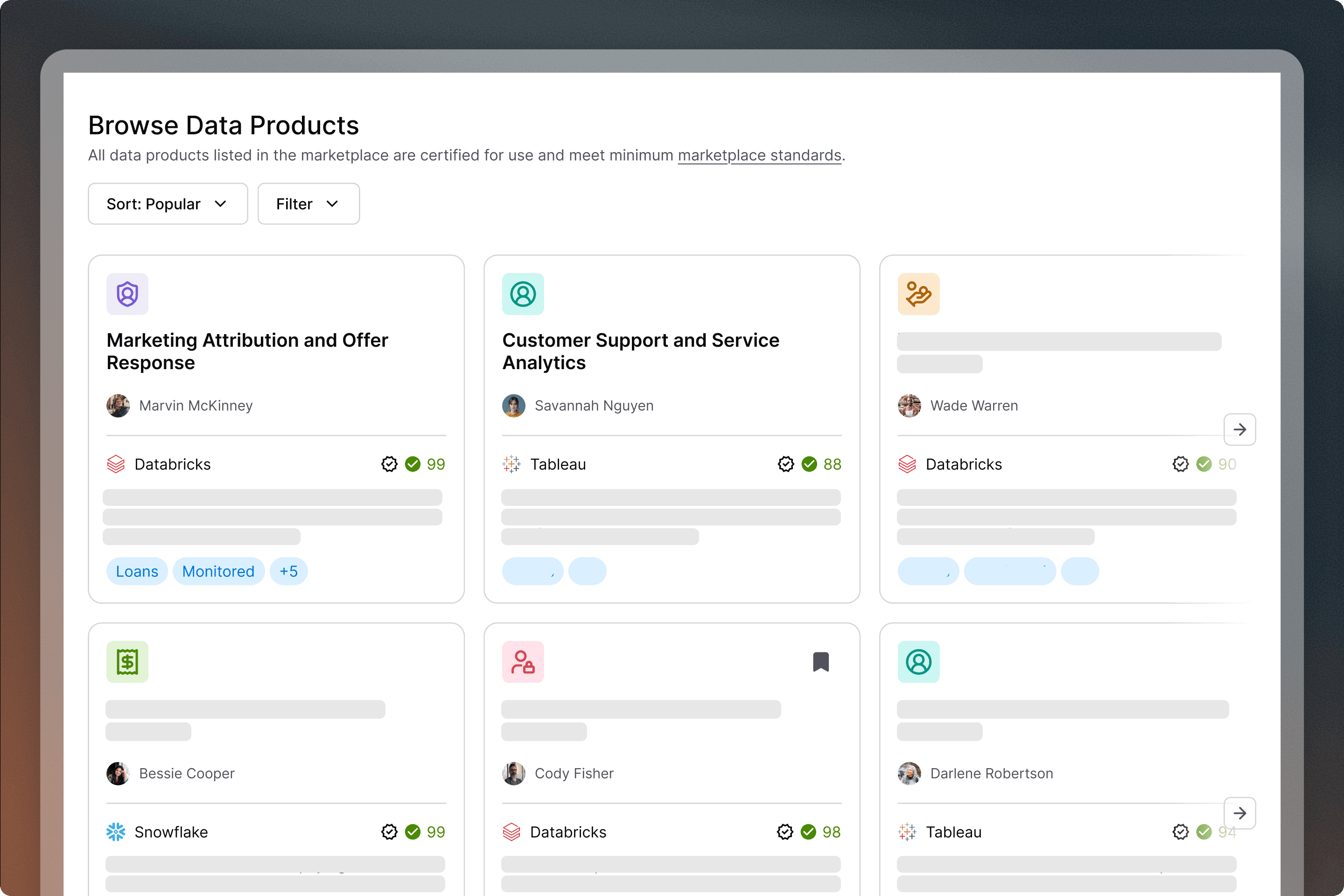
- DATA PRODUCT MARKETPLACE
01
Context arrives with the data.
Point an automation at a data product, and it instantly inherits field definitions, including origin, quality, and ownership. Security is baked in: the agent uses the data product's existing access controls, preventing unauthorized data pulls without requiring a secondary permission model.
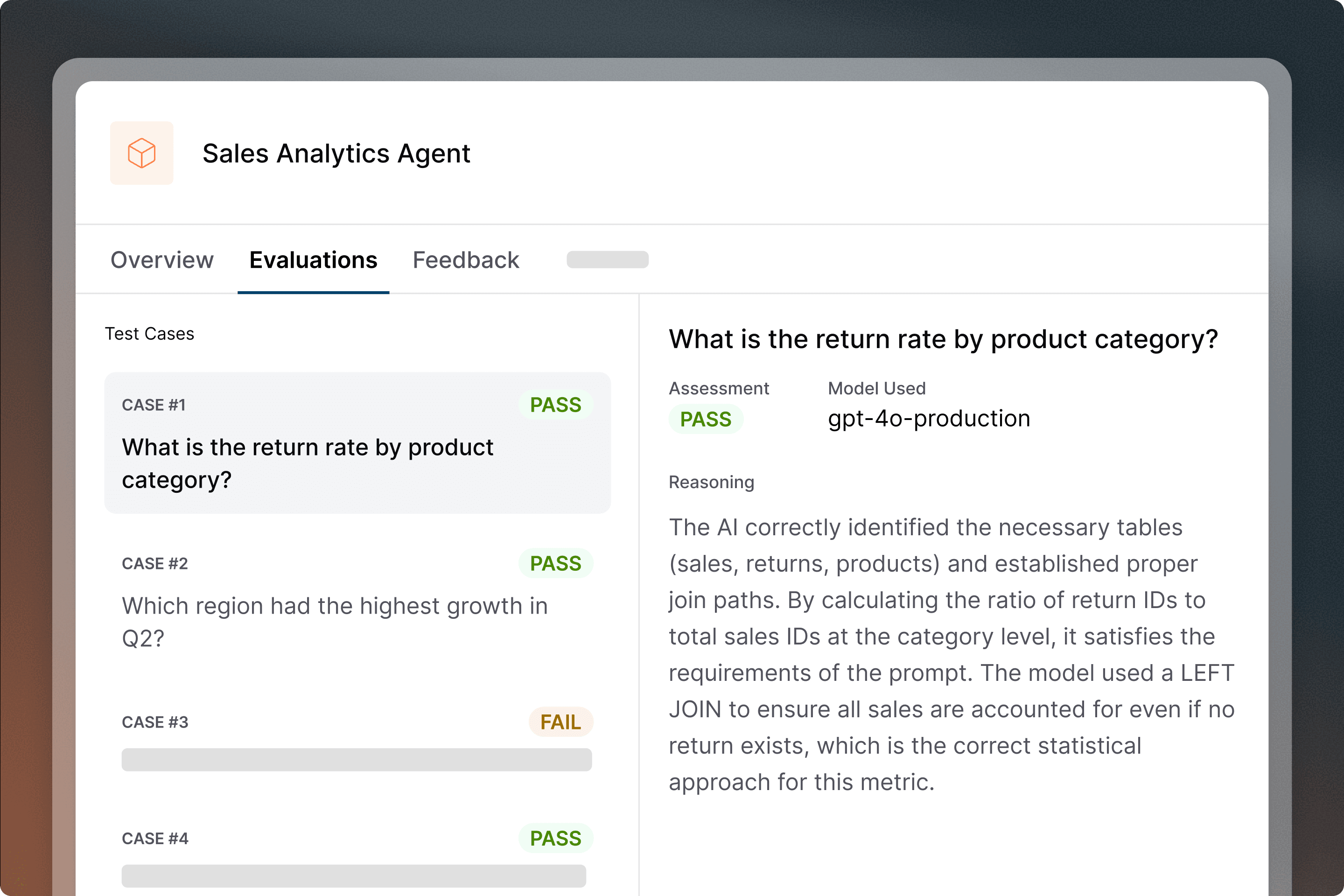
- AGENT STUDIO
- FLOWS
- INBOX
- EVALS
02
Accuracy has an owner after launch.
Chain triggers, decisions, and actions into scheduled Flows, transforming complex tasks like inventory reorders into automated workflows instead of manual reports. Evals are built from the questions your team already asks, held to an accuracy bar, and rerun as the data underneath changes, so you can catch accuracy drops early. Exceptions land in the Inbox, where human corrections write back to the master definition so every dependent agent inherits the fix.
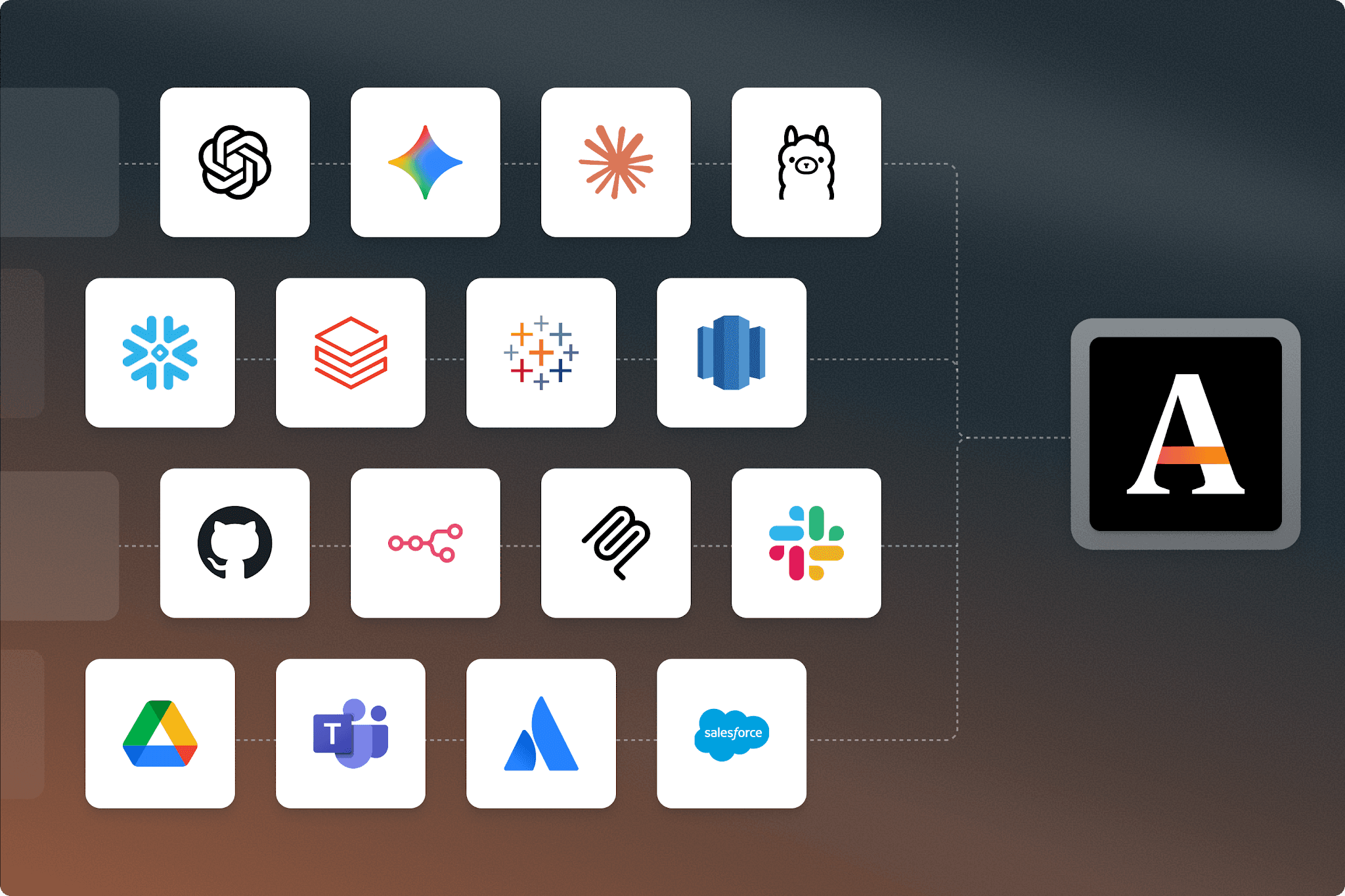
- CONNECTORS
- SDKS
03
Automate complex workflows.
Don't settle for half-automated processes. Deep connectors extend governed context across your warehouses, business applications, and systems of record to automate complex operations end-to-end. Deploy agents via MCP or REST into tools like Copilot Studio or n8n so teams work where they are already comfortable, while maintaining total visibility and governance from a single inventory.
Where This Gets You
When the answers have to be right, we make sure they are.
More data every quarter. More tools every year. Automations that have to be right the day they ship and every day after. AIOS changes what happens after launch. Judgment stays with your people. Execution, checking, and correction run on their own.
What is an agentic automation?
Agentic automation uses AI agents to complete a business process end to end, reasoning over governed context instead of following a fixed script. Traditional automation encodes a sequence of steps and breaks when the inputs change, and teams find out when a report is wrong. AIOS grounds each agent in data products that carry definitions, lineage, quality, and permissions, chains agents into scheduled Flows, runs evals continuously, and routes corrections back to the source so every dependent agent inherits the fix.
Why do AI agents lose accuracy after deployment?
Agents lose accuracy because the ground underneath them changes and the agent does not. New data sources arrive, new tools need context, new definitions are added without old ones being removed, and the person who owned the standard moves on. Nothing in a typical deployment checks whether the agent is still right. AIOS runs eval sets built from the questions the team already asks, on a schedule, against live data. When the accuracy bar is missed, the exception lands in the Inbox for a person to correct, and the correction is applied to the definition or data product that caused it.
How does Alation keep a human in the loop with agentic automation?
Approvals and exceptions route to a person through the Inbox, where they approve, correct, or reject. Judgment stays with the team and the agent handles execution. Corrections are not one-off overrides. The fix is written to the definition, rule, or data product that produced the error, so the same mistake cannot recur in another agent reading the same context. The alternative, patching each automation individually, means the same error gets fixed as many times as there are agents.
Can Alation agents run inside other tools like n8n or Copilot Studio?
Any agent built in Alation Agent Studio can be exposed over MCP or REST and used as a step in n8n, Microsoft Copilot Studio, or another workflow tool. The agent answers from governed data with the requester's permissions, inside the workflow the team already runs. Agents built outside Alation can pull context through the same layer, which puts them in the same inventory with the same owner, purpose, and run history as agents built inside it.
How is agentic automation different from traditional workflow automation?
Traditional workflow automation follows a fixed script. When the schema, the screen, or the business rule changes, it stops or produces wrong output, and someone finds out later. Agentic automation reasons over context to complete a task and adapts as inputs vary, but only if the context it reads is governed. AIOS supplies that context from data products with definitions, ownership, quality, and permissions attached, and monitors accuracy with evals so drift is caught rather than discovered. The result is automation that survives the changes that break a script.
Start a Conversation
Speak with an Alation Expert
A 30-minute call to discuss your priorities, challenges, and goals.
Then we’ll show you how the Alation Intelligence Operating System ensures apps and agents act on current, quality, and compliant data.
Enterprises absolutely have to trust the data underneath their most critical process and decisions. We will help you get it right.