SOLUTION • AI GOVERNANCE
Other tools govern the model. Alation governs the use.
AI is being deployed across every cloud, platform, and team. When a regulator asks which systems you have in production and which rules apply to each, the answer shouldn't take weeks. Alation registers every AI asset, maps it to the regulations that apply, and proves compliance on demand, not on deadline.
WHAT ALATION CAN DO FOR YOU
Govern AI the way regulators do
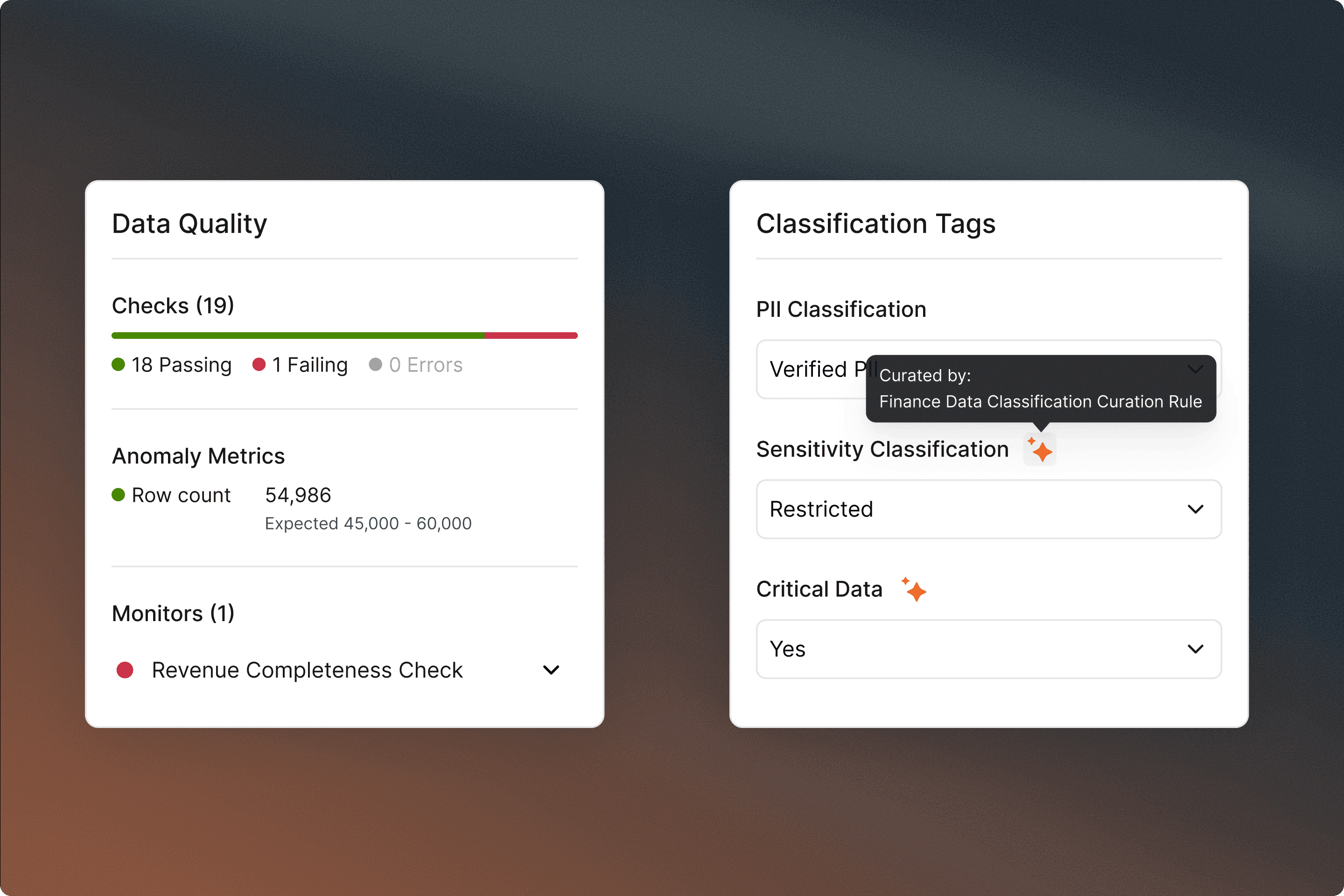
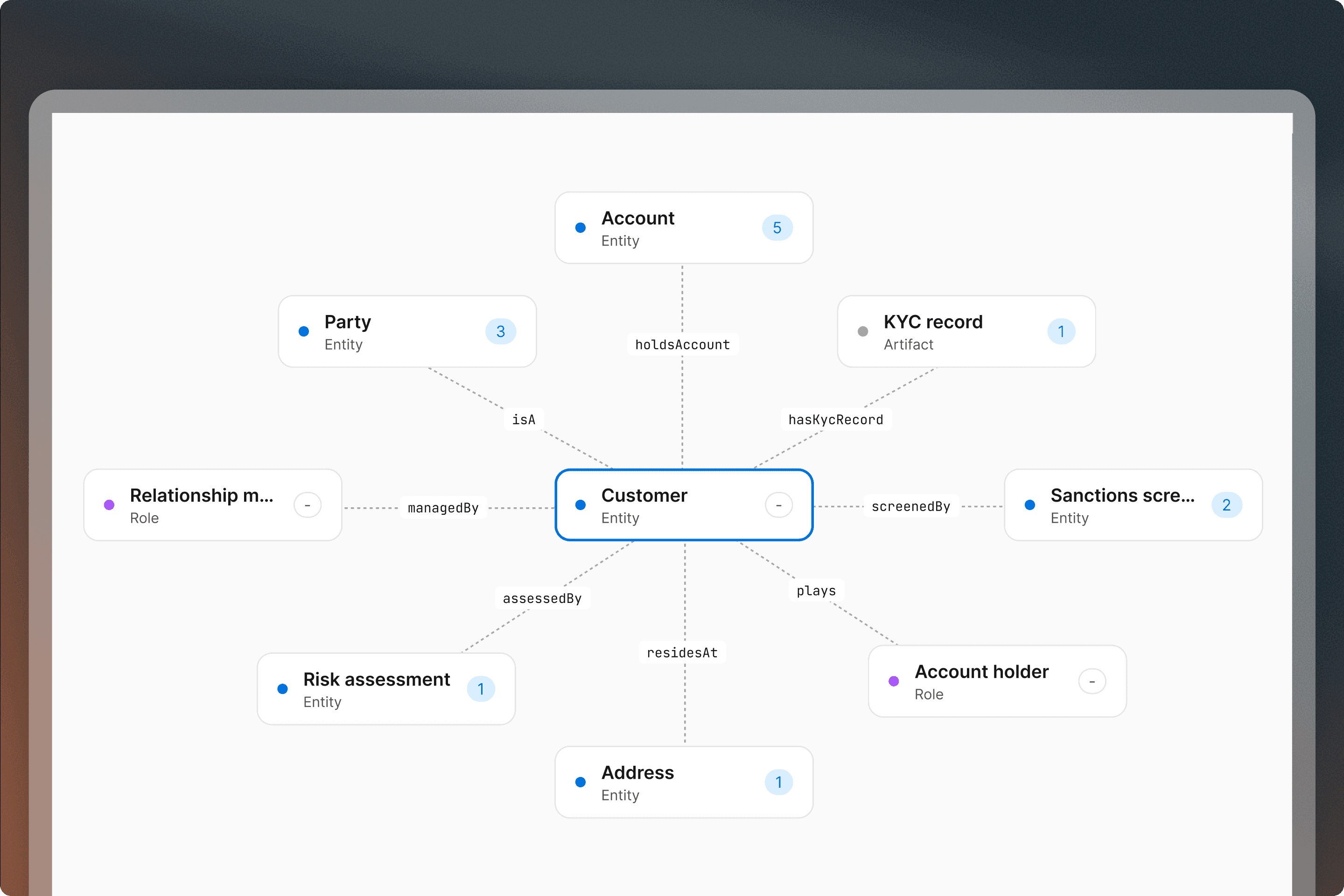
Most tools only govern the model lifecycle, registering assets and generating model cards. But they can’t show the lineage, catalog context, or data quality feeding those models. So when someone asks whether the AI is compliant, the answer stops at the model boundary. Alation anchors governance to the business use case, linking every model and agent to that business outcome, then extending continuous governance all the way down to the underlying data. So when auditors request proof, the audit trail is already built.
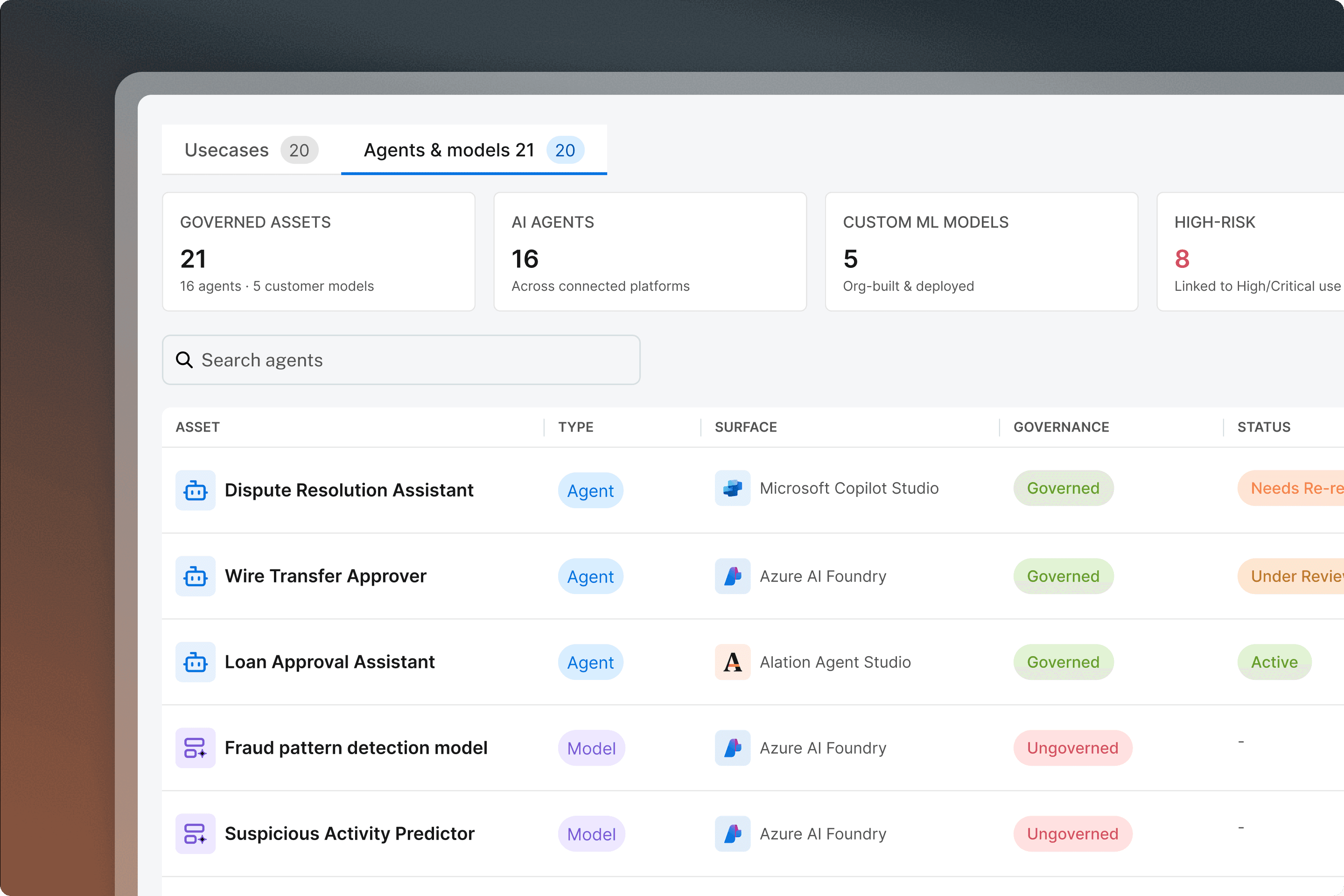
- CROSS-PLATFORM REGISTRY
- AI Governance
01
See every AI asset.
Across every platform.Models and agents are ingested from wherever they run: Databricks, Azure, AWS, Google Cloud, Alation Agent Studio, or registered via SDK from wherever engineers build. Each asset links to the use case it serves, the data it depends on, and the catalog entry that governs it. Eliminate spreadsheet sprawl with a single enterprise command center.
- AUTOMATED REGULATION MAPPING
- AGENTIC GOVERNANCE WORKFLOW
- AI Governance
02
Map regulations to requirements. Automatically.
Alation decomposes global standards (including the EU AI Act, NIST AI RMF, ISO 42001, GDPR, and your internal policies) into specific requirements. Intelligent agents evaluate each use case by risk tier and recommend the appropriate regulatory scope. Automated workflows then route tasks to the right reviewers, ensuring no approval closes until all required evidence is attached.
- EXECUTIVE DASHBOARD
- AI Governance
03
Prove compliance on demand, not on deadline.
Gain real-time visibility into your live compliance posture by regulation, use case, and business unit, with every approval traced and every model card citing its evidence. When the board asks, the answer is already assembled. When the auditor asks, the export is one click. No more rebuilding evidence packs the week of the audit.
Where This Gets You
When the answers have to be right, we make sure they are.
More models every quarter. More regulations every year.
The same team to govern all of it.
Alation changes how long it takes to answer for your AI. From weeks of manual assembly to a system that already has the proof.
What is AI governance software?
AI governance software gives an enterprise a single system of record for every AI model, agent, and tool it runs, with live compliance posture instead of evidence assembled manually. Alation AI Governance registers assets from every connected platform, maps each to the regulations that apply, routes approvals through risk-tiered workflows, and produces board-ready compliance exports on demand. The result is a CDO who can answer for the entire AI estate in minutes, not the weeks it takes to rebuild the story from spreadsheets and email threads.
How does AI governance work in practice?
A use case enters the system and links to its models, agents, and data dependencies. The owner sets a risk tier and Alation suggests applicable regulations. Requirements are decomposed automatically, and model cards are drafted from metadata, with gaps flagged. An evidence-gated approval workflow routes to the right reviewers based on risk. When the asset is approved, the CDO sees compliance posture update in real time. Five steps: register, map, document, route, prove.
How does Alation map AI systems to regulations like the EU AI Act?
Alation ships with pre-loaded regulatory frameworks, including the EU AI Act, NIST AI RMF, ISO 42001, and GDPR. Each framework is decomposed into specific requirements. When a use case is registered, agents suggest which regulations apply based on the risk tier and the use case profile. The owner confirms, and every requirement becomes an evidence obligation tracked to completion. Organizations can also bring their own internal frameworks and have them decomposed the same way.
What makes Alation AI Governance different from other AI governance tools?
Most AI governance tools govern the model lifecycle but stop at the model boundary. They have no catalog, no lineage, and no quality scores on the data feeding the model. Alation governs the use case and connects all the way down to the governed data foundation: 14 years of catalog, lineage, data quality, and policy infrastructure the enterprise already runs on. Platform vendors govern their own corner. Pure-play AI governance tools govern the model, not the data. Alation governs both, across every platform.
How does Alation help prove AI compliance during an audit?
Alation maintains a live compliance posture by regulation, use case, and business unit, with every approval traced and every model card citing its evidence source. When an auditor or board member asks for proof, data leaders can export that evidence quickly. The alternative is rebuilding evidence packs the week of the audit from spreadsheets, Slack threads, and email chains, which typically takes weeks and produces a snapshot that is already out of date by the time it is presented. EU AI Act penalties can reach 7% of global annual turnover, which makes 'we will assemble the evidence when asked' an expensive posture to hold.
Start a Conversation
Speak with an Alation Expert
A 30-minute call to discuss your priorities, challenges, and goals.
Then we’ll show you how the Alation Intelligence Operating System ensures apps and agents act on current, quality, and compliant data.
Enterprises absolutely have to trust the data underneath their most critical process and decisions. We will help you get it right.