Alation Agents
Agents that stay accurate, wherever they run.
Alation Agents puts governed data and context to work anywhere. Each agent you build is grounded in certified metadata, ontologies, and data products, so answers are accurate, and feedback loops keep them that way as your catalog changes. Native agents ship ready to run and are yours to customize. Reach them over MCP and REST from the tools your teams already use.
AGENTS ARE EASY, ACCURACY IS HARD
Building an agent takes an afternoon. Trusting one takes more.
Every data vendor today promises agentic automation. But most hand you a builder and stop there. So context decays quietly after launch, and agent accuracy declines with it.
Prove accuracy continuously.
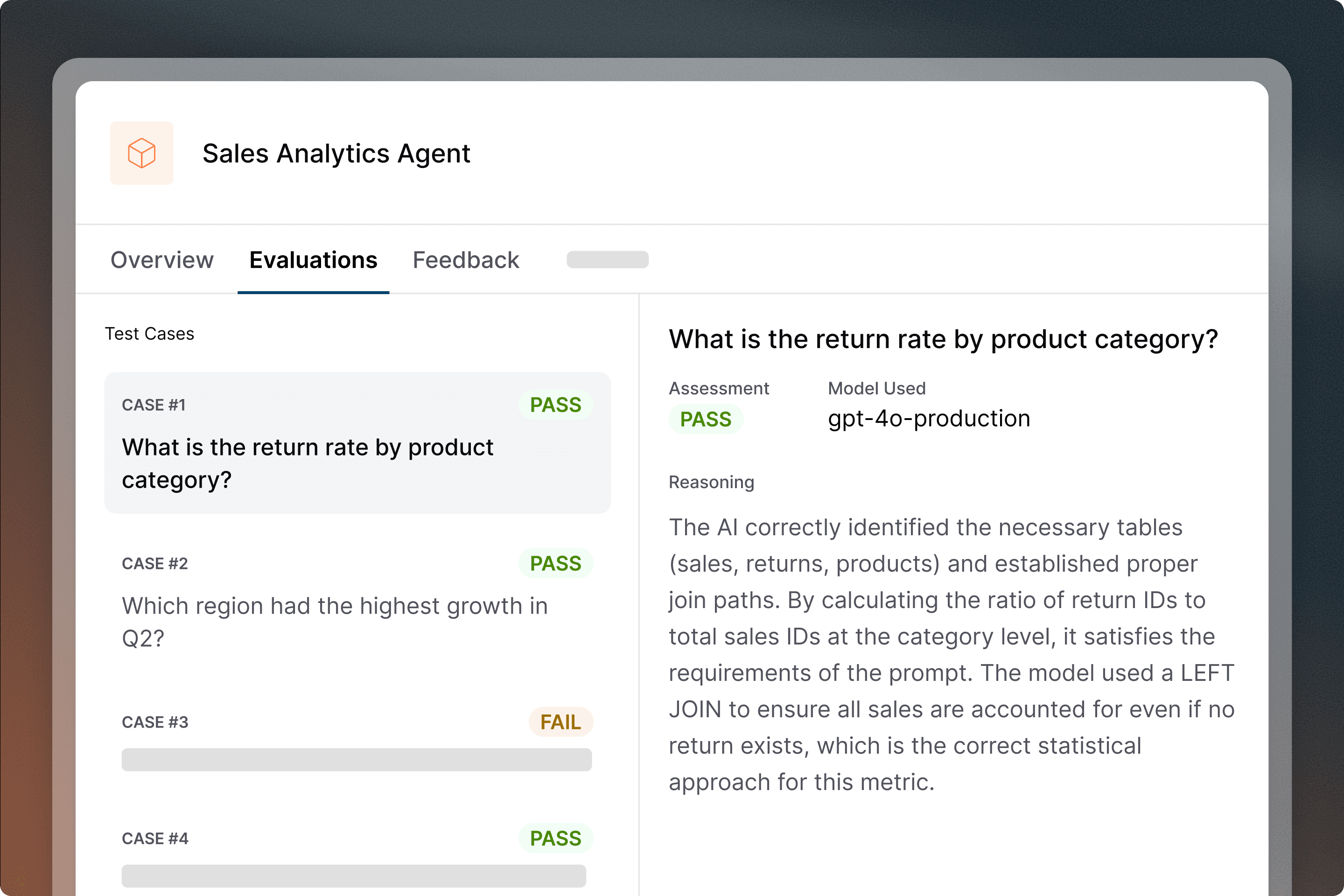
Agents are grounded in certified metadata, data products, and ontologies, not raw schemas. When two teams define “churn” differently, the agent knows which definition applies. Build evaluation sets from your query history and gate above 90% accuracy before production. When accuracy drops, Alation traces the context behind it. With self-improving feedback loops, a steward approves the fix once, and every agent improves with each run.
Native or custom
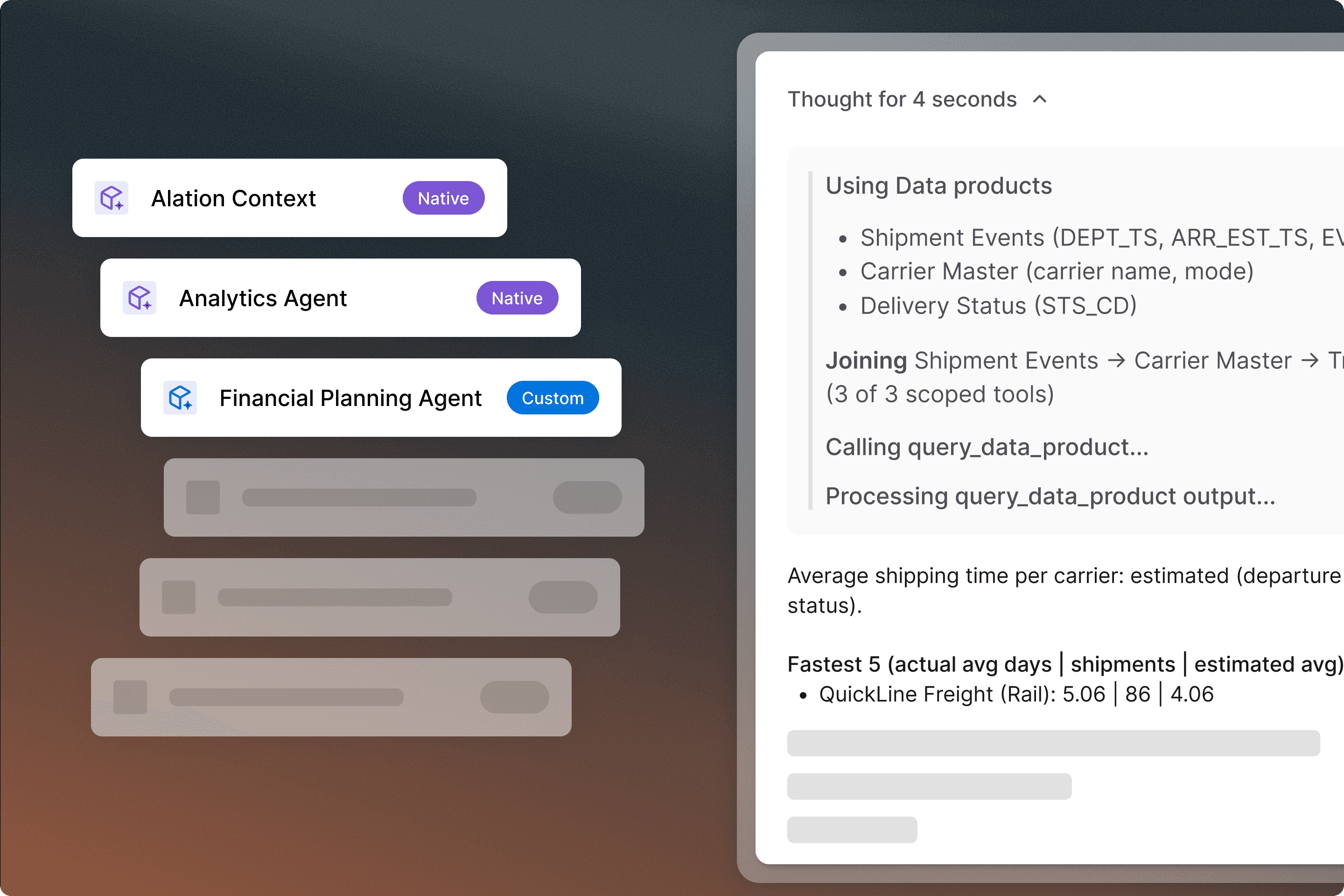
Curation, lineage, and chat agents ship ready to run against your catalog, so they arrive knowing the job instead of learning it from your prompts. Every answer names the definition it used, so a revenue number arrives explained. Clone any native agent to change its prompt, tools, or model, on GPT, Claude, Gemini, or your own; context and access controls stay the same.
Where teams work
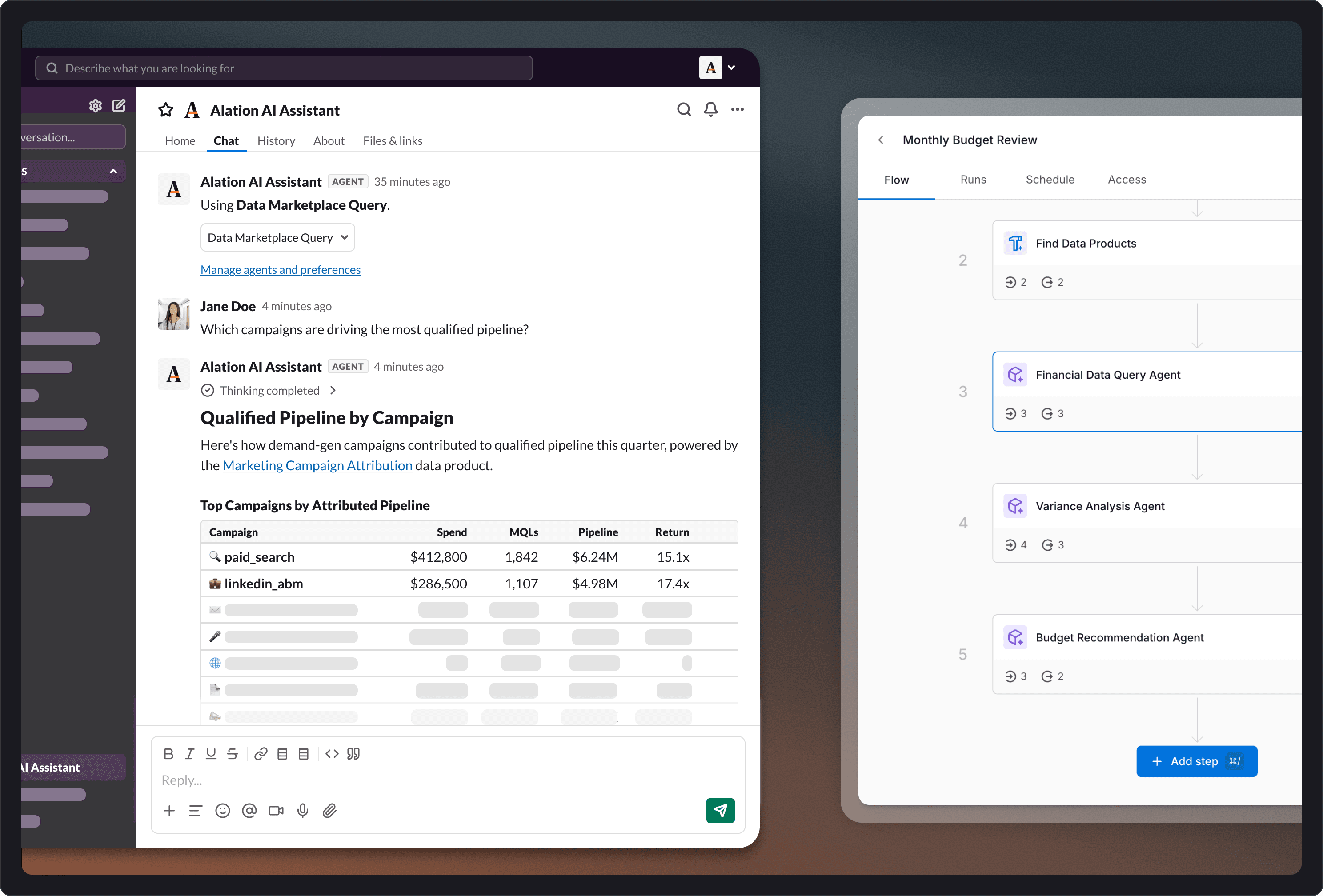
Agents reach people where they already work. MCP and REST put them in Slack, Teams, Copilot, Claude, or ChatGPT, so there is no new interface to adopt. Chain them into flows that run on demand or on a schedule, with access controls and accuracy gates at every step. Console is the one entry point in Alation to manage it all. Say what you want done and it's routed to the right capability.
FREQUENTLY ASKED QUESTIONS
What to know before you put an agent in production.
Q1 —
What makes an Alation Agent accurate enough to put in production?
Grounding and testing. Alation Agents read certified metadata, data products, and ontologies rather than raw schemas, so they only use agreed-upon business definitions. Before an agent ships, build evaluation sets from your own query history and run them against accuracy targets. As a best practice, teams typically gate above 90% before production. After it ships, Alation monitors accuracy automatically, and when it drops, the system traces which piece of context caused it and proposes a fix at the source.
Q2 —
Can I use my own model, or agents I built somewhere else?
Yes to both. You can run agents on GPT, Claude, Gemini, or a model you host. There is no model lock-in. You can configure agents in Agent Studio with your own logic, prompts, and tools, or connect agents you built elsewhere and let them draw on Alation for context and governance. Either way, the same access controls apply across every source in your estate rather than one platform.
Q3 —
Where do Alation Agents run?
Wherever your teams already work. Agents are exposed over MCP and REST, so they are available in Slack, Teams, Copilot, Claude, ChatGPT, and other clients your teams have open, with no new interface to adopt. They can also be chained into flows that run on demand or on a schedule. Recurring flows become Intelligent Feeds, so scheduled work arrives as certified insight in the channel where the team already is.
Q4 —
How do self-improving feedback loops keep agents accurate over time?
Corrections do not stop at the answer. When an agent gets something wrong, Alation traces which piece of context caused it and proposes a fix at the source. A steward approves once, and every agent reading that context is corrected. That is what makes the system self improving rather than a set of agents each degrading on its own. Accuracy is monitored against your evaluation sets as the catalog changes, so drift shows up before users report it.
Start a Conversation
Speak with an Alation Expert
A 30-minute call to discuss your priorities, challenges, and goals.
Then we’ll show you how the Alation Intelligence Operating System ensures apps and agents act on current, quality, and compliant data.
Enterprises absolutely have to trust the data underneath their most critical process and decisions. We will help you get it right.