Season 4 · Episode 15
The First AI Election: Why Data Centers Became the Midterms’ Biggest Battleground

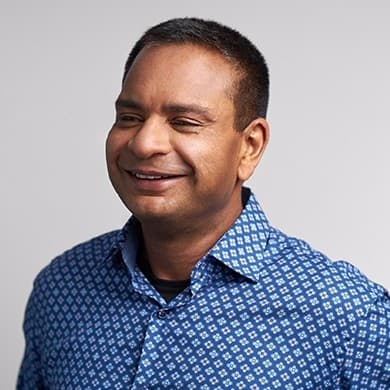
Brendan Bordelon
Senior Tech Reporter, POLITICO
A tech journalist for a decade, Brendan tracks how AI is reshaping Washington, from the data center backlash to the lobbying fight between the AI safety movement and venture capital. Check out the Decoded podcast.
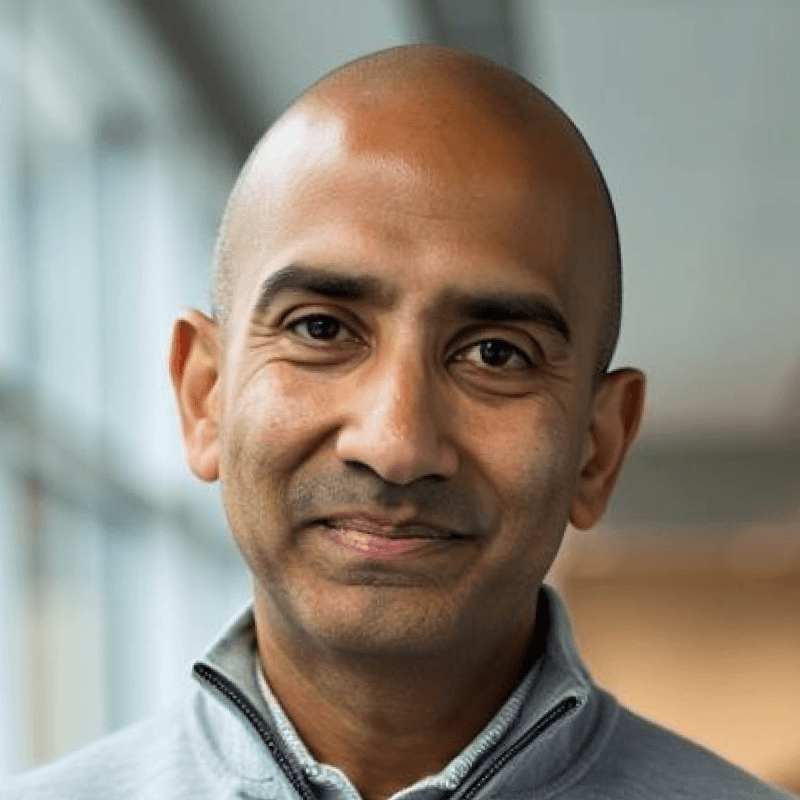
Satyen Sangani
CEO & Co-Founder, Alation
As the Co-founder and CEO of Alation, Satyen lives his passion of empowering a curious and rational world by fundamentally improving the way data consumers, creators, and stewards find, understand, and trust data. Industry insiders call him a visionary entrepreneur. Those who meet him call him warm and down-to-earth. His kids call him “Dad.”
Welcome: how the 2026 midterms became the first AI election
Producer introduction to Brendan Bordelon, senior tech reporter at POLITICO, and to this AI Radicals episode on the midterms, data centers and AI policy.
Producer: Welcome back to AI Radicals. Every election cycle, someone calls it the tech election. This year, it finally was. Brendan Bordelon is a senior tech reporter at POLITICO, where he co-authors the Decoded newsletter and co-hosts its podcast. He spent the past decade watching Washington try and mostly fail to figure out what to do about Silicon Valley.
Satyen and Brendan unpack the midterms and why data centers became the place voters took their AI anxieties, from electricity bills to job fears. They dig into the three directions Democrats could take on AI regulation, how the AI safety movement built a policy machine in DC years before anyone else showed up, and why, despite all the noise, Brendan's best bet for Congress is still that nothing happens. If you wanna know where AI policy goes from here, this one's for you.
This show is brought to you by Alation. Only 5% of enterprise AI pilots from 2025 delivered ROI in production. Alation's free agentic AI opportunity discovery guide shows you exactly how to find the right processes to automate and build AI that actually sticks. Get it at alation.com/ai-guide.
Satyen Sangani, host: Hey, Brendan. Welcome to AI Radicals.
Brendan Bordelon, senior tech reporter, POLITICO: Hey, Satyen. Thanks so much for having me.
Was the 2026 midterm the first AI election?
Host Satyen Sangani, CEO of Alation, asks POLITICO's Brendan Bordelon how much of the 2026 midterm result was about AI and tech.
Sangani: So we are recording this on the week after the midterms, and as it currently stands, the Dems have majorities of 54 seats in the Senate, 254 seats in the House. How much of the election results, in your view, was about AI tech, and how much of it was due to everything else?
Bordelon: Yeah. So I've been covering tech for about 10 years, and every election cycle, there are folks that wanna tell you this is gonna be the tech election, right? Going back to the data privacy debates or the antitrust fight of maybe a couple cycles ago, and it never happens. It always fizzles out.
And I think this is the first time where clearly the data center issue was a driving factor in the election. And to the extent that that's upstream or downstream of the broader debate and anxieties around AI, I think clearly this was the first AI election as well. There's not really any super clear data as to how much this drove people.
You see various polls where AI was maybe... I think the highest I ever saw was maybe the fourth or fifth highest issue, which is still crazy when you look at even a year ago, it was down at the very bottom, below climate change, which is a very, very low issue for a lot of people at this point. And so to see it rise that much in various polls was pretty dramatic.
Did data center ballot measures pass in the midterms?
POLITICO senior tech reporter Brendan Bordelon describes the local data center moratoria and restrictions that appeared on 2026 ballots as evidence that AI mattered to voters.
Bordelon: I think one way to show how much it was a driving factor for voters was to look not just at the election outcomes in terms of candidates but also in terms of the data center initiatives that we saw. There was a broad range of moratoria or restrictions that were also on the ballot at various states and localities.
I think there was 41 or 42 across the country, and I'm pretty sure all but one of them passed overwhelmingly. So I think that was very clearly a sign that it wasn't just about these other issues, the affordability, the Iran war, corruption. I think AI was clearly a factor. And some folks in DC are saying those things are kind of bound up together.
How did Big Tech's ties to the White House shape the vote?
Bordelon explains how voter concern about corruption, and about technology CEOs' closeness to the Trump administration, combined with data center and job anxieties.
Bordelon: I think particularly the corruption issue, which did actually rise to number one in some of these polls. I do think people looked at how the Silicon Valley CEOs, people like Jensen Huang, some of the AI CEOs, Elon Musk obviously, even folks like Mark Zuckerberg, looked at how closely tied they were to the Trump administration, to the White House and said, "I'm a little concerned about this." And I think that all kind of factored in with the data center concerns, the concerns about job loss or prospective job loss, concerns about corruption, and the idea that maybe the AI ecosystem and the policy landscape was being made between the White House and a few CEOs without input from voters.
Certainly, I think it was a much bigger factor than you typically see in elections about tech issues, and I think folks in Washington are very keen to make it a factor going forward in saying, "This is what was driving voters." So at a certain level, perception is reality in DC. Folks on both sides of the aisle think that AI and data centers were a major driving force, and I think we're gonna see how that plays out in the coming months as we have a new Congress.
Why do voters hate data centers?
Sangani asks Bordelon, of POLITICO, why data centers provoke such strong opposition when supporters point to jobs and investment.
Sangani: What is it about data centers that is such a hot topic? The data center apologists would say they bring jobs, they're not as energy greedy and hungry as people think they might be, they bring investment to communities. And yet, they seem to be unequivocally hated by the folks where it's up for issue. What is it about that issue that seems like people are getting so disturbed about?
Bordelon: Yeah. It's certainly an 80/20 issue, I think, at this point, and it does seem to cut across party lines. I think Republican voters might be slightly more supportive of the idea of data centers, maybe just by virtue of the president going out and saying, "These things are good. They're good for your community." But really, even a lot of Republicans are concerned. So the things you mentioned, like electricity, I think folks have seen their electricity bills rise across the board. I do think there's some evidence that does track to the increased demand by AI data centers in particular.
To your point, I think that the salience of that is mixed and probably depends on where you live and probably what kind of data center operator you're talking about. People get worried about water use. I think folks across the board that are experts on that say that's broadly not a real concern, but, to the extent perception is reality, folks are worried about that.
Are data center water, noise and diesel concerns real?
Bordelon of POLITICO weighs the specific complaints residents raise about data centers, including water use, noise and diesel generators at one Memphis site.
Bordelon: I've heard noise is a problem. They have this kind of high-pitched whine that people do not like hearing in their backyard. I mean, NIMBYism is nothing new. I think even much less offensive things like new apartment buildings, I mean, you guys are out in the Bay Area, where I think that's been a huge issue historically.
So I think all that's true. I think all of these sort of esoteric issues. I think also, your mileage may vary depending on what operator you're talking about. There's a data center in Memphis that's operated by SpaceX AI that is notorious for using diesel generators far beyond the acceptable allowance of the EPA. And when you talk to data center lobbyists in DC, they're like, "Those are exactly the kind of bad actors that are giving the rest of us a bad name." Obviously, there are companies that I think are doing a much better job of that, but they all kind of get lumped into the lowest common denominator.
Why do data centers carry voters' fears about AI?
Bordelon argues that data centers have become the physical face of AI for voters, and describes a conversation with a prospective protester worried about jobs.
Bordelon: But I also think that data centers are increasingly seen as the physical manifestation of AI and all of the anxieties and fears wrapped up in that. And actually, this is an incredibly unscientific thing, but I was flying back from a work trip to Dublin a couple weeks ago, and I ended up sitting next to a guy from rural Pennsylvania, and he was considering going to a data center protest that weekend.
And I asked him what the deal was, why he wanted to do that, and I thought he was gonna say, "I just don't like how they look. I don't like the fact that my electricity bills are higher." But he was worried about jobs, and he was worried about jobs being taken by AI. And I think especially when voters feel disempowered, like I said earlier, I think they look at how the technology is being regulated or perhaps not being regulated and the discussions that go on between a very small group of people at the White House and a very small group of people at the top of these tech companies.
They say, "Well, where do I have power? Where can I stick my foot in the door here and stop things from going forward?" And it's at the data center level. It's, can I go to my town hall? Can I get my local politicians to block this? Can I go protest? And it's been very effective. And so I think voters have found a lever to pull for their AI anxieties, and I think, separate from all of the other more prosaic concerns about power and water and noise, that's a big driving force.
Why is AI anxiety rising when the job market is strong?
Sangani asks Bordelon of POLITICO why public anxiety about AI keeps growing even though employment and inflation figures look healthy.
Sangani: Yeah. It's really interesting because what the apologists for AI and data centers would say would be, "Well, hey, look, the job market looks amazing, and oh, by the way, people haven't really lost these jobs, and oh, by the way, inflation is a little bit painful, but it's not like 5, 7, 10%." So what gives? Why is there so much more increasing anxiety around this AI? And how do folks in Washington really explain this? Because in the Valley, it's like, "Oh, this is unequivocally good, and these are all benefits to humanity. Why can't these people realize that they're being so happily affected?" Apparently, they're not, or they don't feel it.
Bordelon: Yeah. Well, not everyone in the Valley says it's unequivocally good though, right?
Sangani: Yeah. That's true. It's not everyone. But it is the loud AI voices. Let's put it that way.
Bordelon: And well, I mean, I think that's actually a big factor.
Did AI CEOs' warnings about job loss fuel the backlash?
Bordelon explains how public warnings from AI lab leaders such as Dario Amodei of Anthropic and Sam Altman of OpenAI about existential risk and job loss shaped voter attitudes.
Bordelon: I think that it's been the folks at the top AI labs who have been screaming from the rooftops, not just about these existential concerns and risks to humanity, right? And I'm sure if you're in San Francisco or elsewhere in the Bay Area, you run into these folks who are incredibly worried about the technology potentially killing everybody. I think that has trickled down to the public. But before that, they were talking about mass job loss. Dario Amodei was going on and talking about mass job loss. So was Sam Altman. So were these household names really, increasingly, these tech CEOs.
I think even if a part of the broader rank and file in the Valley feels that this technology is going to be overall beneficial, especially at the start of the year and maybe at the end of last year, those voices that were warning policymakers, I think the rest of the public was looking at that too, and they were like, "If you're so worried about this technology, why are you building it?" I think the job thing was a really big... And I think you've noticed, the AI labs, Dario and Sam and the rest of them, have stopped talking about the job loss as a major risk, I think in part because, to your point, it has not yet materialized, and also because I think they realized that it was not good for them, and it was not good for the broader ecosystem.
Obviously, these guys need data centers to continue to train their models, or maybe realizing they were shooting themselves in the foot by harping on forever and ever about the job loss. So I do think that the folks at the top of these companies are a major reason why this is the case.
Why do data center operators blame the AI labs?
Bordelon describes how data center lobbyists in Washington view AI company messaging, and notes that labor unions have largely supported data center construction.
Bordelon: And when you talk to the data center lobbyists, they're like, "Man, I wish those guys would shut up." This was over the summer where they were just like, "I don't understand." I think they kind of blame all of this on the AI companies. The data center operators are like, "We just wanna talk about the things we do for you with Google Maps and with your Netflix, your HBO Max subscription only works because of data centers," right?
All of these things that you love were not just AI data centers, right? But I think to the extent that all of it has been wrapped up in the AI conversation now, I think that's been very frustrating for them, and I think they put a lot of that blame on the folks at the top of these companies.
So I think that's a big part of it. And I also think, not to be a broken record, but just to go back to, again, this sense that the public feels shut out of a lot of these conversations, and I think data centers are seen as the physical manifestation of all these concerns, and that's where they feel like they can really have an impact. So it has been interesting because, to your point about jobs, the unions have come out in support largely of building data centers. So it is not necessarily a left-right thing. I think there are a lot of voters who feel that data centers could be an economic boon to their local economy.
What is a ratepayer return plan for data centers?
Bordelon of POLITICO explains the shift in Washington from ratepayer protection bills toward ratepayer return programs, in which communities share in data center profits.
Bordelon: I think the other thing is we're just not seeing that. And I think that's where folks in DC talk a lot about a ratepayer protection plan. There's a ratepayer protection bill right now that would make sure that people don't pay too much on their electricity bill if a data center comes in.
But I increasingly hear people talking about a ratepayer return plan, a ratepayer return program. So it's not just that your electricity bill is protected, you're also basically paid off, right? You're given some money when a data center comes into your community. And I think increasingly voters are like, "Hey, if you guys are gonna be making all this money and we're gonna be stuck with the externalities, whether that's the data center directly or the downstream effects of the AI economy, we need to get a slice of this pie," right? And so I think that's probably where the conversation is heading, particularly now that the Democrats are gonna be taking over. So it'll be interesting to see how that plays out.
Sangani: Yeah. To me, I think that last statement that you made summarizes the entire framework. If you were to summarize voter sentiment in my mind, there's this premise that the gains of all of this AI efficiency have largely not been shared. And so whether it's data centers where I think, in many cases, there's a desire to take a cut, or more broadly, you're seeing a lot of these companies make just an incredible amount of money. People, I think, even though the averages would tell a story that the inflation is low and unemployment is low, I think the distribution of the gains is even more unequal than it's historically been.
And to me, there's both the anxiety about the future, but there's also the present feeling that most people have, which is that they just can't do the things that they used to do yesterday with the dollars they have right now. And a lot of it is because a lot of things that they used to be able to do are just completely priced out.
Is the data center backlash really about inequality?
Bordelon of POLITICO and host Satyen Sangani discuss whether data centers are absorbing a broader backlash over who benefits from the AI economy and stock market gains.
Bordelon: I think that's even unique to the AI economy or to tech generally. I think the overwhelming swing towards the Democrats, in large part, was driven by the sense across the board that the gains that folks are seeing in the stock market and maybe the gains that... I saw Chamath on the All-In podcast talking about this a few days ago, and he was basically like, look, the asset class has done incredibly well in the last six years through low interest rates, through high interest rates, through the rise of the AI economy, and it just has not really trickled down to the rest of the economy and the rest of the American public.
And I think data centers are, again, one area where they feel like they can make themselves heard and say, "Hey, we need a piece of this." So I think it's spot on. I think it's even broader than just the AI economy, and I think maybe the data centers are just getting stuck with the backlash because they're vulnerable, frankly.
Sangani: Yeah. They're the physical manifestation of all of this. And I think to your point, Chamath was pretty spot on in that analysis. There's all of this money being made, but if you look at what the average person can go do, they just can't do all of these things that otherwise they might have been able to do. In the Bay Area, I think it's most obvious, although it's obvious in the rest of America as well. You find medicine going to concierge practices, private schools going to tuitions that are upwards of $100,000, where people are paying as much for primary educations or secondary educations as they would for colleges. And even all these luxury items, where dinners are hundreds of dollars and sporting event tickets are thousands of dollars. Then you see all these things, and I think people are like, "Hey, this is not a world that I can operate or live in," which is pretty tough.
What will a Democratic Congress do on AI regulation?
Sangani asks Bordelon, senior tech reporter at POLITICO, what a Democratic majority means for AI regulation and data centers. Teams preparing for new rules can start with these AI governance best practices.
Sangani: I guess as you think about now the implications moving forward with the Dems in power, what should we expect to see? Should we expect to see a lot of AI regulation? Should we expect to see pullbacks on data centers? And what does that mean for the AI and tech world moving forward?
Bordelon: Yeah. So the Democrats are not united on a single approach to AI regulation or, for that matter, data center regulation. I think in large part that's because they haven't had to do that yet. They have not been in charge of anything. They've been content to watch the Republicans flail on this issue. There was a commission that the House Minority Leader Hakeem Jeffries stood up at the end of last year, the House Democratic Commission on AI. It was Democrats only, trying to unite the clans. They really never got anywhere so far this year.
So it's gonna be interesting because you do see this split within the Democratic Party between folks who I think are pretty close to industry. Some of them represent districts in Silicon Valley, Sam Liccardo is one of them, Zoe Lofgren's another. Folks that I think very much do feel like the voters are clamoring for regulation and do wanna regulate the technology, but don't necessarily want to kill the golden goose, for obvious reasons, right? I mean, the AI economy is essentially propping up the entire US economy, if not the world economy at the moment. So a little risky to go very hard at the bottom line of these business models.
Which Democrats want to ban superintelligence?
Bordelon identifies the progressive Democrats, including Representative Greg Casar and Senator Bernie Sanders, who are calling for strict limits on advanced AI development.
Bordelon: And then you do have this progressive wing, folks like Congressman Greg Casar from Texas, Senator Bernie Sanders from Vermont, technically an independent, but obviously caucuses with the Democrats, and they're going very, very hard on some very strict regulation on this technology. They're the ones that have been calling for a ban on superintelligence. Greg Casar just called for a ban on recursive self-improvement, which actually a lot of people seem to support. So we'll see where that goes. That's an interesting question, but these are much more aggressive approaches on the fundamental structure of these companies and how they build this technology.
I do think that a lot of that's driven by the concerns we talked about earlier, jobs and discrimination and how this technology is gonna impact people in the near term. But there actually are also some Democrats, and I think Casar and Sanders among them, who are safety-pilled at this point. They've been sucked into that AI safety world that I know exists in San Francisco and in Berkeley over at Lighthaven, and there's a lot of concern about AI killing everybody from this small group of Democratic lawmakers, which honestly did not exist a couple of years ago. That was very much a uniquely Bay Area thing.
What approaches to AI regulation are Democrats weighing?
Bordelon of POLITICO describes the AI safety trend within the progressive wing of the Democratic Party and the first two of the approaches Democrats could take on AI oversight.
Bordelon: You are seeing that start to rise within the progressive wing of the Democratic Party now. Not everybody. I think AOC, Alexandria Ocasio-Cortez, has stayed more away from those concerns, and she's talking about, again, how AI is going to potentially impact people's access to credit or housing or health care. Not so much the machine god coming and killing everybody.
So I guess there's three wings the Democrats might go. One is the relatively industry-friendly or at least industry-adjacent approach that says there needs to be some sort of third-party auditing verification of these models as you're building them. There needs to be some sort of power for the government in an emergency to come in and either block a model release or maybe shut down training. But we're not necessarily gonna ban huge swaths of training practices or even types of AI. That's not something we wanna do. You have then these folks who are really worried about superintelligence, worried about the AI safety risks, who wanna ban superintelligence, wanna ban recursive self-improvement, wanna come at these companies very hard, essentially.
Power concentration, AI bias and three legislative tracks
Bordelon explains how Senator Jon Ossoff and other Democrats frame AI companies as a political foil, and adds the third track: legislation on AI bias in hiring and other areas.
Bordelon: It's not even just progressives. You saw somebody like Senator Jon Ossoff, who won big last week in Georgia. He came out there and has a phrase where he was like, what was it exactly? "The AI CEOs are building bunkers while they tell you that this technology is gonna save the world," or something like that, implying that they're building this technology that they know is dangerous, and they don't care because they feel like they're gonna be protected.
And so I think Democrats may run on that, even if they're not necessarily super far left in terms of how they wanna regulate it. The industry is a useful foil for them, right? The power concentration angle. And then you have folks that are worried about these more prosaic concerns about AI bias in access to various aspects of your life. Again, I think people worry about AI in HR applications, right? AI is used to screen jobs and maybe they'll screen out names that sound African American or something like that. So I think you're gonna see legislation on all three of those different tracks, and where that all ends up is gonna be an interesting question in no small part because the president's still there, right?
Can the White House work with Democrats on AI?
Bordelon describes how President Trump and the White House have shifted their AI positions and what a Democratic Congress can realistically send to the president's desk. Federal guidance such as the National Institute of Standards and Technology (NIST) AI Risk Management Framework offers one reference point for teams tracking this debate.
Bordelon: I mean, Donald Trump has said he doesn't really wanna regulate the technology despite the growing drumbeat. So it's gonna be really interesting to see if the Democrats can unite around a single approach given those disparate poles. And then on top of that, you have to figure out, well, what's achievable with this White House? The White House has shown that it can shift on this issue. Last year, they were saying, "Block the states on regulation. We wanna see anything on that." Then they swung very aggressively in almost like a clampdown approach for these AI models over the summer. You remember the Mythos moment when everybody was freaking out about the cyber attacks.
So they have shown an ability to pivot on this, have not so much shown an ability to work with Democrats. So it'll be interesting to see. I do think Democrats are gonna send something sooner or later to the president's desk, and we'll see if he signs it. And I don't know if that'll be a first or last attempt at negotiating on this, but a lot of moving parts.
Where does Trump stand on AI regulation?
Sangani asks POLITICO's Brendan Bordelon what, if anything, President Trump might be willing to sign on AI, and Bordelon recounts the president's call with POLITICO's Dasha Burns on election night.
Sangani: Is there any signal around what the president might be willing to sign in this domain, if anything?
Bordelon: Yeah, well, in this domain, not so much. But he did talk to our colleague, one of our reporters at POLITICO, Dasha Burns, on the night of the election. It was actually kinda wild. They were on a podcast like this, and they were like, "Well, let's just call Trump." I mean, they just lost hugely, and he picked up. And he said at the time, "Look, I don't wanna just be sitting there for two years vetoing everything." I mean, frankly, he sounded totally shell-shocked. He did not sound like the Donald Trump that most people knew, so he was reeling maybe.
Since then, I think he's gotten a bit more combative, but it was noteworthy that right off the bat he said, "Look, I wanna find a way to work with these people. I don't wanna veto everything."
Who is shaping the White House's AI policy?
Bordelon of POLITICO discusses the competing influences on White House AI policy, from venture capitalists such as David Sacks to officials concerned about cybersecurity and biosecurity risks.
Bordelon: Your listeners probably know that Trump is very much influenced by a small cadre of venture capitalists from the Valley who are allergic to regulation. I think probably epitomized by David Sacks and the rest of the folks on the All-In podcast. Not to pump another podcast here, but they...
Sangani: I'm okay if people... I mean, yeah. But that podcast in particular has gotten to a place where they not only evangelize a tech way of thinking, but also I think more broadly represents a new version of the right, at least economically.
Bordelon: Yeah, exactly. And they definitely have the president's ear. Sacks in particular continues to be very influential with the president. The rest of the administration, I think, is willing and eager to make some sort of deal with the Democrats. I think that folks like Treasury Secretary Scott Bessent, now-departed White House Chief of Staff Susie Wiles, she just left a couple days ago, but these are folks who have been very concerned about the safety risks of this technology. So the cybersecurity risks in particular, but now folks are increasingly worried about the biosecurity risks within the White House. They're hearing from the AI safety people that are largely coming out of San Francisco, but that increasingly have very strong footholds in DC and at think tanks across DC, and they've been very effective, I think, even at moving Republicans inside the White House.
Will a major AI cyberattack force Congress to act?
Bordelon says AI safety advocates expect a serious cyberattack to break the regulatory stalemate. Organizations deploying governed AI agents face the same risk question in their own environments.
Bordelon: The president is the wild card, and I think it's in part because of the people he talks to, and in part because he's just a naturally very skeptical person and naturally does not really wanna work with Democrats or really anybody who wants to tell him what to do. So I think it'll be really interesting to see how that plays out. But again, I think events might overtake us, right? When you talk to the AI safety people, they say it's only a matter of time before there's a major cyber attack that impacts people's lives, maybe wipes out billions of dollars from the financial system. And then there's gonna be no question, but there's gonna be regulations.
So I don't think folks that advocate for this stuff wanna get there, but I do think they feel like if we don't get it on the front end, we're gonna get it on the back end once there's been a calamity, that folks will come together.
Sangani: Yeah. I mean, it feels like something like that is only a matter of time. Especially with the Binance hack, which was so... I mean, the way that went down was so super interesting.
How will Stephen Miller affect AI policy?
Sangani asks Bordelon whether the arrival of Stephen Miller as White House chief of staff changes the outlook for AI and tech policy.
Sangani: But going back to the people, with Susie Wiles out and Stephen Miller in, is there any sense for what his impact is gonna be? Because he tends to be more hard line, but what does that mean in the context of tech and AI?
Bordelon: Yeah, it's a great question, and honestly, I don't know if anybody knows. He's not really been super plugged into the AI debate. His big thing is immigration, right?
Sangani: Right.
Bordelon: And so I just feel like, insofar as... I think you're right that maybe temperamentally he is very unlikely to drive for any kind of compromise with the Democrats just as a matter of course on any policy issue. So I think that is gonna be an extra hurdle to overcome on any kind of AI regulation, which again, I don't think falls neatly along party lines at all. I think over the last two years you saw Republicans broadly take their cues from this White House, and I think this White House was taking its cues from the VC community.
Sangani: Totally.
Bordelon: But I don't think that is actually indicative of where certainly Republican voters are, and I don't really think it's where Republican lawmakers are either. It's also worth noting, in the House at least, you don't need Republican lawmakers anymore. I mean, the Democratic majority that's coming in is so large, this is gonna be 100% a Democrat-on-Democrat fight on AI.
Can Democrats pass AI laws without 60 Senate votes?
Bordelon of POLITICO explains the Senate math and the filibuster question for any Democratic AI legislation. The section ends with a sponsor message from the AI Radicals producer.
Bordelon: Republicans are gonna be a rump party, at least in the House. In the Senate, you are gonna need to attract a few Republicans. I mean, anything that you wanna get passed in the Senate needs 60 votes. I think Democrats are looking at a 55 or 56 seat majority, which is huge, but you have to peel off a few Republicans.
Sangani: Not enough. Is there any discussion around the filibuster and whether or not they're willing to get rid of it?
Bordelon: And there always is, perennially. I don't even know if I wanna prognosticate on this. I have not heard any escalating conversation around getting rid of the filibuster, whether in the AI context or generally, since the election. What's interesting about this election is it's almost like a choose-your-own-adventure. I think both the progressives and the moderate Democrats can say, "Look, this proves our theory of politics and our theory of governance," because progressives won big and the moderates won big as well.
I do think to the extent that the moderates continue to be driving the ship, the filibuster's unlikely to go away. So one thing for your listeners to look at is the extent to which Hakeem Jeffries in the House or Chuck Schumer in the Senate, the current Democratic leaders, whether either of them face a serious leadership challenge at the start of the next Congress. I think if you see a serious challenge, and I think especially if either of them get forced out, then we could see some pretty aggressive progressive-led measures to overturn the filibuster or something like that. But realistically, I think it's likely to stay. Everybody knows that you're not in power forever, so you wanna have that in your back pocket.
Sangani: Yeah, and Schumer's not likely to wanna get rid of it, so...
Bordelon: No.
Sangani: Yeah. Totally makes sense.
Producer: We're brought to you by Alation, the data intelligence platform trusted by 40% of the Fortune 100. Here's the problem they solve. Your catalog helps people find data, but it doesn't actually deliver business outcomes. Alation's data products marketplace changes that. Teams can build governed, AI-ready data products in a single session using plain English, no code, no SQL. And business users can literally chat with the data to get trusted answers. Governance is baked in, not bolted on. Want to see how it works? Grab the free data sheet at alation.com/data-products.
How much AI money is flowing into US politics?
Sangani asks POLITICO's Brendan Bordelon to explain the effective altruism movement and the role of AI industry money in 2026 elections, including the Leading the Future political action committee (PAC) and the Alex Bores primary.
Sangani: Well, with all of this happening, the Anthropic IPO is happening, I guess now in a couple of weeks. It sounds like they're about to go on a road show. And with that coming in, a lot of people are talking about how much more money will be coming into particularly the left with this entire effective altruism movement that they seem to be at the vanguard of. I guess, one, can you describe for our listeners what that movement is all about and what you see as being the possible impacts from having that much money in the system, and how much that money will matter? Because in some cases, you looked at Elon Musk spending $500 million, and that didn't seem to matter very much. So what happens here in the world and what are people thinking will transpire?
Bordelon: Yeah, yeah. So there is a lot of AI money that's been awash in the US political system this year. At the start of the year, it felt pretty even until we had these pro-AI industry, regulation-skeptic PACs epitomized by this one PAC called Leading the Future, which was funded by Andreessen Horowitz and OpenAI president Greg Brockman primarily. Interestingly enough, Greg Brockman actually backed out of donations later on in the year, in part because this effort was not really working. But they were trying to promote candidates who had a relatively light-touch regulatory approach to AI.
They came in swinging very hard against a Democratic primary candidate in New York known as Alex Bores. He actually did lose his primary by a few points, but I think a lot of folks feel like all that spending against him backfired. It raised his profile, and now he's actually running this organization that is vetting 2028 Democratic presidential hopefuls for their AI policy and trying to steer that ship.
Which candidates did Public First's AI safety money help?
Bordelon of POLITICO describes the AI safety political action committee (PAC) Public First, its election results including Scott Wiener's House win in San Francisco, and the open question of whether the money mattered.
Bordelon: And obviously, he's a very pro-AI safety guy. He's actually tied in with the effective altruists. And that leads us to the other side of this AI money bomb that we saw this year, and this was coming from the AI safety community, the effective altruist community. Frankly, a lot of it was coming from Anthropic, the big pro-safety AI company, or maybe one or two hops removed from Anthropic, but still very much in that world.
This was epitomized by a competing, rival PAC called Public First. They had a very good election cycle. They got a lot of their folks elected. Scott Wiener is one of the guys that they went and... So Scott Wiener is the new Democratic representative out of San Francisco, actually beat Nancy Pelosi's preferred candidate, Connie Chan, which was really... I was actually surprised because you'd think Pelosi's usually the kingmaker over there. But again, I think Wiener ran on this AI safety platform and won. Other folks across the country got some of this money. It is an open question, the extent to which the money actually mattered versus these folks already riding this wave of AI anxiety, data center anxiety.
Why are AI safety backers wary of data center bans?
Bordelon explains why many AI safety advocates do not support data center restrictions, citing the goal of keeping US labs ahead of China in building AI safely.
Bordelon: It's actually worth noting a lot of these people are not pro-data center bans or data center restrictions, in part because they believe that part of doing AI safety safely, part of developing AI safely, is ensuring that you stay in the lead of countries like China. And so it's actually been interesting to watch, a lot of AI safety people are kind of wary of the data center side of this, where they say, "We don't really wanna stop data centers because we wanna make sure that we can build this technology faster than the Chinese, who we really don't trust to build this tech safely."
So it's kind of a weird place to be because I think they do want voters concerned, but they don't want them concerned about the data center build-outs necessarily. So I think it's actually gonna be interesting to see how Democrats navigate that.
How did AI safety groups build a Washington policy network?
Bordelon of POLITICO traces how the effective altruism (EA) and AI safety movements built think tanks and fellowships across Washington. Organizations building responsible AI governance programs operate in the policy environment this network has shaped.
Bordelon: But I think separately from all of the money in the elections, so campaign ads and supporting specific candidates, the effective altruist movement and the AI safety movement have done an incredibly good job, not just in the last couple of years, but at least in the last five or six years, of building an entire AI safety ecosystem inside Washington.
And so that's think tanks, that's fellowships for tech experts and AI experts that can be seated throughout the US government, throughout Congress, throughout various agencies. A few years ago everybody was looking for an AI safety expert or an AI policy expert. Who do I go to to tell me how to write this bill or how to support this particular policy? And the AI safety and EA advocacy movements had already built all this up. And so people could go and they were like, "Oh, my AI expert is telling me that we need to crack down on this technology." They'd be like, "Oh, that's so interesting. My AI expert is saying the same thing."
And they were all paid by these philanthropic groups, the vast majority at least. Yeah, yeah. The Coefficient Giving, used to be Open Philanthropy. But that's a group that's very much downstream of the effective altruist movement and Anthropic and all that stuff. So they built this entire AI safety network in Washington that continues to influence the policymaking process in a very big way. You have seen the venture capitalists, Andreessen Horowitz is probably the biggest example, try to push back on that in the last couple of years and build their own network. But frankly, they're a few years behind and it's not clear they've even invested anywhere near as much as the other side. So totally separate from the campaign spending, you also have this policy spending that I think has really had a dramatic impact in how both parties, but especially the Democrats, have been approaching legislation and general conversations about the risks and rewards of AI.
Will Congress actually pass AI regulation?
Sangani and Bordelon assess how likely federal AI legislation is, given divisions inside both parties. Governance programs do not have to wait for legislation, and teams can start with agentic data governance.
Sangani: Yeah. But to your point, it's not entirely clear it's consistent across the board on the Democrat side, and therefore you've got not only the differentiation of points of view within the Democratic Party, except for maybe the data center issue where everybody's unanimously aligned, but even that's kind of more of a state and local issue than it really is a federal issue. And then on top of that, you've got the confusion within the Republican Party. So what will happen seems like it's... watered down, hard to predict, but it doesn't seem like blanket bans, the Bernie Sanders outcome, is the likeliest outcome in all of these things. It seems like it's probably gonna be far more moderated, if anything.
Bordelon: I think that's right. And actually, if past is prologue, the likeliest outcome is still probably nothing happening. This is Washington. And, yeah, Congress has to get all of its ducks in a row, and even with the united Democratic majority, there's a lot of infighting on this issue.
Will Democrats investigate Jensen Huang and Nvidia?
Bordelon of POLITICO says tariffs, the Iran war and probes of the president's business dealings will compete with AI legislation, and that Nvidia CEO Jensen Huang is a likely target for Democratic investigation.
Bordelon: There's also just a lot of other stuff they have to do and a lot of other stuff they have to address. I mean, the tariff issue is top of mind, the Iran war. They are going to be investigating the president's business dealings, and frankly, I think to the extent that there's a big tech nexus in what the Democrats are likely to do, it's likely to be in probes into things like Nvidia's Jensen Huang, right? Which just broke yesterday, the idea of him having a relationship with an alleged Chinese spy while being in bed with the government, with the Trump administration, on all these export control questions, pushing the US government to loosen export controls so that Nvidia can sell chips to China while you have this now exposure to a Chinese spy.
I mean, so you can obviously see why the situation that the Nvidia CEO has found himself in, and obviously these ties that he has to the Trump administration, why that would be something that Democrats would want to investigate. I mean, frankly, that's catnip for them, but it is going to take time, and I think it's going to obviously take a lot of oxygen out of the room if they're going to have these difficult, complicated conversations around AI legislation.
So I think, despite all the talk we've had about the possible permutations for Democrats and AI regulation, the most likely outcome is probably still nothing happening, especially when you realize that Trump is still there, and he can veto anything that they do.
Will states move first on AI safety?
Bordelon explains why advocates of AI regulation are turning to state legislatures, where new Democratic trifectas and governors may drive laws in large states such as Texas. Teams operating across jurisdictions can compare approaches in this EU AI Act compliance guide.
Bordelon: And I think with that in mind, a lot of folks that wanna see regulation are not putting their eggs all in the federal basket, and that's where you see state legislation come into play, right? And California's been at the forefront of this, but I think another outcome of the election on Tuesday was this mass wave of Democrats being elected in state houses across the country and new Democratic governors. I think there's seven new Democratic trifectas now in various states across the country.
Texas is a blue state now, right? So the regulations that you see coming out of the states, I think are gonna serve two purposes. One, they're obviously gonna... I think the states are far more likely to regulate on AI, regardless of what the federal government does, and I think you're gonna see more states jump in now, especially big populous states like Texas.
And I think that could drive the Congress and maybe even the president to do more on this issue because increasingly, I don't think anybody wants to see states driving this. Even the states would say this is ultimately a federal issue, especially the safety stuff. So you could see, maybe at some point there's a critical mass of states that spur Congress and the White House into doing something.
I think that might be more likely, particularly in the next year, where you just see an even more aggressive wave of state laws and regulations that maybe eventually culminate in some sort of federal action, because again, Congress is gonna be distracted, the Congress and the White House remain divided, and Washington generally just doesn't do a lot anymore.
What does California's SB 53 require of AI labs?
Sangani asks what states can do on AI safety, and Bordelon of POLITICO describes California's SB 53 transparency requirements and later state measures in New York and Illinois.
Sangani: So the question though is, what can the states do? Because look, the data center stuff is very physical and very much within the realm of what states are capable and competent at doing, but what can they do on the safety and regulation side and what would an example be of the sorts of state regs that could exist? Because to me that's really confusing. I don't know what a state could do by itself. Could they ban a model? Could they stop development? It would seem really hard, and then there's open source. What are they gonna be capable of actually implementing?
Bordelon: Yeah. So some states have already moved on this front. California was at the forefront with legislation called SB 53. Essentially, that's just transparency requirements, so forcing the companies to say, "Look, when we see something bad, when we see our model doing something that is dangerous, we have to let the government know." There's been a ratcheting up of safety requirements since then in New York, in Illinois. There's been more and more that the states have been asking the labs to disclose, new whistleblower protections for when somebody inside the lab sees something that they think they should share with the government, there's not retaliation.
What is an independent verification organization for AI?
Bordelon of POLITICO defines independent verification organizations, or IVOs, the outside auditors that states want embedded in AI labs. Independent reviewers depend on traceable records, and data lineage is one way teams document where data and model inputs come from.
Bordelon: And now, I think probably the big push at the state level is to get independent verification organizations, or they call them IVOs, into these labs. And again, California's at the forefront here. Just towards the tail end of the legislative session this year, they passed legislation that builds out this independent verification framework. So for folks who don't know, these are outside groups, they're largely based in the Bay Area, that develop some sort of expertise in AI safety, that are able to go in and almost look over the shoulder of the developers and say, "Make sure that the AI model doesn't do this or doesn't do that," or "Hey, we're noticing that you guys are having some alignment issues. Maybe you should slow down on developing this model."
These guys would basically be required by the state to be embedded inside these companies. They would be given employee-like access, and they would report to the government, almost like spies for the state government inside these labs if there are any problems or concerns.
This is broadly supported, for what it's worth, by most of the folks inside the AI labs. They feel like, "Please check our work and please make sure that we are not... We're worried about this technology, so we wanna make sure that if anything is going wrong, other people know about it and our leadership doesn't try to hide it from the outside world." So I think you're gonna see an increased effort by states to require these embedded third-party evaluators and assessors.
Who is liable when an AI model causes harm?
Bordelon explains the early state-level discussion of liability for AI-caused damage, and Sangani raises open-source models as a complication. See also this overview of AI compliance reporting standards.
Bordelon: And then the other thing you might see are some sort of regulations or at least questions being raised about liability. Like, what happens when a model causes damages? Whether it's a cyberattack, whether people are harmed, money is lost, who's liable and in what capacity? And states can do that as well. I mean, I think if a company, particularly if the attack takes place in the state or if people are harmed from that state, I think the sense is that there is a jurisdiction there. It's not as clean as if it was a federal liability standard, but I do think states are gonna start talking about that as well.
I think some of this stuff does have to stay at the national level, right? I think the idea of a ban on recursive self-improvement or, to your point, banning model releases altogether, a lot of this stuff is national security. And I think some of the stuff that the AI labs are most worried about, they think that only the national security state in DC can really handle. So I do think ideally they would wanna see a federal approach, but in the interim, there's a lot that the states can do and there's a lot that they're already doing.
Sangani: Yeah. It's tricky though, because on one level, you've got all of this open source, and so even with any of this cyber attack work, it's pretty likely that many of these folks are not using something that's off the shelf, and they're using probably open source models, and so then who's liable then? And then you've got Chinese competition, and anything you slow down within these labs basically puts you at a disadvantage. Same true for these data centers. And so the externalities of these regulations are super unclear because you can try to plug the dam on one side, but then you might just be causing a bigger hole on another side. And so it's so tricky. It's so tricky.
How can the US slow AI down without falling behind China?
Bordelon of POLITICO relays an argument from Ben Buchanan, former AI policy adviser to President Biden, that export controls on advanced chips can slow both US AI development and China's.
Bordelon: Yeah. And like I said earlier, a lot of the AI safety people are worried about slowing down the US AI labs because of the Chinese concerns you raised, right? This idea that as scary as US-built AI is, Chinese-built AI might be even scarier.
And it's interesting, I put this question to Ben Buchanan. He was Biden's AI tsar, so in the same way that David Sacks was kind of the AI whisperer for Trump, Ben Buchanan was the main AI policy advisor for President Joe Biden. So really, kind of the best person you'd wanna ask for these Democratic-centered AI questions.
I put this question to him because he has a book coming out on November 10th that is very much concerned about staying ahead of China. But he's also very, very pro safety regulations. He wants to see these strict regulations on the tech, and I was like, "How does that work? How do you..." Because again, if you over-regulate the industry, you might slow them down vis-à-vis China, and then you end up in the worst world where the US doesn't have the best technology and all the safety risks are still there, but now they're centered in Chinese AI.
And he said, "Look, we can slow down and we can also slow the Chinese down at the same time. And the way to do that is through these export controls on advanced US-designed chips to China. And right now, those export controls have been loosened. The Trump administration has rolled back many of those controls, frankly, at Nvidia's urging, because most of these chips are designed by Nvidia, and Nvidia makes a lot of money if these Chinese companies buy them.
Will Congress tighten chip export controls on China?
Bordelon of POLITICO says the Jensen Huang controversy has revived calls for strict chip export controls, and previews a push in the year-end defense bill during the lame-duck Congress.
Bordelon: We're in the middle of this huge blow-up right now with Jensen Huang's mistress, who the US government believes is a Chinese spy. So where this all lands is crazy, but I think it has reinvigorated the conversation in DC in favor of very strict export controls on chips to China. And I think you're gonna see those things move in tandem.
I think particularly the AI safety people feel like they have to move in tandem. If you're gonna regulate this technology to address the safety risks, you are inevitably going to slow down the US AI ecosystem at some level. I think folks, you know this as well as your listeners do, they wanna pace the development of AI. They say it's going way, way too fast, and if we get recursive self-improvement, it's gonna be going even faster, and we can't trust that these models are gonna be aligned. But if we slow down, we have to make sure that we're also slowing the Chinese down.
So we have the lame duck Congress coming up. This is the last couple of months with the Republicans still in charge. I think you're gonna see a very strong effort to put stronger export controls on chips to China in the year-end defense bill that goes through Congress every year. There's gonna be a very major push. Anthropic is gonna be backing it. I think folks on both sides of the aisle are gonna be supporting it. Nvidia was gonna fight against it. I don't know if they still have the capital to do that now, now that Jensen is fighting for his life. That is a moving part here as well. I think as you talk about regulating the US AI sector, you're gonna talk about what can we do to slow down the Chinese, and I think everybody that feels that way thinks that the chip restrictions are the lever to pull there.
Why Satyen Sangani doubts chip controls alone can hold China back
Host Satyen Sangani, CEO of Alation, responds to Brendan Bordelon of POLITICO with doubts about whether chip export controls can keep China from catching up.
Sangani: Yeah, it seems like the most physically obvious thing to go pull. But the Chinese also don't have to stand in place, and they can use their own models to start developing the capability. If not obviously in the current day, certainly there's some decay function that would allow them to catch up. And you would imagine they would get their hands on chips at some point so that they'd be able to get pretty close to whatever the frontier is on the chip development side. And I think Jensen obviously has been, on some level it's not been clear whether he's the good guy or the bad guy, but this most recent thing where he's like the Manchurian candidate of the chip industry, or the AI industry, seems like it's been... I mean, you just can't make this stuff up. I mean, this must be much fun to be a journalist.
Jensen Huang and Megaspeed: how Silicon Valley is reacting
Bordelon of POLITICO asks host Satyen Sangani how Silicon Valley is reacting to the Nvidia CEO's alleged ties to a Megaspeed executive, and Sangani describes a split between speed and caution.
Bordelon: Well, and I'm wondering, not to turn it around on you because this is your podcast, but how is the Valley reacting to this? Because we're seeing, I think, some investors and VCs and folks close to Huang being like, "Oh, he just made a mistake. It's no big deal." And obviously Nvidia is so central to the entire AI economy, both in terms of the inputs, like the chips go into everything, but also in terms of the financial structure, right? Like...
Sangani: Totally.
Bordelon: ...their money is propping up everything. So it's kinda risky to... I'm curious how the Valley, does the Valley feel like this is a company that's too big to fail, or how are you guys viewing it?
Sangani: I mean, I've only had a few conversations, but I think everybody just goes back to their priors. I think there's either this general sense of, hey, the All-In view of we've got to go as fast as we can, build as many data centers as we can. None of this can be impeded. Let's go, go, go. And then you've got this other side which is like, slow it all down. And I think they would all look at Jensen and say, I think the All-In side would say, "Well, he's a guy and he's historically been great and everybody can get fooled and, man, everybody falls to temptation." And then you've got this other side which is just like, "This guy is literally arguing against export controls and sleeping with a woman who's a Chinese spy." I mean, I think that to your point at the beginning, I think the Valley's split, and I think it's only gonna get more split, but it's also not clear to me that either side has got a real workable solution. Like, you can go as fast as you want to and hurtle off the abyss, or there may be no abyss to hurtle off of, in which case by slowing yourself down you might be just impeding yourself. I don't know.
Bordelon: Yeah.
Sangani: Things really complicated.
Is Washington as divided on Huang as Silicon Valley?
Bordelon of POLITICO says Washington is far less split on Jensen Huang than Silicon Valley, because chip controls were bipartisan before President Trump took office.
Bordelon: Yeah. And I can tell you in DC there is not much of a split on this. I think everybody feels like the last group you talked to, which is that he was arguing against export controls while sleeping with a Chinese spy, and that just is so black and white.
And before Trump came into office, chip controls were a bipartisan issue. And frankly, China hawkery in general was a bipartisan issue. And so it really is the president and his gravitational pull on this. I don't know if the listeners saw, but last night a reporter asked, or sorry, actually it was a Sunday night, a reporter asked President Trump if he regretted not acting on the intelligence because Trump knew about all of this, and they didn't do anything against Nvidia. They didn't do anything against...
Sangani: No. Is that right? Is that right? I did not have that wrinkle, that political detail.
Bordelon: Yeah, they knew... Well, the US government is the one who is telling the New York Times and other reporters that we know that this woman at Megaspeed, this executive, is a Chinese asset.
Did Trump regret not acting on the Megaspeed intelligence?
Bordelon explains that, according to what he describes as US government sources, the intelligence about a Megaspeed executive reached the president and cabinet members, and recounts the president's response when asked.
Bordelon: And so that was brought to the attention of the president. It was brought to the attention of other cabinet members. They didn't do anything. And somebody asked Trump, "Do you regret not acting on the intelligence?" He's like, "No, I don't think so. I mean, he dealt with somebody, but everybody deals with those people," is I think what he said. So he's sort of like, yeah, this is just a... I'm paraphrasing, so don't go with the exact quote there. But yeah, so the early tea leaves suggest the White House is not going to do much on this.
Who controls US chip export decisions?
Bordelon of POLITICO relays an assessment from Chris McGuire, a former Biden official at the Council on Foreign Relations, on why the Commerce Department rather than the State Department controls chip export policy.
Bordelon: It was reported by The New York Times that Secretary of State Marco Rubio was raising alarms internally about Huang's connections to this Megaspeed executive suspected of being a spy, and people were like, "Oh, that's great and all," but I talked to this guy at the Council on Foreign Relations, Chris McGuire, who's a former Biden official, and he said, "It doesn't matter what Marco Rubio thinks because the State Department is not in charge of the export control program in the US government. That's the Commerce Department, and Marco Rubio can't make Commerce Secretary Howard Lutnick do anything."
And they have known as well. The Commerce Department has also known that this Megaspeed executive was allegedly compromised. They've apparently known about her relationship at some level with Jensen, and chips, as far as we can tell, have continued to flow to Megaspeed. There has not been any Commerce Department action, again, as far as we can tell, taken against them, much less against Nvidia.
So I think you're gonna see a lot of pressure. I knew this is gonna be moving in tandem with the debate about AI, with the debate about data centers, with the broader debate about tech industry corruption and ties to the White House. Again, it's worth remembering the US government gets a cut of every one of these chip sales, Nvidia chip sales to China. And so I think all of that is gonna be very much a driving factor for the Democrats in the new Congress, and frankly, I think a lot of Republicans are gonna join because a lot of folks across Washington are really worried about how this has developed, and I think there's gonna be a lot of pressure on the administration, on the president, on Lutnick to respond in some fashion.
So it's gonna be fascinating to see how that all plays out, but I think it is all wrapped up in the broader conversation around data centers and AI regulation and everything else.
Corruption, inequality and the risk of killing the golden goose
Sangani and Bordelon of POLITICO connect the Nvidia controversy to voter concerns about inequality and corruption, and Bordelon raises whether Nvidia is too big to fail.
Sangani: Yeah, I mean, it feeds this entire narrative around inequality, around these tech oligarchs effectively being self-dealing at all costs, Trump being...
Bordelon: Mm-hmm.
Sangani: ...on the inside of it, corruption, which you said was the number one issue, I think. And so all of it seems to tell a very similar story and, while I'm not a big conspiracy theorist, it does seem like this is all particularly crooked and fairly... The fact that people have been talking about it and nobody's done anything seems insane. I mean, just wild.
Bordelon: Although at the same time, yeah, Nvidia is in such a central place in the AI economy, and I think Huang is seen as such a singular deal maker at the company, people will be worried about killing the golden goose, and to your point about investors in Silicon Valley kind of waving this away, I don't think it's gonna fly in DC, but people are gonna be wary about that because I do think it has such a tremendous economic impact if this goes wrong. Again, is Nvidia too big to fail regardless of what they do? That's gonna be another wrinkle here.
Sangani: Yeah. Man, we live in interesting times. We certainly do.
Bordelon: Fun times. Yeah. I know. Yeah, we as journalists, we love it, yeah.
Wrap-up: what to watch in AI policy after the midterms
Host Satyen Sangani of Alation thanks Brendan Bordelon of POLITICO and closes the episode. For data and AI leaders turning policy into practice, Alation AIOS is one place to start.
Sangani: Yeah, totally. Brendan, this was awesome. I appreciate you taking the time, and what an interesting week to do it in, and I'm sure future weeks will be just as interesting, but gosh, there's so much cool stuff going on, and this could be a podcast by itself. So thank you for taking the time and look forward to having you on again.
Bordelon: Sure. Thanks so much for having me. Appreciate it.
Producer recap: why data centers took the backlash
The AI Radicals producer summarizes the episode's main argument, then Alation's sponsor message follows.
Producer: Voters can't vote on a model. They can vote on a data center. That's what Brendan saw in this year's midterms. Higher power bills and noise play a part, but the bigger driver is a sense that AI policy is being made between the White House and a handful of tech CEOs with no one else in the room. Data centers are the only place voters can push back, and nearly every local measure to restrict them passed. In Washington, it's messier. Democrats are split between industry-friendly oversight, outright bans on superintelligence, and protections against AI bias in hiring, credit, and housing. The president still holds a veto, and the safest bet for Congress is gridlock.
So the real action may come from the states, now pushing past transparency rules towards independent auditors embedded inside the labs. Underneath it all is a simple question, who shares in the gains? The AI economy has made a few people extraordinarily rich. Until voters get a slice through ratepayer returns or something bigger, data centers will keep taking the backlash for all of it.
To follow where it goes next, subscribe to Brendan's Decoded newsletter and podcast from POLITICO. Thanks for tuning into AI Radicals. See you next time.
A word from our sponsor, Alation. Here's a stat that should give every healthcare data leader pause: 80% of organizations have deployed AI in some form, but only 11% have achieved it at scale. The bottleneck isn't models or compute, it's the data underneath them. In healthcare, that's especially high stakes. Ungoverned data doesn't just slow down your AI program, it can introduce bias, expose patient information, and produce outputs clinicians can't trust or act on. Alation's new whitepaper, produced with Healthcare Information and Management Systems Society, pulls from real implementations from Children's Hospital of Philadelphia. It covers what AI-ready healthcare data actually looks like, how to build data products that accelerate clinical AI, how to govern for HIPAA compliance without killing innovation, and a practical roadmap for going from pilot to production. If you're building AI strategy in a health system, this is one to read end-to-end. It's free at alation.com/ai-healthcare.