Season 4 · Episode 1
Why Enterprise AI Is Entering Its ROI Era

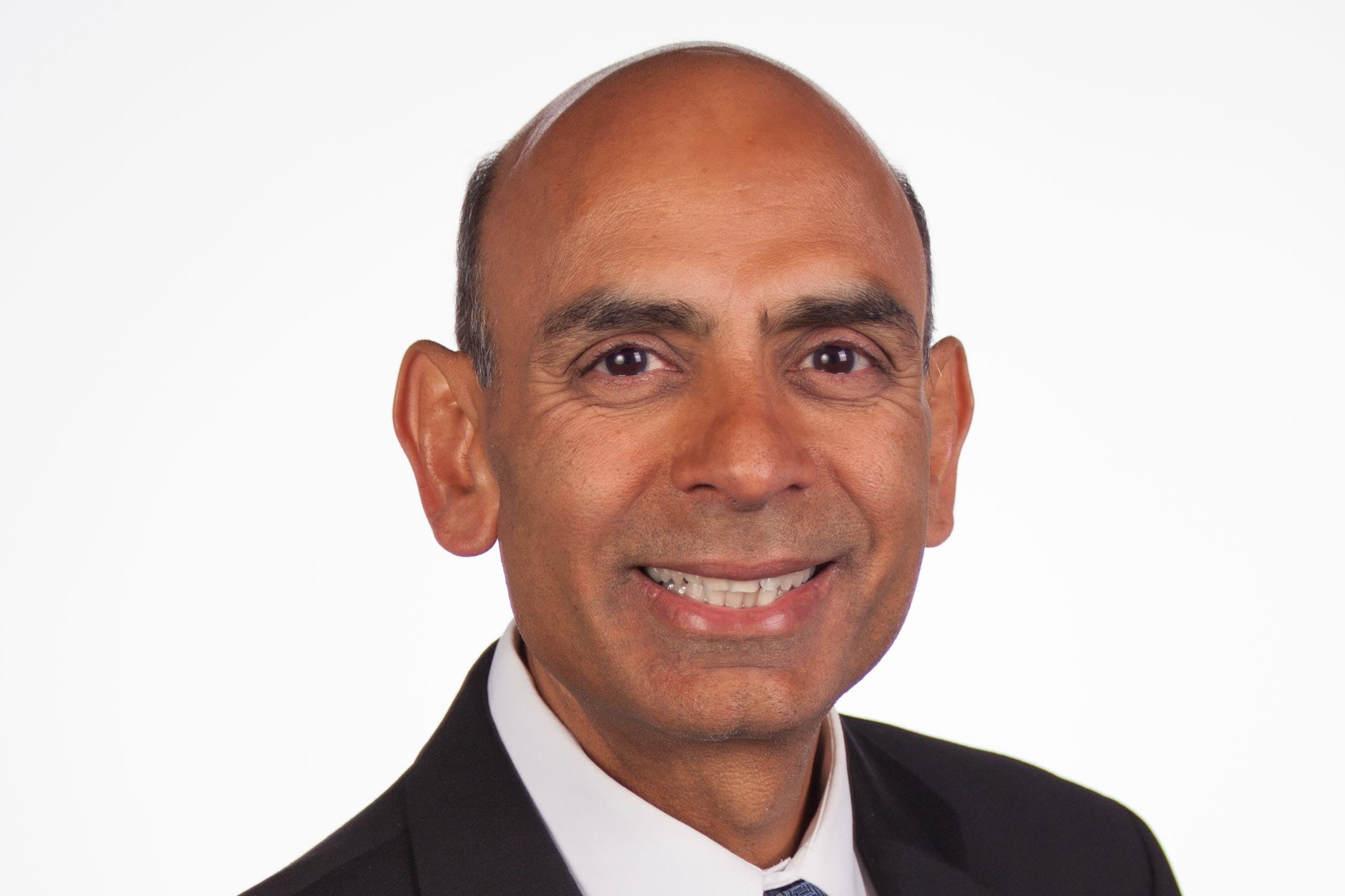
Mark Nelson
Venture Partner, Madrona
Former Tableau CEO Mark Nelson brings decades of tech leadership, with experience spanning data analytics, cloud infrastructure, middleware, and biophysics. At Madrona, he evaluates new investments and advises portfolio leaders, driven by his passion for data-driven software and its power to transform human endeavors.
Satyen Sangani
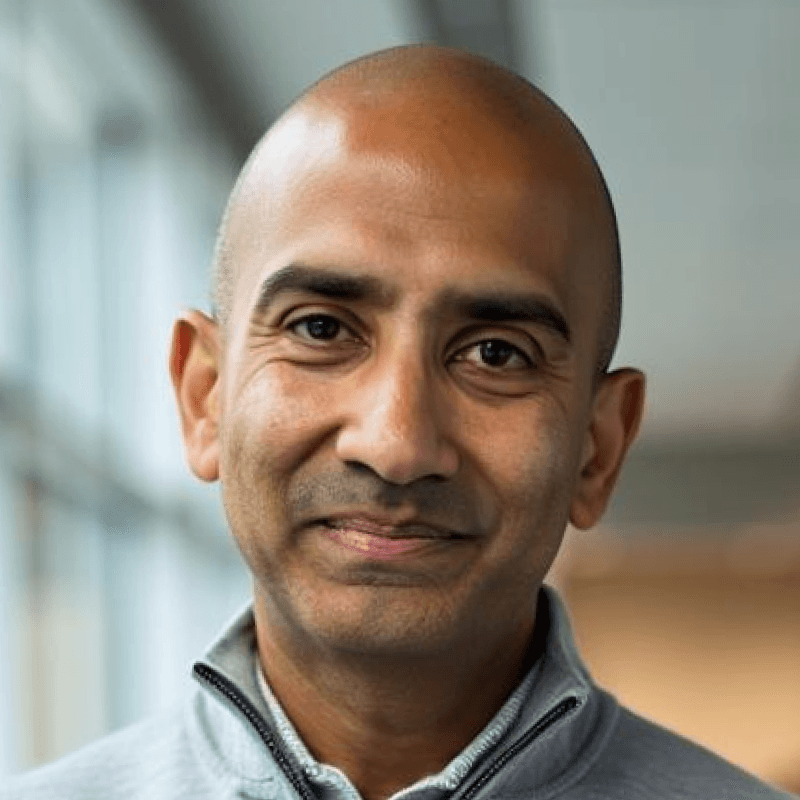
CEO & Co-Founder, Alation
As the Co-founder and CEO of Alation, Satyen lives his passion of empowering a curious and rational world by fundamentally improving the way data consumers, creators, and stewards find, understand, and trust data. Industry insiders call him a visionary entrepreneur. Those who meet him call him warm and down-to-earth. His kids call him “Dad.”
[00:00:00] Satyen Sangani: Welcome to season four, and welcome to our next era. We are AI Radicals. For three seasons, we've built this show on a core truth: great data is the bedrock of great decisions. But today, as every org on the planet races to deploy AI, we have to modify that statement. Great data and AI are the bedrock of great decisions, so our name has evolved to meet the moment.
[00:00:24] Satyen Sangani: In this first episode of this new chapter, we have Mark Nelson. Mark spent three decades building some of enterprise software's most influential companies across databases, cloud infrastructure, and analytics. As CEO of Tableau, he helped steer one of the defining companies of the modern data era, and today, as venture partner at Madrona, he works with founders building the next generation of AI companies.
[00:00:45] Satyen Sangani: He argues that while AI is one of the biggest platform shifts we've seen, the fundamentals of building great companies haven't changed. Customers still pay for value, great software still takes judgment, and so while writing code has gotten easier, knowing what to build matters more than ever. If you want a clear-eyed take on where AI is creating lasting value and where the hype falls away, this one's for you.
[00:01:08] Producer: This show is brought to you by Alation. Only 5% of enterprise AI pilots from 2025 delivered ROI in production. Alation's free agentic AI opportunity discovery guide shows you exactly how to find the right processes to automate and build AI that actually sticks. Get it at alation.com/ai-guide.
[00:01:34] Satyen Sangani: Our next guest has been on the front row of every major enterprise software shift over the last 20 years. Mark Nelson has spent decades building and scaling technology businesses from databases to middleware at Informix and Oracle, to SaaS and cloud platforms at Concur and SAP, to analytics as the CEO of Tableau during one of the most pivotal times in the company's history.
[00:01:55] Satyen Sangani: And today, as venture partner at Madrona, he works with founders building the next generation of AI companies. Few people have seen as many technology cycles on both the operating and investing sides, and Mark, it's really exciting to welcome you to AI Radicals.
[00:02:08] Mark Nelson: Awesome. It's great to be here this morning.
[00:02:09] Satyen Sangani: So you have this different perch. You've kind of been in the game in some sense, and obviously being a venture investor is also being in the game, but it's, it's a, it's a different purview. And I, and I guess in... Maybe I'd love to start by understanding your perspective on the moment that we're in. You've seen databases and middleware and SaaS and cloud and even modern data stack.
[00:02:31] Satyen Sangani: Tell us about this moment. Like, how do you feel about AI? How is it different? How is it similar? What's totally, what's totally unique about it, and what's, what's, what's absolutely the same as a lot of these other shifts?
[00:02:41] Mark Nelson: Yeah, for sure. I mean, it is another one of these world-changing moments. There are s- there are a lot of similarities, you know, again, and, and we certainly don't know the end of it yet.
[00:02:50] Mark Nelson: I think a- as the saying goes, like, it'll be less changing in the next three years than we imagine and more changing over the next 10 years than we can imagine, and it's already changing super fast, and that feels like some of these other, other changes that we've lived through with mobile, with cloud. I think the biggest thing that feels different...
[00:03:08] Mark Nelson: Well, I'd say two things that feel different. One, one is the speed which it has hit the ecosystem. The last three years, we're not even three years. Three years? Yeah, I guess we're three years into our ChatGPT moment, right? Like, it y- you again, the world is just such a different place. Like, that, that feels like the onset has been faster.
[00:03:27] Mark Nelson: And then from a more, like, mechanics of it, the rest we're, we're still building software. We were still delivering somewhat the same things. This one is just, it's a different beast, right? Like, AI, it's not just building software and delivering it in a different way, or, you know, cloud brought a whole new way to build it and databases and middleware, but it was still, like, fundamentally, we were digitizing business processes.
[00:03:52] Mark Nelson: AI is this fascinating encapsulated knowledge, non-deterministic, kinda human attributes, kinda not. It is not just, oh, there's a new way to build or deliver software. Like, there, it is a, it is a new thing in town, and I use the word thing very intentionally as we figure out what it looks like. But it is definitely, you know, again, the, the changes that it has on business, like, we're all trying to figure out, like, the fundamentals of business haven't changed, but we have, we have this amazing, amazing new tool in our mis- midst, and, like, how do we, how do we keep doing all the business things we want to do with this new tool?
[00:04:29] Mark Nelson: And that, that feels similar to these past changes that were so sweeping.
[00:04:33] Satyen Sangani: What is it about this technology or what is it about this moment that, like, why is this so much faster in your view? Like, w- what are the underlying reasons for the speed?
[00:04:42] Mark Nelson: Yeah. I think because it got introduced in such a fast way because I'll say both, like, you know, people say, "Oh, my God, like, everything changed overnight."
[00:04:51] Mark Nelson: Yeah, but, you know, it didn't because it was coming for 10 years, right? Like, in some sense, everyone's like, "OpenAI, quickest company ever to 100 million in revenue," blah, blah, blah, blah, blah. It's been around since, whatever, 2013, right? Like, it's actually been there for a long time. It was just a slow burn.
[00:05:08] Mark Nelson: But the... You know, unlike cloud and SaaS and the internet, it kinda got introduced, and it took a while to seep in. Even though, you know, AI and ML have been around for a long time and have been coming, there, there was that singular GPT moment where it, it went from uh, you know, this thing that was kind of in the background most people didn't understand to, like, overnight it was like, wow, everyone got it, and it was just there and present for you.
[00:05:35] Mark Nelson: And then, and then the races were off, where, I mean, you look at Cloud, AWS was a slow burn, right? And startups got it at first, and then it took a couple of years before all of a sudden, like, people really got the potential. Or the internet. You know, I was gonna date myself very much, but, like, I was, I was at UIUC, University of Illinois at Urbana-Champaign, in the building where Mosaic was being built.
[00:05:58] Mark Nelson: And back in 1995, Marc Andreessen and his group would literally send out a list of the new websites on the internet every day. It was it was really fun. But it took a long time. Like, it was this slow burn that kind of seeped into people's awareness of, "Wow, what is this thing? How does it... " And it wasn't until, like, the late '90s and the 2000s that it really caught on, where again with ChatGPT, it was just this visceral moment where it's like, wow, there's this new thing.
[00:06:26] Mark Nelson: That again took decade to get there, but that moment was, was just such a mind-blowing changing moment that opened up so many opportunities in a way almost overnight, in a way that these others didn't.
[00:06:38] Satyen Sangani: Yeah. And, and it's, it's in some ways it's almost... it's hard to envision what the, the ranges of possible in this set of technologies, even though, you know, there's a lot of stuff that people always echo about sort of the extremes that people predict with prior technical waves and, you know, there'll be a robot in everyone's home back in the '60s or the '50s and, and obviously there's, like, The Jetsons and all these things that I think sort of portended a very different world.
[00:07:04] Satyen Sangani: This one feels like the world is obviously so different because it, y- the range of possibilities of people not having to work in the near future versus everybody being totally super powered and AI charged and AI pilled, like the range of outcomes is very different. Where do you, where do you end up on all of this?
[00:07:22] Satyen Sangani: I mean, so you're, you're obviously doing venture investing. You see a lot of stuff. Are you on the side of sort of Dario, where everybody, he thinks that everybody's out of a job soon? Or how, how do you see the world evolving given the, given the purview you have and, and what you're- Yeah ... what you're experiencing?
[00:07:37] Mark Nelson: Yeah. I mean, both from a technologist and then watching what's going on, and I'll, I'll put my asterisk on here on the... unless there's another fundamental breakthrough like we haven't seen. But if you imagine the current state of the technology and what LLMs have brought us, it's not intelligence, and it can quickly become a ph- this can become a philosophical conversation about what is intelligence and what is judgment.
[00:08:01] Mark Nelson: These things still don't understand the world. They don't have judgment. They don't have a lot of things that, you know, humans do. It is the most amazing encapsulation of knowledge that we've ever seen, right? You know, you now essentially have everything on the internet- In your hand in a way that's, you know, again, and using the word reasoning is, is delicate as well, but it's still...
[00:08:30] Mark Nelson: It, it's, it's parroting back. It is still fundamentally a parrot, and it's an amazing parrot, but it's a parrot. And back to having an actual unders- conceptual understanding of the world and a really judgment is still missing, right? And, and really isn't on the horizon, right? It's not just a, oh, I see. If I just polish this, right?
[00:08:52] Mark Nelson: You know, like some technologies you go, "Yeah, we're not there yet. But trust me, two more orders of magnitude of speed and then we'll be there." That's not the case here, right? Like, just the fundamental mechanisms of the way these things work. And the best, the best analogy I've heard here, there's a professor who used to be here at, at Washington, uh, University of Washington, and she's since moved on to Stanford, Yejin Choi, and she gave this TED Talk on why LLMs are both amazingly smart and amazingly stupid at the same time, right?
[00:09:19] Mark Nelson: And the amazing things that they can do, and yet the fundamental things they still get wrong. And the analogy she used at the end is, look, we just invented skyscrapers, and skyscrapers were amazing, and they changed human life, and they changed how cities were, and, like, they changed so much about how the human dynamic worked.
[00:09:38] Mark Nelson: But by the way, if you want to go to the Moon, like, you can't build a taller skyscraper. Like, the, the the taller skyscraper is not going to get you to the Moon. So back to the root of your question. Like, I feel like this is still an enabling technology. It does give you superpowers. It gives you the way to get out of so much grunt work.
[00:09:55] Mark Nelson: It puts knowledge at your fingertips that, like, you just didn't have before. That is amazing. But it's still missing, back to are we all gonna be sitting on the be- you know, Dario's, "Are we all gonna be sitting on the beach doing nothing?" Yeah, I find that hard to believe. Like, there's no creativity, there's no judgment, there's no understanding of the world and the why and the, like, why would I want to do that?
[00:10:18] Mark Nelson: Again, barring some next gen- back to that going from a skyscraper to some device that can take us to the Moon, like, there's a different mechanism that's gonna be necessary before that happens. That's not to diminish the amazingness of what, what has been given to us and what is there. Like, again, skyscrapers did change every city in the world, and that's amazing.
[00:10:38] Mark Nelson: And this moment is amazing too. But it's still... It's a tool. It's something that lets us be more productive and lets us do things we couldn't do before. It will replace some jo- I mean, I think there's no ways around, like, there, there were jobs that were learn, learn a process, learn knowledge, and then regurgitate that process or that knowledge at the right time.
[00:11:00] Mark Nelson: These things can do that. Like, they just can.
[00:11:03] Satyen Sangani: The, the most protocolized jobs feel like the o- like, the ones that have... The ones where the jobs are effectively similar to programs where you're doing run books and you have- Yeah ... very clear procedures that you have to follow, those feel like the ones that are at most risk over time. But it's not also clear...
[00:11:24] Satyen Sangani: I mean, to your point, like I, I kind of share the same perspective. I mean, it's... There's certainly some jobs that are going to go away, but then there are other jobs that are going to appear, and it is, I mean, certainly in my personal experience, like, I just feel like all I do is ha- Like, I, I only have more work to do.
[00:11:39] Satyen Sangani: Because everybody's sending us more information, and more judgment is required, not less. And so the scarce commodity ends up being judgment, not information, at least in the present moment. I mean, the asterisks question I think is interesting. You probably see companies that are maybe asterisks companies, I would imagine, which, and by, by which I mean, like, companies that are actually trying to change the, the underlying game.
[00:12:00] Satyen Sangani: Right. And then there's companies that are sort of trying to optimize the current game. What, where are you... Like, where, where are you looking? And what are the sorts of... Like, are you a thesis-based investor, or are you looking primarily at sort of technology and team, and you sort of... Like, how do you, how do you think about the world and, and, and what is it that you're excited about right now?
[00:12:16] Mark Nelson: Yeah. For sure. At Madrona, we're an early stage investor, so it is fundamentally at our heart about so much of what we do is around the people and the team, right? Yeah. 'Cause it just... When you're, you're investing in an early stage, there are so many twists and turns. It is, do you really have the stomach? Do you have the ability to go through with that?
[00:12:33] Mark Nelson: With that said, yeah, we're very much thesis driven on what do, what do we believe the world's gonna look like, and how does that fit in there? Like, our three, our three big questions are why this problem, why now, why you, right? Like, those are the things that we're looking for. On those asterisk companies or not, like, there's always a mix, right?
[00:12:50] Mark Nelson: Like, you, you, you can't just bet all on the asterisks companies because those are highly theoretical, and there are some things that I would say five or certainly five years ago, 10 years ago would've been research projects at universities that are now becoming VC-backed companies. And that's an interesting dynamic, shall we say, right?
[00:13:10] Satyen Sangani: And what do you mean? Do you mean, do you mean that you have to get way farther out over your skis in the early stages now, and you're investing far less in technologies that's commercializable in the next couple of years, but stuff that's gonna basically, it's just a moonshot? Is that, is that what you're effectively saying?
[00:13:26] Mark Nelson: Uh, for the asterisk companies I'm saying. Uh, as a general thesis in what we invest in, no, definitely not.
[00:13:33] Satyen Sangani: Yeah.
[00:13:33] Mark Nelson: Um, but for... There, there are these companies, like you said, who are trying to change the rules and come up with fundamentally different, different ways, where again, I think some of those used to be research projects, where, like, that, those are literally have been done at universities.
[00:13:46] Mark Nelson: But now both because of the capital it takes to do some of those experiments and because of the potential payoff, they're becoming companies instead of research projects, and that's fascinating. And that's an interesting thing, but is... I, it's just, it's got all the risk profile of a research project, right?
[00:14:02] Mark Nelson: Like, it's super hard. So you can't, you can't just invest there indefinitely.
[00:14:06] Satyen Sangani: Yeah, but I guess, um, what... Because alpha is so hard to come by in, like, this world I mean, it's not a venture term, but a hedge fund term. Like, do you, are you more willing to do those things or do you see... Or is the, is the allocation more towards those things than to, than it was previously?
[00:14:22] Satyen Sangani: Maybe not in an absolute sense, but is it, is it more than it was previously?
[00:14:25] Mark Nelson: Yeah, maybe more than it was, but there's always been an element of that. I mean, I would say the overall portfolio is still, like, you can see where this goes, right? Like, you can see the commercial use of it. You can see how, like, you can definitely succeed.
[00:14:38] Mark Nelson: Some of those asterisk companies are ideas that may or may not ever come into being at a at a pretty high degree of risk.
[00:14:47] Satyen Sangani: Right.
[00:14:47] Mark Nelson: So, and there's always been those ideas in investing, right? Like, that, that's not new. It is accelerated in this moment just because there's so many unknowns, right? This has changed the rules so quickly.
[00:14:58] Mark Nelson: There's so much changing that I would say there is just more of that. There's more opportunity for that, and then hence there's more of it happening. But it's always been there and there's always some ratio. And then, but yeah, the heart of what, what w- certainly we at Madrona are investing in, what I'm looking at, are, are, are areas that we already know and where there are very clear problems to go attack and try to make them real.
[00:15:20] Mark Nelson: And, you know, and, and where there's a real instead of just, "Hey, I'm gonna change the world," and then great things are gonna happen, it is much more the, the, the bread and butter of there's a customer, they have this problem, let's go solve that problem for them, right? Like, that, that is how great companies are born.
[00:15:37] Mark Nelson: There's a need and a, a problem to go solve, and you solve it for them.
[00:15:41] Satyen Sangani: And so, I guess venture commercial opportunity. Tell us about what you've invested in recently and what you're excited about and, and, and what, what theses have been exciting for you in the, in
[00:15:51] Mark Nelson: the recent- Yeah. Certainly, you know, I, I spend a lot of time in data and analytics, and so, uh, you know, two of the most exciting recent investments are two, two people who worked with me at Tableau have started companies, and that's Francois Ajenstat and, and Golden Analytics, and Ellie Fields and Ridge AI.
[00:16:09] Mark Nelson: Spaces that I know super well, people who I know super well and we'd been in the trenches with before, and I'm so excited to be back in the trenches again. Because I do think there's so much happening in the world of data, in the world of analytics. Again, back to a new opportunity. So much of the grunt work goes away, but- There's so much yet more to be done.
[00:16:30] Mark Nelson: There's a lot of opportunity. And so I'm, I'm very excited about what's happening in that space, and I'm very excited in those two investments and those two founders in particular.
[00:16:39] Satyen Sangani: Outside in, talk about Francois and Ellie and, and talk about the characteristics. Um, it, it's true that you obviously know them from Tableau days, but what are the character
[00:16:47] Satyen Sangani: Are the characteristics of founders that you look for meaningfully different? Is it all kind of the same? I mean, what, what are you guys looking for, and what allows a new AI company to get funded? And particularly everybody's asking the question, like, "Hey, are the foundation models gonna do this?" Yeah. Is it in this blast, is this in the blast radius?
[00:17:04] Satyen Sangani: How do we build competitive differentiation? What does it even mean to have a software moat? I mean, how do you think about those problems at, at the, at the earliest stages?
[00:17:12] Mark Nelson: Yeah. So much to unpack there. But I'll start with the founders, right? You know, and there's a bunch of we're all special snowflakes, right?
[00:17:18] Mark Nelson: So there is no formula like, here is the perfect founder. They come with these things. You know, because we all come with towering strengths and our own weaknesses, right? But, you know, both Francois and Ellie, obviously huge domain depth, right? I mean, Francois has been bouncing around analytics since the beginning, right?
[00:17:35] Mark Nelson: And so, like unparalleled. Ellie has just an amazing breadth of both analytics depth, but then she's kind of done every function, right? Like, she started off as a CS major, and then she was in marketing. She was one of the first marketing employees at, at, uh, Tableau, and then she came back to product. And so, like, the breadth of what Ellie can do combined with that depth of domain knowledge is super exciting.
[00:17:59] Mark Nelson: Both of them just have this, you know, across kind of all fields, right? You know, not just being a product person, not just being an engineer, not just being a salesperson. Kind of all of those skill sets The tenacity and curiosity. And then, you know, I ... One thing I will always say about any founder that is true, you know, the one comment is, like, do you understand your customer?
[00:18:20] Mark Nelson: Do you understand what you're solving and why? And, like, do you really kind of first personally feel that pain? And I would say, you know, both Ellie and Francois are amazing that way on, like, understanding who they're building for and what problem they're solving for.
[00:18:34] Satyen Sangani: All of which feels very similar to what you might have invested in three to five years ago.
[00:18:37] Satyen Sangani: I mean, that-
[00:18:38] Mark Nelson: 100%.
[00:18:38] Satyen Sangani: Yeah.
[00:18:39] Mark Nelson: Yes. And, and this is what ... You know, it's fascinating to watch because everybody's like, "Oh, it's like a whole new, new world," and this feels so much like the internet boom, boom too, right? Oh, it's a whole new world. The dynamics of business have all changed. It's like, no, actually, like, for as much as things have changed, the fundamentals have not, right?
[00:18:56] Mark Nelson: Like, again, you are building some piece of software, some system that's going to help someone with a problem that they need to solve. And if you ha- add more value into that equation at the right price, then you'll be able to sell it, and you still have to make money, which, you know, every wave of this we get lost in there's a new economy.
[00:19:14] Mark Nelson: There's a new way of doing business. Yeah, there really isn't.
[00:19:18] Satyen Sangani: Let me actually dig into that. So I, I saw a post from a VC that I kne- you know, that I know, and that, that, you know, all, like, LinkedIn posts, like, you know, super polarizing and hot take, and it was like, look, the, the, the post was something to the effect of, um, the middle of venture has disappeared.
[00:19:34] Satyen Sangani: And I interestingly also talked to another investor who was like, "You know, there, there is, e- even in this most re- in this most recent wave, it's always been a power law business." But, you know, SpaceX OpenAI, Anthropic have, have such fundamental power laws that it's almost like just every... I, I don't know what percentage of the returns in this generation those companies are gonna account for, but it's, it's, it's gonna be a material, material percentage of the returns.
[00:19:57] Satyen Sangani: And, and then there is this question of differentiation and competitive differentiation with, with, with, with any new company that comes up because all software is fundamentally now at least a lot cheaper to build and a lot cheaper to, cheaper to copy. So, so I guess how do you think... D- I would imagine that does change a little bit of the business.
[00:20:13] Satyen Sangani: Like, a- and maybe talk a little bit about that or, or maybe it doesn't at all. Like-
[00:20:17] Mark Nelson: No, it, it changes the dynamics. I mean, this is why I don't wanna underestimate the change that is happening. Like, yeah, and can talk for a long time about how you build software today. It's fascinating. We've never seen anything change the way we build software so fast in such a short amount of time.
[00:20:33] Mark Nelson: But that just has pushed the... It used to be getting the code generated was the blocker, right? And now kind of overnight, generating code is not the blocker. Oh, but great software isn't just flowing off of people's fingers either. Software is flowing off of people's fingers. Great software is not. And that, you know, that bottleneck has just changed to...
[00:20:54] Mark Nelson: Back to the view, what I believe has not changed is, do you understand your customer's pain point? Can you build a real solution for them? The dynamics of building that has definitely changed, right? Like it used to be, I better have a friend who's an engineer who can crank out a lot of code. Nope. You've got a friend right, right in your pocket that can generate code.
[00:21:13] Mark Nelson: But do you have the good taste to understand what to build? Can you figure out how to sell it? Can you put all the things around it to make it a useful product for your customer? Those fundamentals of... You know, this is what I mean, like, the fundamentals haven't changed, right? Like, customers are still looking for solutions that help them run their businesses, and they will pay when they get value, and they won't pay when they don't get value.
[00:21:35] Mark Nelson: That equation has not changed. The, the way you go around it and what they're looking for even, yeah, has changed in a way that is so fast. And back to that power curve, yeah, it's fascinating. Yeah, the m- the middle of VC and talking about maybe you mean... It's just like anything else wh- where a snake swallowing a raccoon, right?
[00:21:53] Mark Nelson: Like it's gotta work its way through, right? And we just had a such a fundamental change in, you know, the rules, the businesses. Yeah, the model companies are dominating both the amount of funding that have gone in and the returns at this point. Let's see how long that lasts. Let's see if, again, 10 years from now, those are really the huge winners or not.
[00:22:13] Mark Nelson: I'm not smart enough to say, but I, I, I do have my-- like, it's not a foregone conclusion to me that like, oh, well, yeah, OpenAI and Anthropic are clearly the winners, and then all the rest of the companies out there are fighting for the scraps. That is not at all clear to me that that's the way this is gonna play out.
[00:22:30] Mark Nelson: Yeah. You know, where value accrues? Is it in the model? Like, that, that world plays out if you believe the models are where all the value accrues. But you'll see the blowback now on cost and how much you can do with open source models, and what does that really look like? And then you can see all those companies also racing up on, like, CodeGen is one of the clearest up the, up the chain, right?
[00:22:50] Mark Nelson: 'Cause that's not just about the model, it is about the system around it and how do you build software. So it's gonna be fascinating to see, you know, OpenAI and Anthropic and SpaceX/XAI, like, they're out there at the forefront at the moment and it's amazing. Do they keep running with that lead? Like, is it, is it MySpace or, or, or, or Facebook?
[00:23:11] Mark Nelson: Where, where does the value accrue, and, you know, what is really durable in there over the long run? I, I'm not smart enough to have my bets, but I, I am definitely betting that we have, we have not seen the end game. We are not all just fighting over breadcrumbs that are left over, that there's still a lot of games left to go and a lot of things to be figured out.
[00:23:32] Satyen Sangani: I mean, even saying those words, I think in this moment just seem, like, very counter-trend, because that's obviously not how the market is pricing these companies.
[00:23:39] Mark Nelson: Mm.
[00:23:39] Satyen Sangani: And it's certainly not how the-- I mean, you know, when you look at Anthropic, I guess by the end of the year they'll be bigger than- All, uh, not all combined, but each of, uh, Salesforce, Oracle, SAP- Oracle.
[00:23:52] Satyen Sangani: I mean, you know, IBM. Yeah. I mean, these are, you know, these are companies that took decades to build and, you know, these guys are coming along just like right past them. But then, I mean, y- I assume you saw like I did, or maybe you didn't. Did, did you see the Alex Karp rant on- Yes, I did ... which, I mean, what he, what he effectively said was, "Look, all these Fortune 500 CEOs are super pissed at the foundational model companies 'cause they're basically spending all this money on tokens and getting no ROI for it," which I think is something, something that obviously as all of this AI spend crowds out all of the other IT spend, then the question is like, well, are we getting a return for all of this money that we're pumping out the door?
[00:24:28] Satyen Sangani: And the, uh, and the prevailing answer, if you just look at Fortune 500 P&L seems to be absolutely not. And, and so that's what's so weird, I think, about this moment is that... And, and that, by the way, if you said that three months ago, nobody would've even like, that would've been not even a part of this, like, the conversation.
[00:24:44] Satyen Sangani: So, so there's this idea that, look, the game's not over. We're investing for the long term. We're gonna invest in great people. There's still good companies to be built. And yet, at the same time, you've got this like software so cheap to build. That's very, the, like these, the, you, so how do you think about, how do you think about, like, differentiation?
[00:25:03] Satyen Sangani: How do you think about these com- Like, how does one maintain differentiation in this world, and how does, how does one think about that? Is it distribution? Is it, is it taste? I mean, is it just this je ne sais quoi that like a Francois might have about like, "Oh, like I'm just gonna build this thing and it's gonna be perfect."
[00:25:18] Satyen Sangani: Like how do you think about that?
[00:25:19] Mark Nelson: I would say it is largely taste and figure out what to build. And again, we got to keep harping on do you know your customer? Do you know what to build? And I would push back on software is cheap to build. Code is cheap to generate. Software and software systems that are meaningful are still hard to build.
[00:25:35] Satyen Sangani: Say more about the distinction. Like, talk about, talk about what problems happen.
[00:25:40] Mark Nelson: Yeah. It's having a good design sense, having a good, you know, taste is the word of the moment, right? Like, do you know what to build? Is it actually useful when you build it? Can you get it in the hands of the customer in a way that they want to use it?
[00:25:55] Mark Nelson: 'Cause again, it's really easy to generate code, and then, you know, the SaaSpocalypse and everyone's gonna generate their own CRM. Yeah, wait until you have 20 CRMs bouncing around your company. You're gonna find out that that's not what you wanted. It's not what you wanted at all. And by the way, most of those people don't understand how to do security, don't understand about taking care of PII, don't understand about the, the other things that turn out actually matter when you build software.
[00:26:20] Mark Nelson: I, I think there, there is gonna be a retrenching back to it's cheap to generate code. It's still hard to generate good software, and it's not necessarily cheap. It, it, again, it changes the bottleneck. The bottleneck used to be how many engineers could you get working on a problem? Now it is how much good taste, how, how well can you put together that system?
[00:26:41] Mark Nelson: Go to market is becoming a whole nother thing as well, right? As the marketing stack and how we all find things change dramatically. How you, again, connect with your customer has been thrown up in the air in this moment as well, which is fascinating. And all of that's still hard, and I would say somewhat expensive in the sense that it's still, it requires a human in the loop.
[00:27:03] Mark Nelson: It requires skilled humans with, you know, unique insights and abilities, and that's still, that's still the scarce commodity, is the human with the skills to create what is necessary and go forward. It just has changed a little bit on, like, it used to be for software, very engineer-heavy It's not so engineer heavy anymore, although I also am of the opinion engineering has far from gone away, right?
[00:27:29] Mark Nelson: Again, just 'cause code gen now is fast, like good systems design, good security design, good p- like that matter of taste around engineering and what good software looks like has not gone away even though I think most programming languages are gonna become like Assembly language was to us, right? Like I learned Assembly, never programmed in it professionally, but now most of these programming languages are gonna become the same way.
[00:27:53] Mark Nelson: That doesn't mean I didn't have value, you know, as I got to be an architect and, and systems designer. Like those skills are still out there and still necessary.
[00:28:02] Satyen Sangani: I think that's right, and I, I generally believe that to be true. I think I had wrote out on one podcast that somebody said something to the effect of like, "There's not gonna be any crappy software in a couple of years" because you, you have these like...
[00:28:15] Satyen Sangani: I, and I don't know if that's true. I, I, I like- Yeah ... I, I guess is there's still gonna be a lot of crappy enterprise software 'cause just seems they're, they're- Yeah ... like not all of the lock-in problems have been solved and, and there are some things that just don't have to be pretty to be, to be good. But I, but I, I, I do think that this idea that sort of building the system of building software is still really, really, really, really hard, and building good software is still really, really, really hard.
[00:28:40] Satyen Sangani: And, and, and I think, um, to your point, it's, it's the, the, there's a huge premium on, on talent that, that we, that we've even seen internally.
[00:28:51] Producer: We're brought to you by Alation, the data intelligence platform trusted by 40% of the Fortune 100. Here's the problem they solve: your catalog helps people find data, but it doesn't actually deliver business outcomes. Alation's data products marketplace changes that. Teams can build governed, AI-ready data products in a single session using plain English, no code, no SQL, and business users can literally chat with the data to get trusted answers.
[00:29:19] Producer: Governance is baked in, not bolted on. Want to see how it works? Grab the free data sheet at alation.com/data-products.
[00:29:37] Satyen Sangani: Maybe switching gears a little bit. So, so now, like you-- there's the supply side of the equation, which is all of the, all of the folks building stuff, all of the makers and the creators, all of the founders, all the engineers. There's also the demand side. And you've obviously had the experience of sort of, you know, sitting on both sides of, or at least like really talking in v- different versions to enterprise buyers.
[00:29:58] Satyen Sangani: Uh, where i- where are the buyers at the moment that you talk to? What are you seeing and what are they feeling? Where do those buyers factor into where you're investing and, and what are the anecdotes that you can share about people's mindset in the moment?
[00:30:11] Mark Nelson: Huge transitions going on. I would say we're getting to the, you know, back to the Alex Karp rant and, uh, you know, we're getting to where people want value and seeing returns, right?
[00:30:21] Mark Nelson: Like, we went through this moment where There's this, this crazy rush on like, "I'm being told by everyone I have to, you know, I have to do AI. I- if I'm not doing AI tomorrow, I'm so far behind." There was, you know, these magical AI budgets created where, like, doing a POC, it was really easy to get paid to do a POC of anything that smelled like AI.
[00:30:42] Mark Nelson: That moment has passed. Um, you know, people want value out of it, and it, it, it has, again, back to just all the signals and what's going on in the market, has jumbled them all, right? Like, 'cause we've seen these companies get out of the gate with amazing revenue because the demo is great, there are a lot of POCs, and some of them have continued up and to the right, and some of them have crashed back down, right?
[00:31:04] Mark Nelson: And so buyers are... Well, one of the best anecdotes was, um, someone who was in marketing at Tableau is now a CMO at a small startup, and she was like, "Look, okay, I have 18 employees in marketing. Right now, I have 35 AI tools that we have purchased." And she's like, "There is no way a year from now I'm still gonna have 35 AI tools.
[00:31:28] Mark Nelson: I have no regrets about buying them because we don't know what we don't know and we have to go and play with these things, but, but there's no way." I mean, that's crazy, right? Like, there's just, there's no way that there's that much dispersion. So it's this, the... Everyone's feeling because the rules of the game change so fast, and marketing is a g- is a great example of where they're like, "Oh my goodness, the rules have just changed."
[00:31:47] Satyen Sangani: Yeah. It's so different.
[00:31:48] Mark Nelson: It's so different. It's so different. So different. And there was an initial just like, "Well, just spend money and let's go f- go figure out what works," and, you know, we're s- we're getting now into like, "Okay, well, we can't just spend money 'cause we've just been pouring money down the drain," and we're starting to figure out what works, what doesn't work, but it's, it's gonna contract back down again.
[00:32:07] Mark Nelson: And so back to the fundamentals, I mean, people are looking for value, like, what's the return? And it is, uh, returning back to some of the point on, like, the, the money that's being spent and accrued by the big model companies, one of the fundamental things I have to change is right now, again, we're all paying for tokens.
[00:32:22] Mark Nelson: That is not y- that's not the value you get, right? Like, when you pay for a token, what's the value you got for that token? Wow, it varies widely, right? Did you get a good answer? Did you get a bad answer? Did you get 1,000-word answer when you should've had a five-word answer? Like, the best pricing models are where there's a direct correlation between what you pay for and the value that you get, right?
[00:32:46] Mark Nelson: And my own maybe controversial, maybe not, tokens are not it
[00:32:50] Satyen Sangani: That was one of the things that came up with Francois that I thought was quite ... I mean, that was fascinating because if you look at sort of the prevalent models, whether it's the LLMs or in the data stack, you know, Snowflake and Databricks, I mean, whether compute token, tomato, tomato, like whatever.
[00:33:06] Satyen Sangani: And like, you know, you've got also of course the hyperscalers, all of which are all effectively token-based. I mean, uh, uh, when I say token, I just mean like it's a consumption measured model. What I think Tableau obviously did was it had a user-based pricing model, but it was pretty unique to its time, and then Francois effectively is obviously doing the same thing with a user-based model, which is very countertrend.
[00:33:27] Satyen Sangani: I mean, so- Yeah ... so talk a little bit about that. I mean- Yeah ... do you, do you think that this consumption moment is, is M- there-- the empire's gonna strike back towards a, a different set of models and prevalence, 'cause the SaaS model is basically a seat-based model.
[00:33:39] Mark Nelson: Yep, it is. There is no one model or r- right or wrong is my, my more nuanced answer, 'cause we had our usage moment.
[00:33:47] Mark Nelson: Again, cloud really brought us this usage moment, right? AWS exploded on the scene with usage-based pricing. And everyone, there was a huge pressure at Salesforce on, "Oh my God, we need to go to usage-based." And it's like, really? 'Cause I'm not sure where that's where the value comes from again. It is for AWS, right?
[00:34:03] Mark Nelson: Because when you pay for a machine, you're paying for a machine, and you get value based on how big of a machine you rented. And so usage-based was a great pricing model for that. But then people tried to apply it to other things, and one of the reasons, like we had long debates at Tableau about should we do anything usage-based.
[00:34:19] Mark Nelson: And we were like, the key value you got from Tableau was this ability to explore data, and that, that's what we believed was our key value prop, right? It was not a dashboard that was created. It was not a query run. It was your ability to explore data and answer questions, sometimes questions you didn't even know you wanted to ask.
[00:34:40] Mark Nelson: That was the key value. If you had to pay per query or per dashboard, people are coin operated. If that's the way you pay, the inevitable thing is, "Well, I'm gonna try to do that less 'cause I have to pay more every time I do it."
[00:34:54] Satyen Sangani: Totally.
[00:34:54] Mark Nelson: That lesson, like, that undermined our value prop. If you had to think about it every time before you, you did that next exploration in Tableau, you missed the value.
[00:35:04] Mark Nelson: Like, you were not getting the value of Tableau if you had to worry about every, every time you clicked. And so, so it was the wrong for us. I think it was perfectly right for AWS. And where I would argue it's not so much that it's usage-based in this, it's that it's token-based, and a token is-- does not equal value.
[00:35:24] Mark Nelson: Right? Like, a token v- is, i- is a limiting factor right now because all of AI is so inference and compute expensive. Like, to cover your costs as a model provider, you kinda have to charge that way. And it's also, and this is where I do believe there's a reckoning coming on. Again, the value of each answer I get back from one of those chatbots is not at all the same.
[00:35:47] Mark Nelson: Some of those valuable answers I get back are hugely valuable, and some are completely worthless to me, and yet I'm paying the same per token. And eventually, that feels out of whack to me, right? Because I w- as a, as a user, I want to be paying in some unit that eventually accrues to the value I get, 'cause then I feel like I'm paying fairly.
[00:36:08] Mark Nelson: That's what I want to pay for. I will pay you if I'm getting value for what I pay for. Where I get upset is, like, I just paid you a whole bunch- And I got nothing back. Or I'm paying in a dimension. The company I always use as an example is with Splunk, right? Like Splunk back in the day exploded on the scene.
[00:36:24] Mark Nelson: All of us who were running SaaS companies were, were addicted to Splunk, but they charged by storage, and that was the original pricing model. And eventually, I accumulated with tons of data in Splunk, and I was paying for it all, but that wasn't the value I got. The value I got was the last, the last week worth of data.
[00:36:43] Mark Nelson: Yeah. Very rarely did I have to go back five years into my Splunk logs to figure out what was going on, and yet I was paying the same for those logs that were five years old as I was the ones that were a week old. And eventually, that pricing model collapsed on itself, and they had to change their pricing model and find a new way to go forward that was back to, "What is the value I'm getting from you?"
[00:37:02] Mark Nelson: And it's not the storage that... It's not the data that's sitting in your system. That is not the fundamental goodness that I got from Splunk. I got a whole bunch of goodness from Splunk, but it wasn't in the dimension that I was paying in. So I do think there's a reckoning that's coming on, like, how do we, how do we rec- you know, reconcile all this into I'm paying for value?
[00:37:21] Mark Nelson: And then, yeah, going to, to Golden, like why, why is Francois going, you know, seat base? 'Cause it's still this fundamental exploration, right? Like if I, if I want you to be exploring data, there has to be some limits on, like, you can't go crazy burning tokens and bit- Bitcoin, Bitcoin mining on top of Golden's dime, but The value you're getting from, from Francois' system is not per token, right?
[00:37:44] Mark Nelson: It is, it is somewhat are they giving a system that lets each user be so much more productive, right? And that still feels like a seat-based model. So yeah, maybe can train. I, I don't believe the usage model is the end-all be-all of pricing models. I also don't think it's a bad thing. I think it's a great thing for certain businesses.
[00:38:04] Mark Nelson: But I also don't-- I think there are some businesses that are still, they are, they are seat-based, right? Like they're... If the value is coming, like I've just made this person 10 m- 10 times more productive, and I want them to have an all-you-can-eat to make themselves even more productive if they can, that still feels like you pay per person.
[00:38:24] Satyen Sangani: Yeah. Especially in a world where, I mean, in, in that example, you have this model, which is basically underneath the hood, and of course, you've got a database which is underneath the hood, and there's, you know, compute and tokens that you're kind of spending. And so it's really the, the, it's a, it's a layer on top of those two things to be able to then get the user something.
[00:38:45] Satyen Sangani: And- Right ... and I guess on some level you could argue, well, the user could kinda do it all themselves if they, if they had infinite time. You know- Yeah ... the reason for software is it's sort of, you know, obviating that work. But, but I guess then it makes sense if you, if you're, if you're pricing for productivity.
[00:38:58] Satyen Sangani: And to your point, you don't always get value out of every question. Although for things like Claude and ChatGPT, they are still at least at an enterprise bill- level billing, billing per, per token. But it could be that that, that starts to, that starts to, to change. Where do you see... Like, how quickly do you think this reckoning is gonna come?
[00:39:15] Satyen Sangani: Like, I mean, it does feel like people are talking about it quite- A bit nowadays in terms of, "Oh my God, I'm spending all this money." And the, the, the numbers are so staggering. I mean, you know, if these guys get to 70, $80 billion by the end of the year, that, that's a, that's a incredible, incredible number. I guess, how quickly do you see this changing?
[00:39:36] Satyen Sangani: How quick do you th- Do you think this is gonna change in the next three, three to six months?
[00:39:40] Mark Nelson: I don't know about three to six months. I would say within the next year it's gonna have to change. And now back to your question, like what's different this time about AI compared to the other big transitions, the staggering amount of capital is another one of the the differences this time.
[00:39:55] Mark Nelson: Like, holy cow are we spending a lot of money. Holy cow. And back to why I believe the reckoning will come sooner rather than later is back to the question, like people are going, "But what am I getting for all this money," right? "Am I really getting the return for it?" It's one thing to bet on all of this, I mean, and the, the hyperscalers in particular have been very open on like the opportunity of cost of missing this moment is, is more expensive to me than spending hundreds of billions of dollars.
[00:40:24] Mark Nelson: That's, even though that's crazy to say, but they're like, "The prize is so big, if I miss it, it's... Like I'd, I'd rather be wrong spending... I have $100 billion, I'd rather spend it than be wrong and miss this opportunity." But that's got to become real, and I think again, that, that, that is the reckoning that'll come sooner rather than later on I can't just pay on tokens because I had to get AI into the business.
[00:40:47] Mark Nelson: You know, that, that experimentation moment has come and gone, and now it's value. And so I, I'm, I'm not smart enough to know whether the total amount we're spending's gonna come crashing down, but I do think it's gonna start real- reallocating itself to places where people can prove value. And you see it on both sides on where like Anthropic has raised its prices 'cause it needs to, and people are gonna...
[00:41:13] Mark Nelson: I mean, it's just an economy, right? Like the people are gonna push back on high prices and go to where it's worth paying for that and not spend where it's not worth paying for that. Yeah. And so, you know, I think the market, the market mechanics will all do okay, right? Like they'll the money will slosh around until it finds the right landing spot, but the right landing spot's gonna be where am I getting value in return for what I'm putting in?
[00:41:37] Mark Nelson: Am I actually getting my money back?
[00:41:39] Satyen Sangani: Yeah, it's interesting to th- I think there was a, there was like a meme or like a, a, a clip of Arvind Krishna at IBM that I just saw the, the other day, and you know, he's talking about how expensive it is. I don't remember the amount of power, but he basically articulated that it was sort of a trillion dollars to stand up.
[00:41:59] Satyen Sangani: Maybe it was 100 gigawatts or something like that. I, I, I'm probably getting that number wrong. And, and y- and yet he said to justify that spend you would need effectively that number margin adjusted over five years to be able to get the same return. And he's like, "That number does not exist in the economy."
[00:42:14] Satyen Sangani: And so you listen to that and you're just like, "Oh. Oh. Oh, interesting." So if that number doesn't exist in the economy and all these folks are overbuilding, that, that does feel... I mean, it's really hard to call the top or the bottom on any of this stuff. But it does... Is this something that you guys are talking about in your conference rooms and as you think about sort of where and how to invest and...
[00:42:33] Satyen Sangani: I mean, you're obviously early stage, so maybe the macro trends are a little bit less relevant, but I would imagine that from your perch, these are things that, that are pretty top of mind. Yeah.
[00:42:40] Mark Nelson: They're definitely top of mind because it helps us understand the market. As you say, because we're early stage, we're, we're not writing, you know, nine, 10-figure checks re- regardless, right?
[00:42:50] Mark Nelson: Yeah. Like, we j- we just, that's not who we are. So it's not affecting what we invest in every day 'cause, yeah, we can't write a billion dollar seed check if we wanted to. Um, but it does shape what's going on. And, and this is back to the similarities to previous ones, like I, I do think this is somewhat like the dark fiber analogy from, from the internet days, right?
[00:43:11] Mark Nelson: Like, I don't really see a world where all that capacity just goes away. Like, yeah, I could be wrong, but I think eventually we will need this capacity. Will we need it as fast as people are building it? I don't know about that, right? Like, you can see the telecom bust from, from, you know, shades of that here where like maybe we built a little too fast too soon, but then at the end of the day you look at that and, like, that dark fiber's being put to good use today.
[00:43:37] Mark Nelson: Like, it didn't really go to waste. Eventually, the internet did catch up, and I think, again, we're gonna, we're gonna have some market that will-
[00:43:44] Satyen Sangani: It took us until Cloud, really. I mean, it took us until probably, what, 20- 2013, '14. '10?
[00:43:49] Mark Nelson: Yeah. Yeah
[00:43:49] Satyen Sangani: Yeah. Something like... Yeah, maybe '10. I, I, the... Yeah. Yeah. For sure
[00:43:53] Mark Nelson: And so that's where I think again, it's, it's gonna h- it's gonna even out.
[00:43:57] Mark Nelson: I don't, you know, I'm not a doom'sist. I'm like, "Oh my God, we're spending all this money, and now we're gonna have, you know, shelves of data centers sitting there empty with birds living in them." I don't think that's true. It's hard for me, back to the numbers that you were just talking about. I d- I didn't see that, but, like, I can believe that meme.
[00:44:12] Mark Nelson: I'm like, "Wait a second. Just do the math." Like, do the math on, on what we're investing and the returns you have to get from what's been invested and these valuations. In some of it you go, "Yeah, mathematically, that just doesn't make sense." Like, something's got to give somewhere for this all to come back in the short run.
[00:44:29] Mark Nelson: Again, if you play this out over a long enough timeframe, I think, again, market dynamics are good. It's pretty amazing how systems will regulate themselves back into, into line over a long enough period of time. But again, just 'cause things have changed so fast, we're gonna go through some weird gyrations in between and some, some irrational things are gonna get done in the short term.
[00:44:52] Satyen Sangani: Yeah. Are there spaces that you are, you look at and sort of for you that they're head scratchers. I mean, as you now kind of look at across the funding, uh, universe, are there areas where you think that, that, that you have hypothesized are clearly over invested or things that you, or, or maybe there's hype that you think is, is like, you know, when people say CRM's going away, that's obviously a thing that you don't believe in, but are there other sort of categorical statements that you might be countertrend on or things that you think are overblown?
[00:45:19] Mark Nelson: Back to like CRM, I don't think CRM goes away, but I do think it changes radically, right? And I think this is the SaaSpocalypse I can both say is overblown and underblown all at once, right? Because, and I'll just pick on Salesforce and CRM as a good example, right? The value prop of what you want in the AI age from a CRM is going to change tremendously, and I think it's fascinating and the right move for Salesforce to go to Headless three sixty, right?
[00:45:46] Mark Nelson: Because- Yep ... let's, let's be honest, no one ever wants to see a terrible lightning-based CRM screen ever again in their life, right? They just don't. And now there's a realist like we were forced to use those things because that was the price of getting the goodness out of Salesforce's CRM platform. That's no longer a price I have to pay.
[00:46:04] Mark Nelson: I can, I can use an agent on top of it. I can generate a much more beautiful custom-made exactly what I want piece of software that I want really cheaply. Do I really want to have to go rebuild the logic around what it takes to track a sales pipeline? I kind of believe not, right? Like, there's still a core of CRM that I'm, I'm better off paying someone to build for me than doing myself.
[00:46:28] Mark Nelson: But that equation of what I wanted and what I'm willing to pay for across CRM or marketing or ERP is definitely going to change. And so it's gonna be fascinating to see how these companies go out. And I've had, uh, we, we have a annual event at Madrona, the IA forty, the Intelligent Applications forty conference up here in Seattle.
[00:46:50] Mark Nelson: Mm. And I've been fortunate enough to do two panels the last two years with AI startups and incumbents. We've had Atlassian and Slack and Salesforce along with read AI and Statsig up on stage. And this question always comes up on like, who's gonna win? Like, the rules on what I want out of a CRM system and an ERP system are, are going to change fundamentally.
[00:47:11] Mark Nelson: Is Salesforce in a better position or is a startup in a better position? And the long and short of both my belief in how both those discussions played out is it's execution, right? Like, if you look at Salesforce, Salesforce has huge advantages, right? Like, they have a huge customer base. They have real revenue.
[00:47:27] Mark Nelson: They have a reputation. They have a brand. Oh, but they also have hundreds of thousands of customers who expect them to do what they did yesterday, right? It is the classic innovator's dilemma, right? Like, are you really willing to cannibalize your existing business for what you can see coming down the pipe?
[00:47:44] Mark Nelson: If you're a startup, you're encumbered. You, you don't have any of those encumbrances. You can build whatever you want. You won't disappoint any customer. Oh, but by the way, you have no customers and no money and no data, right? Like, it's, it's gonna be fascinating. I think there's... I don't know if there's a market where it's just like, "Wow, that's dead."
[00:48:00] Mark Nelson: I don't think CRM's dead. I don't think ERP is dead. But I think the rules of what it means to be a CRM vendor is gonna change radically. And will Salesforce or any other company adapt fast enough to stay in the game, or will they get supplanted by someone who's playing that game in a new way? That is execution, and that's opportunity where we, we're certainly making investments in verticalized AI solutions for specific either domains or industries because I think there's, there's opportunity as, again, all these rules rewrite themselves on what people want and where, where the value accrues for what you're going to pay for versus back to, you know, it's easy to generate code, it's easy to generate a custom screen.
[00:48:46] Mark Nelson: Where, where is the value that I'm getting, and what can I do for myself easily?
[00:48:51] Satyen Sangani: Yeah, it's, it's interesting. I mean, one theory that I've, that I've held, and I'd love to test it on you, is that all software is s- and really frankly all products effectively of effect, uh, exists as a result of some positioning.
[00:49:05] Satyen Sangani: So there's a box of a, a category, and then people in their brains sort of put things in these categories, and these categories sort of then guide how you think about the world around you. And obviously, there's the Gardeners of the world who build, build their quadrants and, you know, uh, the like. But, but, you know, you can even see it in things where there aren't quadrants.
[00:49:23] Satyen Sangani: And, and but, but I think in the world of software, the, the ... To me, there's l- the categories are really, really gauzy right now. Yes. Like, all of these ca- categories are effectively kind of it's been a salad, it's tossed up in the air, and nobody really knows where, where it's gonna land. And to me, that's been both a dis- I think it's probably a disorienting thing for a lot of buyers 'cause they're like, "I don't even know what
[00:49:45] Satyen Sangani: There's ChatGPT, there's, like, databases," or like, you know, the LLMs or the databases. Um, you know, maybe there's some like, "I know I'm gonna do finance inside of, like, a system like Oracle or whatever about NetSuite." But like, but I do feel like categories have ch- changed rapid- d- dramatically. Do you share that point of view, or I guess what's your, what's your perspective on that, on that?
[00:50:03] Mark Nelson: Yeah. Oh, 100%. And I, I think it is, again, every trend has its own history doesn't, doesn't repeat, but it does rhyme, right? Like, we saw this through the SAS era where it was like, "Oh, best of breed," right? We're gonna disintermediate every piece of what used to be this monolithic on-prem ERP system broke into 10 different categories.
[00:50:23] Mark Nelson: And s- I mean, CRM used to be, if you, the late, late '80s, CRM was part of your ERP. And then Siebel came along and broke out CRM, and CRM became its own category and its own thing. And then HCM, you know, broke out, and it was like, "It's amazing. Everything's independent." And then what happened over the last 10 years?
[00:50:40] Mark Nelson: All this is coming together. You look at what Salesforce really is, is it was selling a front office product, right? It was sales, it was marketing, it was support, it was everything in one box because, you know, they had kinda become commodity and customers are figuring out it was, "I got more value if I bought a platform and everything bundled together."
[00:51:00] Mark Nelson: To your point on being gauzy again, oh, we just blew all that up again, right? 'Cause now the rules about what I want are all changing, right? So like yeah, pieces of this are gonna fall off, things that you used to think, "Oh, no, that's part of CRM or front office" are just gonna fall off and be on its own.
[00:51:17] Mark Nelson: Yeah, and then how the pieces, like I think this is an inevitable flow back and forth in the software industry, or they're just in the business, right? On like, "Oh, I can do this so much better myself with custom pieces that are closer. Oh wow, I'm tired of putting pieces together. Can you just put those pieces together for me?"
[00:51:32] Mark Nelson: Uh, I, we're, but we're definitely at one of those explosion moments where we're like everyone's going, "I don't know how it all fits together. Let's, let's try new things. Let's try my, what I'm gonna build myself." So I 100% agree, like we're, we're at a very Cambrian moment where lots of things are going to change and come out l- looking new.
[00:51:50] Satyen Sangani: Yeah. It feels to me like on some level, you know, there's this creative destruction of capitalism, but it almost is like there's a creative destruction of categories, and it's almost like y- y- Yeah ... like you just, like these things are gonna just, like that hype cycle, that is sort of the category evolution, like what was 10 years out is now gonna be like 10 months out.
[00:52:07] Satyen Sangani: And like, so it just feels like people are constantly in a mind s- shift, which I think puts a premium on really very clean positioning and very clean branding in a way that I think is, is not ... It becomes, in my mind, more about sort of carving out a place in people's mind than it does even about the product itself, which is, which is strange.
[00:52:27] Satyen Sangani: Um- Yeah. Well, um, Mark, this has been an incredible conversation. I thought it would be, and, and of course you've completed up to every expectation. I think everybody's gonna be super excited to hear, you know, I, I think the episode. Maybe to take us out, um, what gets your attention? How do people, if, you know, people wanna, wanna get Madrona on their cap table, and I believe you guys are now a small investor in Alation because of, because of-
[00:52:51] Mark Nelson: Yep
[00:52:52] Satyen Sangani: Chris Aberger at Numbers Station. Yeah. How do, how, how would somebody get you as an investor, and what are, what are the things that you guys are uniquely looking for relative to other firms?
[00:53:00] Mark Nelson: So first and foremost I'll go back to those three questions. Like, why this problem, why now, why you? Right? Like, that's fundamentally what we look for.
[00:53:08] Mark Nelson: Like, are you going after a com- a, a problem that you're passionate about? Are you, you know, uniquely suited to solve that problem? And is now, 'cause th- all the things we talked about, about how this moment is so unique, why is now the time to go after it? And there's a lot of problems that are uniquely solvable now that were not before.
[00:53:27] Mark Nelson: And so that's super interesting. That's what we ... I mean, and we're early stage. As we look at, at the beginning, I'll go back to it is people, it is, you know, are you, are you amazing? Are you ama- are you the best one to solve this problem? And then personally, I will continue to be hanging around the hoop around data and analytics and infrastructure, and, uh, would love to hear with founders any in, anything loosely related to that.
[00:53:52] Mark Nelson: I always say a good, a data, a day that I get to talk about data with a founder, that's a good day, so.
[00:53:57] Satyen Sangani: Well, hopefully today was a good day. Mark, thank you- Yeah ... so much for your time. It was, it was a real pleasure.
[00:54:02] Mark Nelson: Thank you. It was, it's ton of fun.
[00:54:06] Satyen Sangani: Mark left me with two important ideas. First, AI hasn't eliminated the need for great builders.
[00:54:12] Satyen Sangani: It's just moved the bottleneck. Writing code gets easier day by day. Understanding customers, exercising judgment, having taste, all of that's still the hard part, and the most valuable. Second, technology revolutions don't suspend the laws of business. Buyers pay for outcomes, not hype. So as AI moves past experimentation, the companies that win won't just have impressive models.
[00:54:35] Satyen Sangani: They'll be the ones that are solving real problems and proving it. I'm Satyen Sangani, CEO of Alation. Thank you for tuning into AI Radicals, and if you liked what you heard, leave us a review and share the episode with a fellow radical. See you next time
[00:54:52] Producer: Thanks for listening. This episode was brought to you by Alation. AI can quietly break, and it's not always obvious why. The data, the context, or the agent itself. Join hundreds of data and AI executives, governance leaders, and practitioners to learn how to catch it before it costs you at revAlation this fall.
[00:55:09] Producer: It's Alation's global event series. Chicago on September 17th, London on September 30th, and Sydney on October 8th, bringing together data and AI business leaders to talk about what's actually working in production, not just in the demo. If you're trying to move from we bought some AI tools to measurable business results, this is where that conversation is happening.
[00:55:30] Producer: Find your city and register at alation.com/revalation.