Season 4 · Episode 11
The Control Plane Race: Who Governs the Agents

Victor Dey
AI Industry Analyst & Tech Content Creator, The AI Journal
A former data scientist who built NLP and transformer models, Victor interviews the CEOs of major data and agent platforms for Fast Company, Forbes, and his column The Control Layer, and argues permissions deserve equal billing with context.

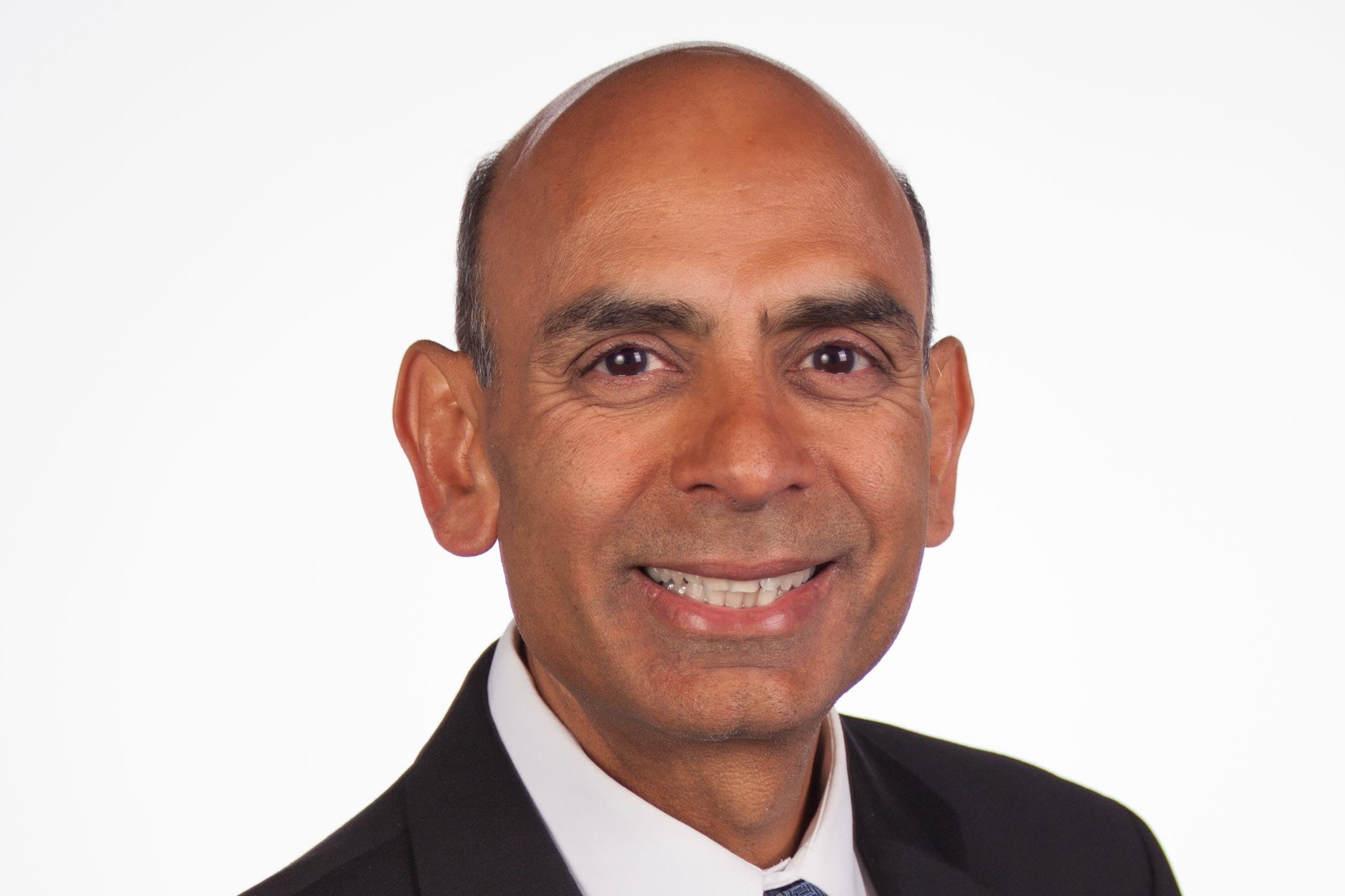
Satyen Sangani
CEO & Co-Founder, Alation
As the Co-founder and CEO of Alation, Satyen lives his passion of empowering a curious and rational world by fundamentally improving the way data consumers, creators, and stewards find, understand, and trust data. Industry insiders call him a visionary entrepreneur. Those who meet him call him warm and down-to-earth. His kids call him “Dad.”
Victor Dey on SaaS, control planes and context
Producer introduction to the AI Radicals episode with Victor Dey, AI and technology analyst and columnist for The Control Layer at The AI Journal, previewing the SaaS (software as a service) apocalypse debate, the AI agent control plane, and context versus permissions.
Producer: Welcome back to AI Radicals. Some of the best stories come from interviews that go off script. Today's guest went into a conversation with SAP CEO Christian Klein expecting to write about the SaaS apocalypse. He came out arguing the opposite. That guest is Victor Dey. Before he started writing, he was a data scientist building NLP and transformer models. Today, he writes the Control Layer, a tech column for The AI Journal. Satyen and Victor dig into whether the SaaS apocalypse is more myth than reality. They look at why the control plane for agents has become the most contested real estate in enterprise software, and they explain why context and permissions are two sides of the same coin, even though context is getting most of the attention. If you want a sharper read on which AI narratives actually hold up, this one's for you. This episode is brought to you by Alation. AI agents are only as good as the knowledge beneath them. Get it wrong and it shows up in production. Get it right with Alation at revAlation, coming to Chicago, London, and Sydney this fall, where data and AI leaders talk real measurable ROI. Save your seat at alation.com/revAlation.
Victor Dey, AI analyst for Fast Company, Forbes and The AI Journal
Victor Dey writes for Fast Company, Forbes and The AI Journal. Host Satyen Sangani, CEO of Alation, introduces him as a data science trained analyst who covers AI agents, cybersecurity and the funding behind enterprise AI announcements.
Satyen Sangani, CEO of Alation: Almost every big data company now claims its platform is the foundation for AI agents. What many of them concede is missing is context: knowing what the data means, where it came from, and whether an agent should be allowed to use the data at all. Few have heard this claim more times and for more companies than Victor Dey. Victor is an AI and technology analyst contributing to Fast Company, Forbes, and The AI Journal. He's interviewed the executives running all of these data companies, including me, and as they make their case really in real time. And he's covered this adjacent ground that most vendors would rather skip, areas like data science, cybersecurity, and a lot of the funding behind all of these announcements. Victor holds a master's in data science and analytics, and has therefore a practitioner's training, and also has written for VentureBeat, New York Observer, Entrepreneur, and also Hacker Noon. Victor, welcome to AI Radicals.
Victor Dey, AI and technology analyst: Thank you so much for having me, Satyen. Always a pleasure to chat with you.
From NLP research to technology journalism: Victor Dey's practitioner background
Victor Dey, AI and technology analyst, explains how his earlier work as a data scientist building natural language processing (NLP) and transformer models shapes the way he reports on enterprise AI.
Sangani: One of my favorite quotes about journalism is that journalism is the first draft of history. And on some level, as a journalist, you get to talk to all of these people, and you certainly get a surface level story from every one of the CEOs and major spokespeople at a lot of the firms that are breaking all of this technology that's happening right now. You have this vantage point. What perspective do you feel like you have or bring that gives you this longitudinal view that's different from what others might be able to see and feel?
Dey: As you mentioned, I have a background in tech. I have not only studied about tech, but I've also developed technologies. And before getting into writing, as a data scientist, I worked on AI research, developing AI models, working on NLP. At that time, models were called transformers. So I come from that generation and those years, and now we're talking about agentic AI and GPTs and whatnot. So working on NLP, working on transformers, I also worked for a major company who develops in-house assistants, in-house voice assistants and devices for voice assistants. And I learned a lot about how these models work and what the potential of AI is for the future. So coming from that background, not only researching but helping develop models and contributing to the architectures and whitepapers and whatnot, what it led to was that I could understand the behind the scenes of technology really well, especially what it takes to deploy a technology: how much work does it take, how much of a team size does it take. Given that background and given that understanding, I could easily understand the products, and where a CEO or a C-suite that I'm talking to, whether it be a software engineer or someone else, is coming from and what his perspectives might be.
Do AI roles now require a hands-on practitioner mindset?
Victor Dey, AI and technology analyst, explains why informed questions draw better answers from technology executives, and Satyen Sangani, CEO of Alation, argues that roles from sales to customer deployment now need a hands-on practitioner mindset.
Dey: I write opinions. So the most important part, and the part that helps uncover these insights, is asking the right questions. So given my background, I could ask the right questions and people would relate to them. Whoever's talking to me, whether it be a tech CEO, an engineer, or a VP of product, they could relate to these questions. Unlike, if you look at the way journalism is traditionally done, because I do not come from a traditional journalism background. Whatever I've learned, I've learned on my own, whether it be the writing styles, the flow, everything. But when you look at traditional journalism, the questions are kind of high level because, while they do understand a part of what they're discussing, they do not fully understand it. Right? So I think that helped me not only think about certain things a different way, but also understand technologies. Sometimes I'm doing stories on reports and white papers, so I can read reports and understand white papers and the jargon really quickly. So I think that helps ask the right questions, and when the person who's in front of you can relate to that question and feels that, "Hey, this is coming from someone who really, really understands what he's asking or what he's doing," I think the answers come out differently, and that does almost, I would say, sixty-five percent of the job. And then there's your perspective to look at and shape a few things.
Sangani: That speaks to, I think, not just the role of journalism, but a lot of roles in this moment. A lot of what we see even in sales roles or customer deployment roles, where general skills in the discipline or the domain might have been pretty useful to get by in a functional job. Now this practitioner's mindset and this ability to understand the texture both allow you to do the work better, allow you to understand and speak to customers better, and allow you to actually build better. So it almost feels like everybody has to have this tactile feel of what's going on in order to be able to make sense of it. Because absent that, it's all just very much skills and abstraction, which a lot of people can do, but the world is moving so fast, you actually have to know what's happening.
How do you separate AI vendor pitches from reality?
Victor Dey, AI and technology analyst, describes how he weighs vendor pitches against his own research, including continuously updated data dashboards and off-the-record conversations, when covering AI announcements.
Sangani: So you get lots of these pitches, and you hear a lot from a lot of different people. How often does the actual interview and the pitch change how you think about the world? And how often is it just actually touching and feeling the tools, and how do you weigh those two things?
Dey: I think generally my way of looking at things is the impact. What is the impact of this particular announcement, or the particular insight that the company's trying to tell? How far can it go, and what are the implications of it, whether for customers, consumers, or their partners? So I think the pitch helps shape, I would say, 20% of my perspective, which is the narrative. And then there's also my own research. Now with AI, it's become even easier to create dashboards, active dashboards where I'm pulling in data continuously. Whatever companies I want to keep an absolute focus on, they're just marked up. But you also get overall news and insights from the developments, and it just adds to this repository so I can visit it, whether it be stats, financial metrics, or anything else. So I've built that. So I have my own data, plus I'm actively talking to people, because I have this tight network. Often what happens is I get a lot of off-the-record insights as well that I cannot use for that particular story but are useful in another one. A particular CEO or someone reveals something but says, "Hey, this is off the record, so please don't use this." But it makes sense to keep that in mind and use it for another story. Now, sometimes you go into a conversation with a certain mindset, and the way the conversation comes out, it leads to a different direction. Right?
How an interview with SAP CEO Christian Klein reversed Dey's SaaS apocalypse angle
Victor Dey describes how an interview with SAP CEO Christian Klein for Fast Company turned a planned story on the SaaS (software as a service) apocalypse into an argument that the narrative is wrong, and why he prefers to interview executives in person.
Dey: And then there's this wow moment where you start banking on it and shaping it. Recently I had this discussion with Christian Klein, a story that I did for Fast Company. It's about everything that you heard about the SaaS apocalypse being wrong. My perspective when I went into talking to him was to understand the narrative on the SaaS apocalypse. But the way the conversation shaped up, it was me and him going further into the discussion, and we kind of went the opposite way from the coverage that was being done on the SaaS apocalypse at that moment in the market. People were writing about how AI agents are just disrupting, and it's going to just erode SaaS. When Christian and I discussed it, we were trying to explore, with every question and at every moment, that there's more to this story, and I think people need to know about this reality and where he's coming from. So we went the opposite direction on why the SaaS apocalypse is not happening. Right? So sometimes you go and think of things in a certain way, but the conversation completely changes, and that brings out a different flavor to it. And after that conversation ends and you go back to the writing pad, you think of it in a different way, and the angle and the flow and the structure of the story automatically shape up. So it's a beautiful thing. Plus, you also get a lot of behind-the-scenes insights. Often I meet CEOs in person and do my interviews in person when I'm in their city or when I'm at a particular conference. So you can see, if there's a product, their excitement about the product, their feelings about the competitors and what they think about the competitors, in real time, and those expressions. So I think that also helped me tell a lot of things about why a particular exec answered a certain question a certain way. And then if I feel that, "Hey, there's more gold to dig," you can cash in on it maybe a little bit more and try to bring more insights out of him, or go back to the writing pad, or while starting writing, you can explore more because at this particular question, he reacted very differently.
Is the SaaS apocalypse real?
Satyen Sangani, CEO of Alation, asks Victor Dey what changed his mind about the SaaS (software as a service) apocalypse, and Dey recounts SAP CEO Christian Klein's argument that history is repeating itself.
Sangani: Yeah, that's a really interesting vantage point, and I want to dig into your process because, on this question of whether things changed your mind, this example of the SaaS story is pretty interesting. You went into it with one point of view, and then you talked to Christian, and then things changed. So in this story, what was it that changed? Did you go in thinking that there was this decimation of SaaS that was going to occur? And what did he convince you of, and how did he convince you of it? I think in some ways your process as a journalist is the one that every person in this world needs, where there are so many claims, where there's so much change. How you navigate this and discern through information is probably something that a lot of people can pick up tips and tricks from. So what happened in that particular instance?
Dey: My thought process about not writing about the SaaS apocalypse was that when I was reading every story that was being covered, and looking at all the other coverage, the thing that struck me was, "Okay, everyone is saying this and that and making claims, but I think there's more to this story." I always felt that there's more to this story. And until and unless people who are living and breathing and developing these technologies at substantial companies, and especially CEOs who have a substantial market share, speak, they must be thinking something. So their perspective needs to come out, and it's very important, and I need to explore it. So when Christian came in, and he shared what customers are thinking, what he saw in the past and what he's seeing now, it was that history is kind of repeating itself. When the internet came in, people were saying a bunch of things, but now we are using the internet every day, and we can't live without the internet. Right? And similarly, when AI first came in, there was this threat to jobs and this and that and ninety-nine things. But now when we look at AI and we look at chatbots, it's a different take. Right? So he came in from that perspective, where he shared how, when a new technology comes in, there's this buzz about what can go wrong, rather than looking at the positives, how we can work around it.
Why are CEOs pushing back on the SaaS apocalypse narrative?
Victor Dey recounts the customer case studies and investor conversations SAP CEO Christian Klein shared, and the wave of CEO interviews that followed his Fast Company story on the SaaS (software as a service) apocalypse.
Dey: And I think when we started exploring that further and further, that just changed not only my perspective, but also brought out a lot of insights. He shared a lot of customer case studies and what his customers think, and what he's actively discussing with customers day in and day out, and his partners, and what he hears, and he's getting calls about the SaaS apocalypse, and what he's discussing with investors. So that outspokenness of his, and that fearlessness of "I'm going to speak my heart out, and I'm going to share everything that I know," I think that also gives you a lot of advantage, because sometimes you'll see CEOs hiding or being a little quiet because his or her PR team might not take it the right way. But he was outspoken, and he was like, "No one's speaking? I will speak." And thank God, right after that story blew up and did the rounds on the internet, I saw the next week a wave of CEOs giving out interviews to CNBC, going out on podcasts and speaking and saying that this is not the complete perspective and this is our take. And people coming out and supporting it. And that led to the story being shared more, and the positivity came back rather than people just talking about the negative things about agentic AI. So yeah, that's what happens when you are open to share what you really feel.
Sangani: Yeah. It's also amazing that, obviously there are the facts on the ground, but in this case, Christian's personality and his conviction and his forthrightness and his being unfiltered had a large part in it. There was a lot of subjectivity in your absorbing his message and deciding whether or not that was something you wanted to report on, but also what perspective you wanted to offer on top of that. And so in a world where information seems like it's almost free, that class of information, that subjective assessment, is still really prized and valuable.
Why software vendors are racing to own the AI agent control plane
Satyen Sangani, CEO of Alation, asks Victor Dey what a control plane for AI agents is, and Dey describes why vendors are building orchestration products while partnering with competitors. Alation outlines its own approach in the Alation Intelligence Operating System (AIOS).
Sangani: Maybe moving to a separate topic, because you talked about SaaSpocalypse, but there's another new term that is now coming up in the world, which is this idea of a control plane for AI. And a lot of people are talking about it. Many people are trying to claim this ground. Talk a little bit about what this is, and how you see this market evolving. When did you start seeing it evolve? And tell us a little bit about what this control plane is and why it's so top of mind nowadays.
Dey: To explain it simply, and I'll keep this simple and not get into the technicalities of it, really it's about whoever controls the data gets the market share and does well, basically. Every other vendor is now developing their own products, orchestration this, orchestration that. And while everyone has their own products, they're also partners with their competitors, which is interesting to see, because at the last conference that I visited, I was talking to a CEO and he announced an orchestration product where he was pitching a competitive product, but he's also a partner with a company that is a leader in the market and also their competitor, on the same product. So I think that has become a really interesting narrative to see in the market. And I asked him, while this company is your competitor and has a similar or a contemporary product, you're still partners with them. Have you guys figured out that there's enough on the table for everyone to eat? And the answers from everyone, whether it be that CEO that I was talking to or others who have this control plane product, is: look at the numbers, look at our market, look at our customers, and we are the best. So who's the best, I think time will only tell.
Why do AI agents need governance, observability and guardrails?
Victor Dey explains why governance, observability and guardrailing have become central to the control plane as AI agents move from chatbots to task-specific agents handling sensitive enterprise data.
Dey: But yeah, with the rise of agents, this control plane, whether it be governance, whether it be observability, whether it be analysis, whether it be guardrailing, has become really, really important. And agents are going berserk, and agents are growing. It started with a chatbot use case, where it was conversational AI, but now it's agentic AI and agents on particular tasks, agents that can perform particular functions. And now there are tools and there are models and there are ways to create more agents for everyone, even the general public as well. The accessibility has increased. But from an enterprise perspective, when you're talking about sensitive data, it becomes really, really important to govern and orchestrate these agents for the perfect outcome. So everyone now wants to bank on it, and every other company has a control plane or a control tower or an orchestrator, competing with each other. And it's an interesting thing to see that competitors are collaborating, but they also have their standalone products, and everyone says they're the best. But what I try to do is uncover the best insights and let the readers decide, because my reader base is mostly the market makers, the people working in technology or people from a particular industry where AI is being implemented. So try and test it, and if the numbers excite you, go with the numbers. If the numbers don't excite you, read the conversations that I'm having and decide for yourself.
The case for an enterprise AI agent control plane, and the evidence so far
Satyen Sangani, CEO of Alation, questions how a single control plane could cover every AI agent in an enterprise, and Victor Dey points to the Hugging Face incident as an example of what can go wrong without one.
Sangani: It's a really interesting construct, this idea of a control plane, because the premise of it is that an enterprise has a single place to control all of the agents within its four walls. One idea is that obviously if you're the vendor that controls the control plane, then that theoretically should give you quite a bit of strategic advantage in upselling or cross-selling products and understanding and owning that customer's agentic landscape. Equally, it also sounds like a pretty hard thing to pull off. Which agents are part of the control plane? When are they not a part of the control plane? How do I even know what the agent is going to do? How do I control for what controls I give it? Is there a lot of evidence that this is going to exist, and do you feel like this is something that you believe in deeply as a construct that will exist? How do you feel about it as something that enterprises should be investing in?
Dey: I mean, of course, given the enormous amount of data and the enormous amount of interaction that is going on with agents, and the implementations even. Right now, if you look at the market, every product that someone is selling, every software or every architecture that someone is selling, has AI agents, and AI agents have become the buzzword. In the beginning, I still remember when the word agentic AI came in, people were like, "What is this? We need to understand." But the adoption and the understanding around the market has grown so quickly. It's just fascinating to see. And a lot of these vendors are also helping their customers understand because, in a way, they do want to sell products, but there's also... When I look at it, I see that there's good and there's bad to it. Recent incidents, if you look at them, we've seen what happens when agents go berserk, like the Hugging Face incident. Right? When you don't have a substantial control plane, or you try to fiddle with it too much, what can happen. So I think the importance is really there of this layer, because with the amount of interaction that is happening, I can only look at it from an outside and an observer perspective.
Why are so many enterprises still stuck in AI pilots?
Victor Dey says enterprises remain stuck in AI pilots, with return on investment (ROI) clearest for large companies, and expects real adoption metrics in about a year and a half to two years. Readers building the business case can see Alation's view on enterprise AI strategy and ROI.
Dey: Now, everyone has numbers. Everyone claims to be something. But I think it will take a year or two more, because on the other side, you still see customers and people stuck with pilots. You still see customers in business trying to figure out what this product really is, and the particular product they're using, they're still struggling with it. Or many are still figuring out how to step into digital transformation and how to completely implement that digital transformation. Right? And if you look at the ROI stats and everything, of course, for bigger enterprises, it definitely does make sense, and a lot of use cases and case studies are coming out of them because of the amount of data that they have and the amount of interactions and everyday use cases that they have. But for midsize, and of course SMBs, it is currently not in the consideration of these vendors, as they say. I think it'll take a year or two more to see the complete effects of it and what the adoption has been and what has come out of it. Because right now, every day there's a company saying, "We've achieved this with agentic AI and AI agents, and we've been able to orchestrate," but there are also reports that come out that say the opposite. You'll see reports of agentic AI incidents happening. Recently I did a piece on a report that says that on an average of fifty-seven incidents due to agentic AI are happening due to governance not being right, or guardrails not being set in a proper way, or the agents not doing what they're meant to be doing and orchestrating in a certain way. So I think it'll take time. What we see is just the early phase of it. But the real, substantial impact, I think a year and a half or two more, and we'll get to see the real metrics. And when it happens around you, you know what's going on.
Producer: We're brought to you by Alation, the data intelligence platform trusted by 40% of the Fortune 100. Here's the problem they solve: your catalog helps people find data, but it doesn't actually deliver business outcomes. Alation's data products marketplace changes that. Teams can build governed, AI-ready data products in a single session using plain English, no code, no SQL. And business users can literally chat with the data to get trusted answers. Governance is baked in, not bolted on. Want to see how it works? Grab the free data sheet at alation.com/data-products.
What should enterprises fix first to get value from AI agents?
Satyen Sangani, CEO of Alation, asks Victor Dey where practitioners should focus now, and Dey answers that data transformation and the context layer come first, since even leading models from Anthropic and OpenAI misread simple requests. Alation's AI-ready data checklist offers a practical starting point.
Sangani: I guess in that world where on one level there's a lot of hype, and on another level people are still not really talking about all of the challenges, and equally that they're not getting things into production, navigating this reality, how do you think about it? Where are the near-term problems that have to be solved? Where do you see a lot of actual work getting done? Where is the actual practitioner at this moment, and what are the things that you think are critical to get right, right now?
Dey: The absolute basics have to be the data transformation, and the amount of data for context being available, and having that layer of context that the agents really require for the full outcome. If you have the right amount of data and the right size of data, I believe that people who already have that will achieve the right outcomes in the near future. But for people who don't have the right amount of data, I think it'll still take some time for them to see something fruitful come out of their implementations. Right? Because let's say simply, we talk about model prowess, and we talk about AI models' contextual understanding. But often, even if you go to the best of Claude's models and the best of ChatGPT, OpenAI's models, sometimes for the simplest of requests, it won't completely understand what you're trying to say. Right? So models are powerful, but not that powerful. And sometimes for the simplest of things, or the simplest of questions, or the simplest of searches, you'll see vague outputs coming out. Right? So I think as models develop and move toward this phase of superintelligence, where in one go it understands what you're really trying to achieve, until that happens, and then there's also data, there's still time to see what we really want to see.
The AI agent failure stories journalists should be covering
Satyen Sangani and Victor Dey discuss sensational AI stories such as the Hugging Face incident, and Dey says he wants more coverage of failed enterprise agent deployments and cases where an agent was denied a task.
Sangani: Makes complete sense. And I guess in this world, as a journalist, you're oscillating between truly trying to understand what's going on, and then there are also these sensationalist stories. You mentioned the Hugging Face incident, which obviously lights up a whole bunch of people's imagination. And then this week there was this Anthropic employee, ex-OpenAI employee, who comes out and says, "10% chance that we're going to eliminate humanity with all of this AI." On one level, you have to cover that because that's sensational and that's a story, and all of the light goes in that direction when somebody says something that's so story-worthy. And on the other hand, you're actually trying to understand what's going on underneath the hood. Are there stories that you believe aren't getting covered? Are there stories that you feel should be getting more coverage but aren't? As a journalist, are there things that you think about that you feel the world needs to talk about more than it is right now?
Dey: We always talk about what agents have achieved, and companies talk about cases where their agent was successful. But I want to hear about times where their agentic implementations failed, or a particular agent was denied doing a particular task. Who denied it? What happened behind it? I think those real-life incident, case study or use case stories need to be explored more. And this is just one example. I think there's more. And I don't think it's just topics, I think there are domains as well that need more limelight.
Why do AI and data topics only get attention after an incident?
Victor Dey says quantum computing and data governance both drew little reporter attention until incidents and product launches changed that, and argues that topics tend to get coverage only after something big happens.
Dey: I was one of the few who was covering quantum computing. Now, it's a complicated domain, and it's hard to boil it down and make the reader understand what a qubit is. But I started four or five years ago, and there were only a few authors covering quantum computing and speaking about the implications of it. And now I see that quantum is at a certain level where we talk about the importance of quantum for AI and data processing, and how it can be a great technology that powers the future of AI. So I'm very happy for how the domain has grown. So there are certain domains that people or reporters or houses did not pay attention to. And likewise, even data orchestration or data governance, governance as a topic. I think it was unexplored before, but now when incidents happen and a lot of things happen, people started talking about it more, and we saw more products coming out around data governance, or guardrailing products or orchestration products. There are always certain domains and certain topics that only start getting attention once something big happens.
How incidents and AI chatbot traffic change who reads governance coverage
Victor Dey describes how older data governance stories he wrote regain readers after incidents, and how chatbot and AI agent traffic to his articles is growing but cannot be measured by name.
Dey: I'll tell you that this happens with my stories as well. Let's say I covered a data governance story and a CEO's perspective on it or his product on it. It would do good rounds and a good amount of views. But when something goes wrong, I see people coming back and revisiting that story from two weeks ago, and all of a sudden it has forty thousand more views because this happened and it caught people's eyes and attention. And these days I see a lot of views coming in from chatbots and AI agents and whatnot, which have no name and are non-measurable, on my personal tech segment as well as on a few publications that I cover for. So I think that also is a good thing that happens: something that was covered, and in the beginning when people re-read it, people were like, "Yeah, it's fine. Yeah, whatever." But when something wrong happens in that same domain or about that particular topic, now people start reading about it more and trying to understand it more. So I think if you're reading something and trying to understand something, it's also important to have it in consideration and at least try to understand it completely while you're reading it, rather than coming back to it again because you saw something pop up on your post timeline, on your LinkedIn or somewhere else, and you saved it for read later and are revisiting it. I think that gives you a better advantage. And when you read something about a particular topic in the future, you can understand it in a better way.
Do AI chatbots favor long-form articles?
Satyen Sangani, CEO of Alation, asks Victor Dey how AI agents as readers change journalism, and Dey says chatbots such as ChatGPT, Gemini and Claude favor long-form articles like his 1,200 to 1,400 word columns.
Sangani: And I guess agents have this ability to recall all of this information arbitrarily, and if agents are the ones that are reading, that obviously means that you've got this different consumption point. Is there any difference in writing for agents, or do you think the world of journalism changes in writing for agents? Have you changed any of your reporting as a result of seeing this agent traffic in your articles, and do you think it changes how you think about what you write about, or where you write, or the content of what you write?
Dey: The one good thing that has happened with people now going to ChatGPT or Gemini or Claude and searching is that these AI models love long form, and I have always been writing in long form. People made their stories shorter and shorter. I kept my 1,200 to 1,400 word length, and I think that has worked wonders for me because these chatbots pick up long form. So I keep an eye on it actively, and even more now that I have The Control Layer and I'm producing my own segment. So I'm even more sensitive about what's going on in the search bar: what keywords are triggering, and why they're triggering. And after I publish something, I look and say, "Okay, I put this keyword in the title, and so when I search in ChatGPT, this link comes out or that link comes out." Let's say I wrote about a particular company just a day ago, but you search on the chatbot, and the first link that appears is from the older story that you covered about the company. So even that happens. So I think it has both good and bad. These models love long form, but then the thing that happens is, while people understand, and there are readers, I have a good and substantial amount of readers, touch wood, who read all my stories from the start to the bottom.
What happens when AI chatbots summarize your original reporting?
Victor Dey describes the trade-off when AI chatbots summarize his reporting: better visibility in search, but uncertainty about whether readers absorb the full insights.
Dey: But there's also a readership that I see coming in which has a really, really short patience level. And they would go to the chatbots and just ask them to maybe tell the top five points from the story or something like that. And when you go to Gemini or Claude or another chatbot, it gives you this one-paragraph summary where you have put in all this hard work, and there are a lot more insights when you open the link. So I think that as well happens, and the good thing is that you're popping up on these chatbots all the time, and your SEO is getting better and better on your name. But then there's also this fear in my mind that, hey, is this information completely reaching the audience? Are they reading it fully? Are they reading it half? You don't know. So you're in a catch-22 all the time.
Sangani: Yeah, you don't know which points of what you've made are getting taken in the right context and how people are going to be able to read it.
Dey: And sometimes there are hot takes in the story. Right? When you're writing it, you feel that, "Ah, this is such a good line, and when the reader reads this, it would just blow their minds, wow, what a line." But sometimes that happens, sometimes that doesn't happen. So that's also another good and bad about it.
Is context for AI agents a passing buzzword?
Satyen Sangani cites Sanjeev Mohan's view that context is the descriptive metadata the data world has discussed for years, and Victor Dey explains why context is the backbone of how AI agents behave. Alation covers the distinction in metadata versus context for AI.
Sangani: Let's double back to context. This idea around context seems to be the new word. About 15 months, 17, 18 months ago, context was a word in the vocabulary, but now it seems like it's the word in the vocabulary. Everybody's talking about how AI needs context. And then there are other folks in the ecosystem who say, "Ah, context is kind of the stuff..." Sanjeev Mohan is very forward about saying, "Context is kind of like the stuff that we've been talking about for years in the world of data. It's basically just descriptions about the data, what's right, what's wrong." Do you think this context stuff is a flash in the pan? Is it something that people will be talking about for the next three to five years? What's your view on this current moment, and how much airplay this word is getting, and what the implications are going forward?
Dey: If you look at it, and if you want to understand how an agent works, it's all about context. Right? It needs to have the right understanding from the right data and from a clean source, and the right amount of data. Without it, it might not act the way that you want it to. So that context, we now call it the context intelligence layer. That is really important, this layer that helps it understand, because the basic definition that all the software engineers and data scientists and whoever's in software talk about is garbage in, garbage out. Right? It needs to have the right amount of insights for it to understand what you're trying to achieve. So it's really important. It's definitely the backbone, especially with the rate of AI agents going berserk.
Are permissions as important as context for AI agents?
Victor Dey argues that permissions, meaning a record of what data an AI agent touched, what it was denied and when, deserve equal attention to context, and Satyen Sangani frames the two as sides of the same coin. Teams evaluating tooling can review Alation data governance.
Dey: But what I think is more important than context, or equally important as context, is also permissions. What data did it touch? What points did it touch? Was it denied, or was it told not to perform certain actions? If not, who did it? At what moment? I think that is also a really important thing, that people bank more on context rather than on the permission, this permission control layer. I think that needs an equal amount of light. But a lot of big tech and a lot of companies have banked on, "Hey, we help you create the best context intelligence layer, so come to us." So that has been a buzzword, that has been a selling point, definitely. And people do think that, which is right thinking: "If I don't have the right context intelligence layer, I might not get what I want to achieve." But there's also the equal importance of permissions and guardrailing and observability and transparency for what the agent touched, what it did, why it did it, and on what data.
Sangani: There's sort of two sides of the coin, which is that if you're trying to light up an outcome or a use case or an agent to go do something, the agent needs to have appropriate context and I guess similarly, it also needs to be able to act within certain boundaries and not do the wrong things. And those are two sides, on some level, of the same coin.
Dey: Same coin. Yeah. It's basically like telling a child. Right? That you know this, but you can't do this no matter what happens.
What will happen to enterprise AI adoption in the next 12 months?
Satyen Sangani asks Victor Dey what happens to enterprise AI adoption over the next 12 months, and Dey says that despite posts claiming artificial general intelligence (AGI) has arrived, current models still need follow-up prompts.
Sangani: Right. Talk about maybe a year from now. Obviously, you're in the business of calling what's happening, and you're not in the business of prediction. But on some level, with these long-form articles, you're trying to understand what's going on in the world, and by analyzing something, you're also forecasting what may be. So we've talked a lot about enterprise adoption, and I think the general view around enterprise AI adoption is that it's going a little bit slower than people would have forecasted. What do you think is going to happen in the next year? Do you think it accelerates materially? And where do you think we stand in twelve months from now as you look ahead and think about where we're going?
Dey: I think with the amount of innovations, or trying to achieve innovations, and this everyday battle of being the best that is going on among model developers, I think there's something big definitely going to happen. Right? Like right now we see Astra, which is making big rounds, and it is a substantial model. I got to try it and it is fantastic. I saw a few recent posts where people say that AGI has arrived, or this is AGI, this is what AGI meant. I think we are not there yet. I think the models still fail on the basic contextual understanding and understanding your emotions completely. Up to a certain level, yes, seventy percent yes, but not a hundred percent. You still need to type a second or a third prompt. So I think the day these models come in and do everything in just one go and just figure it out, because these models are doing guesswork in one way or the other, but the guesswork is so right that they just figure out everything in one go, I'm looking forward to that day. Hasn't arrived yet.
How fast will AI products and architectures grow next year?
Victor Dey forecasts at least 20 percent growth in AI products, architectures and software innovation over the next 12 months, citing AI fighting AI in cybersecurity and the broad public access to AI that tools like OpenClaw created.
Dey: But I think over the next year and over the next twelve months, with the rate of innovation and the amount of innovation happening every other week, every other month, we see something new. I think there's definitely going to be something substantial, and a substantial amount of change in the market. At least a twenty percent growth in products and a twenty percent growth in architectures, a twenty percent growth in software innovation at least, is what I'm expecting over the next twelve months. We might see completely new architectures that come out, whether it be in cybersecurity. Now we're talking about AI fighting AI. I think it's going to go to the next level with the proliferation of AI that has happened, and AI now available to anyone and everyone on a twenty-dollar subscription or a sixty-dollar subscription for them to try it out and play and be a part of this playground and create their own things. Like, OpenClaw was such a sensation. Right? People created so many things out of it. Even the general public got access to a flavor of AI and what AI can do and the power of AI. So I think that proliferation, and even the general public's understanding of AI, I think it's going to lead to, at least what I'm expecting, a twenty percent growth in all domains.
How close are we to autonomous AI assistants?
Victor Dey expects a glimpse of more autonomous AI assistants within 12 months and calls for more collaboration among competing vendors. Teams building their own agents can explore Alation's Agent Studio.
Dey: We might see something new coming out. Of what I know, I cannot reveal. I know a lot of things, but I cannot reveal them because they're off-the-record things. But we might just see autonomy at a different level. I think a lot of companies, and I've been a part of a lot of demos, are just fascinating and fantastic. And Astra is just the start. If you know JARVIS from Iron Man, which is Iron Man's personal assistant, I think at least a part of it, at least 25% of it, or at least a glimpse of it, we might see in the next 12 months, with what's going on behind the scenes and what I know. So I have high hopes and high expectations, but equally there are still problems of expectations versus reality, which the whole ecosystem needs to solve and needs to come together on. It's great to see that sometimes competitors are coming together to solve a particular problem to help out people and help out the ecosystem. And I think we need more of those collaborations happening, rather than just saying, "I'm the best," or, "You are the best." But while being the best, also collaborating and coming out and developing for a better future and for a better ecosystem that makes money for everyone and anyone.
Where to find Victor Dey's work
Victor Dey says readers can find his work at Fast Company, Forbes, LinkedIn and The Control Layer at The AI Journal, which is moving from text to video.
Sangani: Super interesting. Well, Victor, thank you for all of your observations and for obviously your ongoing work and writing. It's been a phenomenal conversation. And where should people go to find you?
Dey: Just Google me. I publish stories every week, every other day on Fast Company, Forbes, and of course my own tech segment, The Control Layer. We have started it on text. We're moving to video soon, by the start of next year. And hopefully more on LinkedIn. I'm an active guy on LinkedIn, and I post almost every other day about the work I'm doing or my thoughts. So yeah, LinkedIn and Fast Company, Forbes, or The Control Layer by Victor Dey, AI Journal.
Sangani: Brilliant. Well, thank you for joining us on AI Radicals. It's been great to have you.
Dey: Thank you. It was always a pleasure to talk with you, and this was a great conversation. And thank you so much for making me a part of this segment. I think we had a fantastic conversation, and I hope this is the first but not the last that you see me on this segment. So thank you so much for having me.
Sangani: Definitively not.
Recap: Why permissions matter as much as context for AI agents
Producer: Everyone wants to talk about what AI agents can do. Far fewer want to talk about what happens when they get it wrong. As Victor points out, context has become the buzzword everyone is racing to claim, but he argues that context is only half the equation. Permissions, knowing what an agent touched, what it was allowed to do, and where it was stopped deserve just as much attention, and right now they're not getting it. More broadly, the hype in enterprise AI is still running well ahead of reality. Companies are still stuck in pilots, and the stories that matter most, the ones about failures, guardrails, and what actually works in production, are the ones getting the least coverage. AI agents may well reshape how enterprises operate, but understanding what's underneath the announcements is the only way to know what's real. Thanks for tuning into AI Radicals. See you next time.
Producer: A word from our sponsor, Alation. Here's a stat that should give every healthcare data leader pause. 80% of organizations have deployed AI in some form, but only 11% have achieved it at scale. The bottleneck isn't models or compute, it's the data underneath them. In healthcare, that's especially high stakes. Ungoverned data doesn't just slow down your AI program, it can introduce bias, expose patient information, and produce outputs clinicians can't trust or act on. Alation's new white paper, produced with Healthcare Information and Management Systems Society, pulls from real implementations from Children's Hospital of Philadelphia. It covers what AI-ready healthcare data actually looks like, how to build data products that accelerate clinical AI, how to govern for HIPAA compliance without killing innovation, and a practical roadmap for going from pilot to production. If you're building AI strategy in a health system, this is one to read end to end. It's free at alation.com/ai-healthcare.