Season 4 · Episode 9
Data Products, Not Platforms: A CDO’s Playbook For The Agentic Era

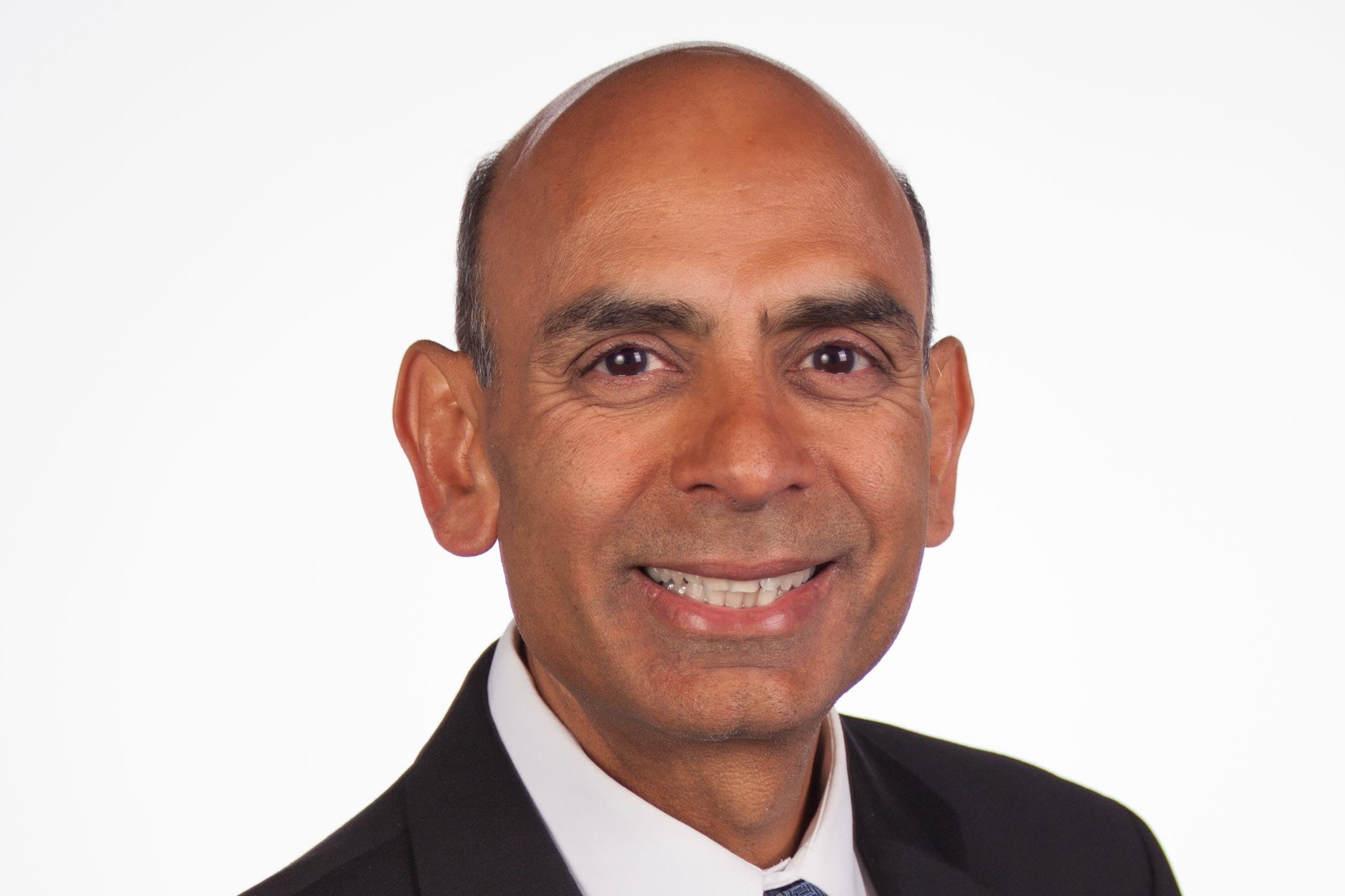
Cara Tice
Chief Data Officer, Early Warning Services
She's built data governance programs from scratch at T. Rowe Price, LPL Financial, and Silicon Valley Bank, and now leads data strategy for a real-time payments network moving trillions of dollars a year on fraud intelligence built from consumer data.

Susan Wilson
Field Data and AI Strategist, Alation
Susan Wilson is a transformational data leader who aligns enterprise technology with strategic business goals. With executive experience at Alation, Collibra, Informatica, and Pfizer, she specializes in Data Governance, BI, and empowering high-performing teams to drive high-impact results.
Why the chief data officer behind Zelle calls herself America's data steward
Guest host Susan Wilson, a sales leader at Alation, opens the episode with the question she says every financial institution is now racing to answer: how do you make data trustworthy enough to bet the business on?
Susan Wilson, sales leader at Alation: [00:00] Welcome back to AI Radicals. I'm Susan Wilson, sales leader here at Alation, stepping in as guest host today, and I'm super excited about this one. My guest has spent her career on the front lines of a question every financial institution is racing to answer right now: how do you make data trustworthy enough to bet the business on?
Cara Tice is Chief Data Officer at Early Warning Services, the company behind Zelle, where trillions of dollars move through her team's systems every year. She's built data organizations from scratch at three major financial institutions, and transparently, somewhere along the way, she has become a dear friend of mine.
She calls herself America's data steward, and once you hear what her team is actually watching over, our information, our transactions, and fraud protection, it's hard to argue. We get into why the data catalog is really just a well-stocked grocery store for your data and AI ingredients, and why AI governance isn't some new discipline, it's data governance with high impact. If you've ever debated progress versus perfection when building out a data platform, this episode is for you.
Producer: [01:15] This episode is brought to you by Alation. AI agents are only as good as the knowledge beneath them. Get it wrong and it shows up in production. Get it right with Alation at revAlation, coming to Chicago, London, and Sydney this fall, where data and AI leaders talk real measurable ROI. Save your seat at alation.com/revAlation.
Wilson: [01:38] Our next guest calls herself America's data steward, and given the ground she's covered, it's hard to argue. Cara Tice has spent two decades sitting at the point where data risk meets data opportunity, first in online advertising, then inside three of the country's largest financial institutions, and now at the company behind Zelle. As Chief Data Officer at Early Warning, she leads the data strategy behind a real-time payments network moving trillions of dollars a year.
Before that, she held CDO roles at T. Rowe Price, LPL Financial, and Silicon Valley Bank, building data governance programs from the ground up and advising C-suite leaders and investors on data as a competitive differentiator. Cara, thank you so much for doing this, and welcome to AI Radicals.
Cara Tice, Chief Data Officer, Early Warning Services: [02:29] Thank you so much, Susan. It's a pleasure to be here, and I love to say that you're a friend, not just a colleague. You are. We've done this many times, so really excited to be here.
Wilson: [02:40] Yeah, I'm super excited about the conversation that we have coming. I've known you for many years, and just super excited about your career trajectory and the many accomplishments. So let's get started. I want to start with the title because it's one you gave yourself. When we were having lunch, you were saying, "I'm America's data steward." And I was like, "Yes, you are."
Tice: [03:02] I am.
What does data stewardship mean that data governance doesn't?
Cara Tice, Chief Data Officer at Early Warning Services, separates two terms practitioners often use interchangeably. Data governance is the policy and standards layer; stewardship is the active, hands-on custody of data as it moves.
Wilson: [03:04] What does stewardship mean that governance doesn't?
Tice: [03:08] I like to think that stewardship is a very hands-on, active role. It's not to debate the importance and the empowerment of data governance, which is about the policies, the standards, the capabilities, but we're also thinking about, how do we keep our data safe, secure, well-controlled, quality controlled? That's where I think the power of stewardship comes in.
And when I joined Early Warning, I'll be honest, like everybody else, we all know Zelle the payments company. You know it as going into your bank app. You're gonna pay your friend. You're gonna pay your cleaning lady. Whatever it might be, you have a payments capability, a real-time payments capability within your bank app. However, what I didn't know is that Early Warning is fundamental to fraud data intelligence, and that's the part where I feel like America's data steward because myself, my team, our entire organization is in care of your information.
We are running fraud intelligence models on your data, and that makes my role so much more important, and I connect to it so much more deeply because I've always been, if you know me, I'm always all about making sure we have good governance around our data.
Wilson: [04:38] Absolutely. In fact, I'll be Zelleing here very shortly a few ventures that—
Tice: [04:44] Excellent. I'm excited. Zelle only. We only do Zelle in this house.
Wilson: [04:48] We do too. We do too. And honestly, now that I know this, ever since our lunch, I think of you every time I submit my payment. I'm like, Cara's got me. Cara's got me.
Tice: [04:58] I got you. Yes.
Who does a data steward actually answer to?
Tice describes the personas in a data governance framework, where stewards sit, and why she considers consumers the real data owners.
Wilson: [05:00] Stewardship implies someone you're answering to. Who is that for you, and what does answering to them look like on a day-to-day basis?
Tice: [05:09] I always think that stewardship is really about making sure data is quality controlled, right? So we have data owners, we have data custodians. If you're building your data governance framework, you have all these different personas. The steward, which is something you can really easy understand, they're about the care and feeding of that data through the entire ecosystem.
So I've done frameworks where these data stewards sit at the system level, they sit at the process level, they sit at the domain level. The importance is you have a steward, right? At the end of the day, you have someone that is focused on the quality of the information that is flowing. And so to answer to, I really think it's like we're answering to the data owners, which is you and I, right? This is our information that is being shared. We wanna make sure that we have really tight controls around that information, and we're providing the best in class fraud intelligence back to our financial institutions.
So that's how I really feel about it. The fact that I've stepped into this role, this is, to use my son's words, this is the best low-key data job in the market. Early Warning truly is a data-centric company. I feel truly lucky to have stepped into this role, and it's very exciting to be there during such a great time around growth and capability.
What does governed data mean when the cost of being wrong is fraud?
Wilson presses on accountability to the consumer. Tice reframes governed data around enablement rather than control, which is the shift she says the AI era forced on data governance practitioners.
Wilson: [06:42] Yeah. I'd love to double-click into that a bit more, because look, in practice, the people that you're answering to, it's the consumer. It's me. It's everybody who clicks and taps on Zelle. And many of them won't have a pleasure like I do to meet you or think about the data that you have. Yet they're the ones that will eventually, that could suffer if something goes wrong. So what does governed data mean when the cost of being wrong, it could be fraud. So what does governed data mean?
Tice: [07:15] So I like to think about governed data through the eyes of enablement, right? So you could think about it as there's ownership around data, there's quality around data, there's a common language. That's how us data governance practitioners have always described governed data, but my thinking has evolved, right? Now we're in an age of AI, right? There is an absolute spotlight on everyone's data governance program with AI.
Has data governance actually changed in the age of AI?
Tice argues the discipline itself has not changed, only its purpose. Ownership, common language, and quality controls are the same requirements they always were; publishing data for use is the new job.
Tice: [07:47] It really is. AI eats data for breakfast, lunch, and dinner. Gotta be right. So I really think that governed data has evolved to how we enable data for use. That could be AI-ready use, that could be analytics use.
You know, AI's been around for a long time, we've just called it different things. Predictive analytics, business intelligence, machine learning, all of that is on the spectrum of AI. And so data governance hasn't really changed in all this time. We want data owned, we want a common language that this term equals that term, we want to have good quality controls to make sure that the data is accurate through the system.
And so what I really like to do is it's not so much about governance, I mean, governance is important, it's policies and standards, but it's how we publish that data for use. And then I get into data products and talk about data as a product. But that's how I see governance evolving, and I really think it's such an interesting time to be in data governance during this age of AI.
How do you balance speed and precision in real-time fraud models?
At Early Warning Services, fraud decisions happen in milliseconds. Tice explains the model development lifecycle her team runs, and names the cause of most data quality problems she has encountered: pulling from the wrong source. Continuous data quality monitoring is what catches that class of failure.
Wilson: [09:06] Yeah. Your consumers, where in the past was largely humans, now we've got AI and agents, and that usage pattern has just exploded in terms of the demand, which is super important, especially in your role. Which let's talk about that for a second. When you're dealing in business transactions that are milliseconds, fraud modeling needs speed and precision at the same time. Those can often fight. Where do they fight, and how do you handle that?
Tice: [09:41] So we have a pretty in-depth model development process in how we bring data in, it goes into our models, we apply features to those models, and then we return results. So we've got a very in-depth process that puts controls through the entire life cycle.
Where I really think it gets exciting is how can you start to build internal-facing data products for consistent reuse. That makes the modeling process easier, the product, the customer-facing product process easier.
At many companies, not just Early Warning, data is fragmented and it's in lots of different places. And oftentimes the issue around data quality is 'cause I pulled it from the wrong place. And like I said, this is everywhere. This isn't just Early Warning, this is absolutely everywhere. And so getting back to your question, I think it's really important to think about as you're developing models, as you're developing customer-facing products that may be data-driven, that you have good clean data behind it, and that's where data products comes in.
What is a data product, in the simplest possible terms?
Tice gives a deliberately unglamorous definition of what a data product is, and explains why embedding governance into the asset works better than asking people to comply with it.
Tice: [10:55] Data products creates context for data. At the end of the day, and this is how I like keep it real, real basic, a data product is all about tables and joins with context around it. You have an owner, you have quality rules embedded. A great product that can do that is Alation. It has a catalog, same thing.
It's got context, and that's where I think data management is really evolving. I've done data products at a number of different firms leading to now, and it's always been the strategy that everybody could understand that you're embedding governance into the data. You're eating the vegetables without knowing it.
Wilson: [11:41] And I love how you've described it, too. You're building in this knowledge layer. It's reusable.
Tice: [11:51] Yes.
Wilson: [11:51] You don't send not only your data consumers, but also the humans as well as the agents out in the wilderness to find stuff.
Tice: [12:01] Right.
Wilson: [12:01] And then you get these feedback loops because as the data product is being used, we're course correcting on some assumptions that either people are making or also agents. And so that importance in terms of the trust, it helps to accelerate, get that better, if you will, data outcome that you're looking for, that business outcome that you're looking for.
How do data products keep a data team focused on the customer outcome?
Tice describes the discipline a data product imposes on its builders. Reusable, governed products of the kind published in a data products marketplace are built against a stated business need, which she says is what keeps a chief data officer from disappearing into plumbing work.
Tice: [12:24] Absolutely. As a CDO or as a data steward, you need to be obsessed with the customer outcome. Don't lose sight of that. It's easy to lose sight of it when you are focused on plumbing and fixing this issue and that issue. You always kind of have to remind yourself of like, what's the bigger picture, what's the north star. That's really important.
And I think with data products, you become relentless about the customer outcome, 'cause you're delivering to a specific business need, you're creating more capability that is business-centric around data. When I think about the features that you would need for data science models, it's the same, right? Whether your consumer is a data scientist or is a commercial consumer, that data is used to make a decision, so you need to make sure that it's accurate.
Progress or perfection: how good does data have to be before you ship?
Wilson raises the tension every data leader manages. Tice splits the answer by audience, holding customer-facing fraud intelligence to a different standard than internal work.
Wilson: [13:24] Actually, this is a great point, because I wanna double click on another item here, which is progress versus perfection. Because your point is right. You got to focus on the outcome, but we could get trapped into going too fast or going too slow because we want it perfect before we release anything as a part of the data platform.
[13:54] Where do you land on that? What's your guiding principles in terms of how you think about releasing data products, releasing any solution in your environment?
Tice: [14:07] Well, it's certainly a spectrum, right? So in our environment, where a lot of my data scientists sits, it's very customer-facing, so we go through a lot of validation controls, a lot of that.
However, data's not perfect, and if you think it is, I could show you a thousand reasons why it's not. I've been at so many companies, and we've implemented so many data quality programs, and it just is the nature of data, right? It moves from system to system. If you've ever played the telephone game as a kid, you know that the message that starts and the message that ends is always slightly different, and it's off.
So I like to think, like, progress over perfection always, but when it comes to customer-facing deliverables, we do strive for perfection. We want to make sure that what we're serving as fraud intelligence insights is as accurate as our models can be.
Why is the CDO role so hard to hold?
Tice speaks directly to chief data officers who are struggling, and names the structural problem in the role: accountability without control.
Tice: [15:13] But I'll tell you, I've been on this journey for a long time. I've built the one data platform a number of times, and the journey's never perfect. If you're a CDO and you're listening to this and you're struggling, I understand your struggle. I've been there. The CDO role is not for the faint of heart. I know, Susan, we have had conversations about this, and you have seen me in many CDO roles, and it is a struggle because you are accountable for something that is not always in your control.
Feels a little bit of the definition of insanity, but I like it 'cause I'm a problem solver. But again, progress over perfection, you always want progress, right? But it all depends on the target. If the target is something that is customer facing and is commercial, you know that perfect needs to be perfect.
Wilson: [16:05] Yeah.
Tice: [16:05] But like I said, building data is an iterative business. Building platforms, iterative business. I hate the answer it depends, but it really is. It depends on what you're focused on.
Wilson: [16:20] Yeah. Not all data and outcomes are created equal, and there's gotta be a right sizing to all of that. It's like tale as old as time.
Tice: [16:29] Yes, exactly.
Should you buy one data platform or best-of-breed tools?
Tice takes a position on the monolith-versus-modular debate, using a Lego metaphor, and flags integration as the cost buyers routinely leave out of the comparison.
Wilson: [16:30] There's something that you covered that I want to make sure that we address. There's belief systems in the all-in-one data platform, or the best of breed, so the monolithic data platforms. Where do you sit with that these days?
Tice: [16:47] I think that the monolith is kinda gone away, and now it's about the Lego blocks.
Wilson: [16:54] Yeah.
Tice: [16:54] But you shouldn't have too many Lego blocks.
Wilson: [16:57] It's true. Yeah.
Tice: [16:57] This is where I do believe that we can sometimes get distracted with there's lots of solutions out there that can solve many different pieces of your problem. There's not one silver bullet. If I knew it, I would buy it, but there's no silver bullet. Data has many various capability needs, and so picking the best-of-breed solution is always a smart thing. But don't forget integration. Integration is a tough thing, and these tools have to integrate.
What's more important about the tooling is the change process around it.
Wilson: [17:32] The change management, right?
Tice: [17:32] The change management. Yeah.
Why does change management decide whether a data platform succeeds?
Tice names the end users a new platform has to reach: data science modelers, business users working through a catalog, and stewards working a queue of data quality issues. She says the change program is the investment most often underfunded.
Tice: [17:56] So when you think about you're gonna be implemented, say the monolith, we don't want the monolith. We now want more of a best-in-breed, best-in-class Lego blocks fit together for your data ecosystem. The most important thing that you can invest in is probably the change management program that's gonna surround it.
Think about the end user. You're gonna need to get data science modelers onto a new platform. You're gonna need to get business users to understand what data means through a catalog. You're gonna need to have data stewards that can actually work a queue of data quality issues that are coming in. So don't forget the human experience in all of this because it's still very human-centric.
Sure, could we roll out AI agents to do a bunch of this stuff? Absolutely. But for now, where we are at from a maturity standpoint, we're very reliant on humans, and so that is really important to remember is that there's an end user experience around this data platform and capabilities that you're building towards.
And I would say, given my experience and the many times I have built a CDO shop with a platform and products on top of it, every single time what gets us is the change management program, getting everybody on board, understanding how to use the tools. Getting value out of it. Measuring the value out of it.
What's the definition of done for a metadata project?
Wilson, who meets with roughly ten chief data officers a week, describes a common answer to "why are you cataloging everything?" Tice recalls debating the same question with CDO Allison Sargrave.
Wilson: [19:14] I'm so glad you said that. I literally meet with at least 10 CDOs a week, CDOs, business transformation leaders, and I tell them every time, don't underestimate the change management. Don't buy tools just for the sake of having tools. Really think about meeting your business consumers, your technical consumers, your analytics consumers where they're at.
And have this portfolio of outcomes that you're solving for. It's not a one size fits all. I still every so often get the, "My goal is to bring all of the metadata across Snowflake or Databricks." And I go, "For what purpose?" And what's the definition of done?
[20:00] Like what does success look like? Who is that person that's gonna leverage this single pane of glass? And the answers are, "Don't know."
Tice: [20:10] That's an interesting debate, and I have it with my CDO friends. And I remember having this debate, it was a couple years ago with a colleague of mine, Allison Sargrave. She's an amazing CDO. I hope you have her on this podcast.
Wilson: [20:26] I know her, yeah.
Tice: [20:27] And Allison and I were debating on the phone just casually. I was like, "Is the data warehouse dead? And are we just thinking about data products, and should we just be knitting those products together?" Because so many CDOs have the trauma story of putting all the data in one box.
Wilson: [20:49] I know, yeah.
How do you show data platform value to a CFO?
Tice explains why she delivers in vertical slices. Frequent, small releases of the kind described in this guide to building data products have outperformed the single-platform approach in her experience.
Tice: [20:50] And then your CFO comes and says, "Okay, you did your project. Where's my value?" And you're like, "Well, we have to do another program to get data out of the box." So that's why I'm a big believer in building in vertical slices.
Making sure that the value is of the utmost important, whether it's customer value or it's internal customer value, right? Delivering that frequently in small chunks is honestly the thing that has made me more successful than the long tail one data platform to solve them all. That's why I always start with data products. That's always a great place to start at any organization.
Wilson: [21:38] We agree. And I tell you, get those successes, 'cause you're gonna learn a ton. Don't wait three to six months before you deliver something. The business will have moved on. Seize those moments, right? Seize those moments and find them.
Producer: [21:56] We're brought to you by Alation, the data intelligence platform trusted by forty percent of the Fortune one hundred. Here's the problem they solve: your catalog helps people find data, but it doesn't actually deliver business outcomes. Alation's data products marketplace changes that. Teams can build governed, AI-ready data products in a single session using plain English, no code, no SQL. And business users can literally chat with the data to get trusted answers. Governance is baked in, not bolted on. Want to see how it works? Grab the free data sheet at alation.com/data-products.
What does a new CDO need to build from scratch?
Having stood up the chief data officer function at three financial institutions, Tice says exactly one thing gets rebuilt every time: the enterprise data strategy, anchored to a why-now statement.
Wilson: [22:35] You've mentioned multiple times you've been a CDO multiple times. You've stood up this function from nothing in some cases, or little something, but—
Tice: [22:48] Nothing. Literally nothing.
Wilson: [22:49] Yeah, literally nothing. Like literally nothing on a piece of paper.
Tice: [22:52] I had to hustle for every dollar.
Wilson: [22:56] There is a course on that, too. Yes. Like hustling for the dollars. 'Cause man, need it now more than ever. What do you rebuild every time, and what do you just say, "You know what? I'm never touching that again. Never."
Tice: [23:10] One thing that you get when you bring me in is you definitely get a refreshed enterprise data strategy. I take a look at the tale of woes around data, the multiple attempts, because there's always been another attempt before you.
And what I like to do is talk about in the data strategy that those were prior eras of work that we all learned from, and this new era is going to change. And that's where you have to just kind of write what is the step change for now, and really have a solid why statement. Why now?
Maybe the company's going through a big growth spike. Maybe they need to be more scalable. Maybe they're going from legacy infrastructure to cloud. There's always some kind of why that has brought you to the table to establish that data strategy. That's the one thing that I always bring in new, is the data strategy.
How do you get a new data strategy funded?
Tice on the funding question every incoming data leader faces, and why the absence of a burning platform changes the plan.
Tice: [24:16] Sometimes you need to evaluate some of the data assets and say, "That's good enough. We don't need a new thing. Let's just improve the current thing that we have." Because you're grappling with, as a CDO new in role, you're establishing a new data strategy. That data strategy has to get funded, and you need to be careful on how you do that, right?
You might have a burning platform, and there needs to be a lot of funding behind that, and you can plan for that. But there might not be anything. In some prior roles that I've had, I didn't necessarily have the burning platform. They brought me in to just run the teams and just build on the new capabilities, and that was okay, right?
Three CDO roles, three different data strategies: LPL Financial, Silicon Valley Bank, and T. Rowe Price
Tice walks through what each chief data officer role actually demanded, which is her evidence that the strategy has to be drafted against the business rather than reused.
Tice: [25:04] Each time I come in as a CDO, it's a different flavor of the same story. LPL was a lot about analytics. It was all about next best action. They were doing really cool stuff, serving data up to their advisors. SVB was about customer onboarding and transformation, and I learned a ton about product management through that role, right?
T. Rowe Price is all about investment and investment research, and that was a mix of data management and analytical capabilities. So I always got to learn something at each one of these roles, but I would draft the strategy around the things that are most important to the business. So that's what I would say is, what you bring in new is the strategy always.
When should you improve existing data assets instead of replacing them?
Tice describes herself as a pragmatic chief data officer and cautions against the reflex to rebuild. Prior eras of work, she says, deserve an assessment before a replacement decision.
Tice: [25:55] If you're in a CDO role and you don't think you need an enterprise data strategy, then maybe the CDO is not a role for you, because it is so fundamental. What I would leave, let live and leave, is maybe some of the data assets that just need some improvements, not an overhaul. Don't jump to the conclusion that you need a one data platform, right?
You might have it, and don't discount the prior eras before you until you take a look at it, right? I think that's kind of where I come in, is I'm a very pragmatic CDO. Rebuilding the same thing over and over again, that isn't the best way to go. Build the new capability that's gonna fuel business outcomes. That's what I would say.
How do you connect a data strategy to the company's OKRs?
Wilson and Tice agree on the approach a new data leader should take before selecting any tooling. Tice argues the chief data officer has to be able to replay the corporate strategy back to the business.
Wilson: [26:46] That's huge, and I know you too when developing out your strategy, it's one of the best things to do is act like a consultant. Go ask questions.
Tice: [26:54] Yes.
Wilson: [26:55] Understand the outcomes, understand the history, meet the company where they're at, and take them on your journey, on the company's journey when it comes to data maturity, versus let's start with the tool stack, call in my favorite vendors, let's go implement things.
Tice: [27:11] You can never have a favorite vendor, by the way.
Wilson: [27:13] Well, that is true.
Tice: [27:14] As the card-carrying CDO, you never have a favorite. You love them all equally.
Wilson: [27:19] That's right. That is correct. The thing is, it's just so critically important, 'cause it establishes that trust. 'Cause there is that, back to your earlier point, that change management. And so getting to know them, hearing them out, and then helping them on the journey, which is huge.
Tice: [27:35] Yeah.
Tice: [27:36] So the CDO needs to be able to replay your corporate strategy, your business drivers. You have to connect data strategy to the OKRs of the company. Otherwise, it doesn't feel relevant. It feels like a librarian exercise to catalog CDEs. And while that is important, and I'm speaking to all my data governance friends, very important, you need to connect it to the why. Why do we need to know where all these terms live, and how are they defined, and how does the business use them?
So I always like doing that and making sure people understand there's a connection to a bigger picture.
How do you connect data catalog work to business outcomes?
This is the grocery store analogy the episode is named for. Tice uses it to explain to non-technical stakeholders what a data catalog does: the data elements in it are the ingredients, and the catalog is the labeled store you find them in.
Wilson: [28:25] Yeah, that connective tissue's super important. But I will tell you, Cara, it's one of the most important questions I ask whenever meeting anyone who's responsible for whatever data platform, the data strategy, or, I'm in a product role, and so I'll ask them, "How is the catalog in your data strategy connected to business outcomes? Like, what are you solving for?"
It's surprising how many don't know, or it goes back to analyst productivity. And I think, okay, let's double click. Let's double click. Like why is this such a hard thing, right? Is it because they didn't learn it? Are they just don't have access and they didn't ask for access to understanding the strategy? Why do you think it's so hard?
Tice: [29:17] It's kind of opaque between how do I connect the day-to-day work that might be happening in a catalog to the actual business outcome of the company. And this is how I like to connect it when I talk to folks, is that the data elements that sit in your catalog, that's the ingredients to your meals, right?
You wanna have a lovely dinner party with really good entrees, appetizers, and desserts. And in order to do that, you need to know where the ingredients are. Sometimes you open up your pantry and it is desolate. Right? There's like cobwebs and—
Wilson: [30:01] That'd be a little scary.
Tice: [30:02] —dusty cans. And you're like, "Okay, we need to go to the grocery store." That grocery store is your catalog, right? You walk in, aisles are clearly labeled. You go down the aisle for the baking, and you can see all the different ingredients. You're like, "I know I need this. I need flour, I need sugar, I need vanilla." My husband would be very surprised that I know any of these things, as I am not the cook or the baker.
Unlabeled data elements are why analysts can't find good ingredients
Tice connects the analogy to a concrete objective, improving analyst productivity, and to the risk of an analyst using whatever they happen to find.
Tice: [30:29] But it's a great analogy, because the data elements, when not labeled, no one knows where to find them. And say I want to improve analyst productivity, which is not a bad OKR, right? I need to know where the data is. I need to know where the ingredients are so those analysts are using good quality ingredients versus something found in the back of your home pantry that you think is the right thing.
So I think that's the thing is you always have to create a message that really helps anyone in the organization understand the value of the work that you're doing in data governance, your data governance program, your catalog, and connect it to the bigger picture of like we are making these beautiful meals for our customers. We are making these beautiful products for our customers, and they're fueled with data. And good, clean data.
Does AI create data problems or just expose them?
Wilson puts the agentic question to Tice, who separates her personal view of AI as a productivity multiplier from her professional view of it as a spotlight on unresolved data risk.
Wilson: [31:29] Let's take that thought and now talk a bit more about AI and this agentic era, and being pushed more into the autonomous category, right? There's a lot of, there were still humans in the loop, and ensuring the agents aren't running rogue and all of that stuff.
But we're being challenged more and more to take a look at how can we make this more autonomous? So the data is at the core, right? AI doesn't create the data problems. It exposes them big time. What are some clear examples that you're seeing around that?
Tice: [32:13] So I'll give you some examples of what I've kind of seen over several roles. It's been very interesting, fun to be on the AI journey at many companies because everybody kind of takes it a different way. My personal belief is that AI is going to be an enabler for productivity everywhere, right?
Where is AI actually delivering productivity today?
Tice on her own use of AI tools, and the balance she tries to keep between offloading research and preserving her own critical thinking.
Tice: [32:39] It's gonna be your co-pilot. In my personal life, I probably use Claude and ChatGPT maybe a little too much to help me through my own problem-solving. I think there's a healthy balance. I think we should really continue our critical thinking and be making those decisions ourselves, but AI can supercharge the research behind a problem to solve, right?
I think that that is something that, and that's my own belief, right? And I think with AI, we haven't fully seen what the art of the possible is. It's continuing to evolve. And depending on the day, and if you're on LinkedIn, you'll see AI's going to ruin us, or AI is going to be the best thing that ever happened to us.
How much data risk management do you need before you use AI?
Tice, who calls herself the governance lady here, sets the precondition she thinks determines AI success: data risk controls that establish which data can be used for which use case.
Tice: [33:31] So it's a balance. I think you have to have a really good data risk management program in place in order to be the most successful on AI. And I hate to be the governance lady and quiet the excitement, but data is what feeds AI. It predicts an outcome based on a pattern. That's not new. That's been analytics for a long time.
So you have to make sure that you've got data risk controls in place to make sure that you can use the data in the right way for the right AI use case. But I also think we have to not completely close ourself off to opportunity as well. The more and more capabilities that come out can supercharge productivity, can enhance things where we weren't able to enhance before.
So it's an interesting time. I'll be very honest. I have conflicted feelings about it. I have a 16-year-old son. He's getting ready to look at colleges. We were talking last night, and I said, "Well, do you use AI at school?" He goes, "No. We don't use AI at all at school." And I was like, "Why?" And he's like, "Well, we have to do it ourselves." And so that's the thing. It's like there's a risk and a reward, and you have to balance it.
Why AI productivity gains are real but hard to measure
Tice separates the productivity tools already in wide use from the scalable agentic workforce, which she says Early Warning Services and many peers have not reached yet.
Tice: [35:18] I think that for us, and whether that's EWS or it's any other company out there, I think the productivity journey on AI, whether you have Claude Code internally or you have GitLab, Copilot, or you have ChatGPT internally, those are all great productivity tools, and the value to be measured is exponential. You'll never know how much time it saved you from creating a PowerPoint deck. You're not tracking that, right?
I think where it will be really interesting, and we're not there yet, as some other companies are, is where you use AI in a more scalable way, right? The AI agent workforce. I was lucky enough in my prior role, I got to spend time with a few vendors that are in this space heavily, and the art of the possible they showed us, we were like, "Sign us up. This is great." And so there's a lot of opportunity with the scalable AI and the AI agents. We're not there yet, but.
What controls does an AI agent need that a human analyst doesn't?
Wilson asks the implementation question directly. Tice's answer is that AI governance and data governance converge here, on ownership and context, which is the premise behind an AI operating system approach to agents.
Wilson: [36:01] More to come on that. When you think about those agents, what would need to be put in place? What controls would an AI agent need that maybe a human analyst wouldn't?
Tice: [36:13] Yeah. This is where I think AI governance and data governance really come together, right? I've spoken to a lot of my colleagues in the industry who've asked the same thing.
You have to have a strong data governance program, period. This needs to be implemented, like get it done. And you need to have data that's owned. You need context, context around that data. Data products is a great way to get that done. Having that is so fundamental to anyone's AI journey. You want to make sure you have a strong data governance program in place that's looking out for data risk, and that is a clear forum to debate the AI use cases.
And making sure that they are safe and they are the appropriate use of data in these AI use cases. I think that is so important. You don't wanna just run wild with this type of capability because you could inadvertently expose data in the wrong way, and once it's gone, it's gone.
Is AI governance just an extension of data governance?
Tice states her position plainly, then reaches back to robotic process automation for the cautionary precedent. Managing agents at scale requires the kind of inventory and oversight that agent development tooling is meant to centralize.
Wilson: [37:20] Absolutely. How are you thinking about AI governance?
Tice: [37:24] I think it's an extension of data governance, personally.
Wilson: [37:27] Me too. Yeah.
Tice: [37:28] I really do. I think it's just an extension, and I think it's more about, remember when RPA came out? I know everybody likes to ignore RPA. They're like, "AI agents." I was like, "That was RPA."
Wilson: [37:41] It's all done.
What does RPA sprawl teach us about managing AI agents?
Tice expands the acronym and the lesson: robotic process automation (RPA) deployments failed on inventory and oversight rather than on the technology.
Tice: [37:42] It's all the same thing. RPA, which is robotics process automation, which was your basic level of agent, there were many stories, horror stories from companies that implemented RPA, let those agents, all those RPA bots just go, and there wasn't a solid inventory or a center of excellence around managing those RPA automations.
I think it's really important that if you're embarking on AI governance that you have a strong center of excellence around AI agents and making sure that you have an inventory, you categorize them, you know what they're doing, that they can do one thing, can't do another. There's no reason to not have that when you're embarking on an agentic workforce.
Rapid fire with Cara Tice, CDO of Early Warning Services
Wilson closes with a short rapid-fire round on first-year mistakes, the bigger force in financial services, and where a new chief data officer should spend.
Wilson: [38:34] Yeah, couldn't agree more. All right, we're gonna do a couple of quick fire questions. Just what's ever first thing that comes to your mind, and then we're about to close.
What do new CDOs get wrong in their first six months?
Wilson: But rapid fire, one thing every new CDO gets wrong in their first six months.
Tice: [38:53] They rebuild something that's already okay. And they fixate on it. What got you to this new role is not what's gonna make you successful, right? So really think about what is gonna be your target when you're developing that strategy.
Will AI or fraud detection change financial services more in five years?
Wilson: [39:11] 100%. 100%. Okay, next question. Fraud detection or generative AI, which changes your industry more in five years?
Tice: [39:21] I mean, I'd have to go with AI. I think AI's gonna change every single industry. Every knowledge worker is going to work differently, so I really think AI is gonna be the game changer.
Wilson: [39:33] Yeah. Yeah.
Tice: [39:33] And it's gonna supercharge everything including fraud detection.
Wilson: [39:37] I agree. I agree. Under that whole umbrella.
Where should a new CDO make their first big investment?
Wilson: [39:40] Now, final questions. There are new CDOs. And let's even just say, maybe not even CDOs, new data and AI leaders.
Tice: [39:52] Yep.
Wilson: [39:53] Someone is watching this in their week one of the job. If a new CDO can make one investment in year one, where should it go?
Tice: [40:01] Fix a problem that has been plaguing the business. It's usually a data quality issue. Fix one. Like, fix it. Fix it, and fix it forever. You really got to find some quick wins when you're the CDO, and come in and nail it. It's hard to find sometimes because a lot of the problems are opaque, and big, and enterprise, but find one achievable problem and fix it.
Wilson: [40:33] What would you say the time duration? Fix it within...
Tice: [40:37] Three months.
Wilson: [40:38] Three months, yeah. Yeah.
Tice: [40:39] Three to six months, find a solution. The implementation solution may take a long time. It could. But nail the solution, plant the flag, show that you are here to help fix problems. I did this CDO first 100 days, what should you do, presentation at Gartner a few years back, and I really talked a lot about making sure you understand the business problems before you start to embark on the technology problems.
What's the one thing to remember about data and AI governance?
Wilson: [41:08] 100%. If someone remembers one thing you said about data and AI governance, what should it be?
Tice: [41:17] One thing I would advise is your AI governance is reliant on your data management program. So make sure you've got data governance up and running, you're in the process to mature it, because AI is gonna rely on your data management controls and the context you create.
How should the data leader and the AI leader work together?
Tice addresses the split many organizations have created between the data office and the AI office, and the convergence she is seeing in job titles. Her position is that AI governance and data strategy are the same piece of string.
Wilson: [41:39] I'm gonna double-click on this one, 'cause this is happening too, of seeing the data leader and an AI leader in their sometimes very different offices.
Tice: [41:48] Yeah. Yeah.
Wilson: [41:48] What advice do you have for those individuals?
Tice: [41:51] My advice is that you need to be joined at the hip. The data leader cares about the usability, the quality, the availability of data. The AI leader is caring about the opportunity, the productivity, the agentic AI, all of the predictive outcomes. It's the same string. It's the same. So my advice is to be very, very closely aligned, and have your data strategy speak to AI, and have your AI strategy speak to data. It should be all in the same.
And I see a lot of former CDOs evolving into this role of head of data and AI. So I can see how it's starting to converge.
Where should you start with AI: small and safe, or at scale?
Tice gives the advice she says she has repeated at multiple industry forums, then closes with what she expects of chief data officers as business leaders.
Wilson: [42:40] Yeah, for sure. What would be the one thing you want the audience to take away around this tension we're seeing, especially with AI pushing us from all different angles, on progress versus perfection?
Tice: [42:53] My one piece of advice, and I've said it at multiple forums, is when embarking on AI, start small, start safe. Don't go after the scalable AI use case first. Start small, start safe. Get wins. Test and learn. That's my biggest piece of advice with AI right now.
Wilson: [43:17] Yeah. Amazing. Any final comments?
Tice: [43:21] I have really enjoyed today's discussion. I always love talking about data and capabilities. My final thoughts are the world is evolving. If you're a CDO and you're listening, you have to evolve with it. You cannot just stick in your lane and keep your head down and build that one data platform.
You are a business leader, and you are enabling your company's customer outcomes, and you need to support that. So I'm pretty tough on my CDO friends, where I talk about you have to understand the customer outcomes because that's really what the company's there to do, and you're there to enable it.
Wilson: [44:02] Yeah. Cara couldn't have said it any better. America's data steward and a dear friend of mine. Cara, thank you so much. I really appreciate it. Thank you for your time.
Tice: [44:12] Thank you. All right. Thank you so much.
Susan Wilson's closing takeaway: one strategy, one string
Wilson closes the episode by restating the through-line for data and AI leaders.
Wilson: [44:15] If there's one thing to take away from this conversation, it's this. Your AI strategy is only as good as the data underneath it. Data and AI might sit in different offices today, but they can't live that way, not anymore. It's one strategy, one string pulling towards the same business outcomes. Your data strategy has to speak to AI, and your AI strategy has to speak to data.
And look, Cara's approach is a great model for how to actually run that. Skip the one monolithic platform dream. Build in vertical slices and make sure every investment ties back to a real business outcome. She's blunt about pace too. Find a problem worth fixing and nail it in less than three months, not because the platform needs to be perfect. It's because the business needs to move at the speed of AI, but safely.
I'm Susan Wilson, sales leader at Alation. Thanks for tuning into AI Radicals, and see you next time.
Producer: [45:17] Today's episode was brought to you by Alation. If you're in data or AI leadership right now, you've probably got a graveyard of pilots that never made it to production. You're not alone. MIT research shows only 5% of enterprise AI pilots from 2025 delivered real ROI.
The gap isn't capability, it's focus. Alation's agentic AI opportunity discovery guide is a strategic framework built to help you cut through the noise. It walks you through the six AI primitives, the friction meets value sweet spot for identifying the right processes, how to build your opportunity backlog, and how to use an impact effort framework to prioritize what to build first. There's even a five-step launch checklist to get your first pilot off the ground. The organizations winning AI right now aren't the ones with the biggest budgets. They're the ones asking the better questions. This guide helps you ask them. It's free at alation.com/ai-guide.