


Think about the last time your governance program passed an audit.
Somewhere in the weeks before that audit, someone on your team spent hours pulling evidence from three different systems. Someone updated ownership records that had drifted since the last review. Someone copy-pasted definitions from a policy document into a catalog field and hoped the two still matched.
And the audit passed.
The program looked mature from the outside. The evidence was assembled. The checkboxes were filled. But everyone who built the audit package knew what it actually was: a point-in-time reconstruction of a standard the organization had not maintained continuously.
That gap between what governance looks like and what it actually is has existed for years. AI is making it dangerous.
End-to-end data governance is a model where one declared standard is enforced continuously by the system, from regulatory intent through to the context an AI agent reads at runtime.
Why manual data governance fails when AI agents consume the data
Governance failures used to be recoverable. A stale definition gets corrected in the next quarterly review. An undocumented critical data element surfaces during the audit and gets added to the inventory. The cost was manual rework and the occasional regulatory finding.
AI changes the failure mode.
When an agent queries data, it does not check whether the metadata is current. It takes what is there and reasons with it. If the context it consumes is stale, incomplete, or ungoverned, the answer it produces is confident and wrong. And for a finance team closing the books or a compliance function preparing for an examination, a confident wrong answer is the most expensive kind.
Only 17% of organizations have deployed AI agents so far, but more than 60% expect to within two years — the most aggressive adoption curve Gartner measured across all the emerging technologies in its survey.¹ The surface area is still arriving as Gartner also expects at least 15% of day-to-day work decisions to be made autonomously through agentic AI by 2028, up from none in 2024, with 33% of enterprise software applications including agentic AI by then.³
And most programs were not updated when the agents arrived. In a Gartner survey of 1,203 data management leaders, 63% either did not have the right data management practices for AI or were unsure whether they did.² The manual governance program was not designed to cover that surface area.
This is not a technology gap. It is a structural one. The process-based governance model puts the entire burden of consistency on humans. When headcount does not scale with data growth, governance quality does not scale either. And it never did. AI just made the consequences visible faster.

How agentic data governance closes the loop between policy and execution
For years, governance leaders have pointed out this structural problem: the loop between intent and execution never closes.
A governance team can articulate exactly what trusted data means. They can document the standard, build the policy, and assign ownership wherever the org structure allows it. And then reality intervenes: stewards have a constantly growing inventory of assets to curate and six hours a week to do it. The quality standard set last quarter is outdated because the underlying data changed. The critical data element inventory that was complete in January has drifted by June; new data has landed that nobody has classified, and the elements already in scope need to be re-evaluated for freshness and re-attested against the regulations they support.
Nobody is at fault. The system was never built to maintain itself. (To learn how one customer tackled this, explore this story from CNA Insurance.)
This is what agentic data governance changes. Instead of governing through process and hoping humans execute consistently, you declare what good looks like and the system maintains it. Three capabilities work as a connected loop, not as point solutions.
Critical Data Manager identifies which data assets are business-critical and maps them to the regulatory obligations and business processes they serve. Months of cross-domain workshops become a single automated run. Large banks put the fully loaded cost of manually governing one critical data element (including stewardship, lineage validation, quality checks, regulatory documentation, annual attestation) at roughly $10,000 per CDE per year in people time, or about $2 million a year for an institution with 200 CDEs.⁵ Early customers of Critical Data Manager report saving three to ten days of effort per CDE annually — TPG Telecom puts it at five to ten days, and calls that conservative until automation is complete.⁶
Data Quality is not a second project you go stand up afterward. As Critical Data Manager identifies a critical data element, the system suggests the quality checks that element requires and lets you deploy them in the same motion, as identification and monitoring are one workflow, not two. From there, those assets are monitored continuously. Not a quarterly snapshot. A live signal from the same metadata foundation that powers discovery, lineage, and curation. When a quality standard is violated, the gap surfaces before it reaches an agent, a report, or a regulator.
Curation Automation closes the loop on the steward problem. Instead of asking a small team to hand-curate a growing catalog, you define what good metadata looks like once, in natural language, and purpose-built AI agents apply that standard, drawing on catalog context, source comments, query history, and your own field-level instructions to generate titles, descriptions, classifications, PII tags, and steward assignments, then reapplying it as objects change and new ones appear.
Stewardship changes: Every suggestion is previewable before it executes, anything a steward already filled in is left untouched, and every change is recorded automatically. Stewards review proposed values rather than authoring from scratch and chasing drift.
Curation Automation, CD Manager, and Data Quality run on shared catalog context:
CD Manager sets which data is critical and what standard it must meet
Curation Automation carries that standard into the metadata
Data Quality monitors whether the data holds up.
Stitch that together from disconnected products, and you get three places to configure one standard and three chances for it to drift. Declare it once, and the work scales with your data instead of your headcount.
What governed context means for AI agents
End-to-end governance used to mean: from regulatory obligation to certified data. That definition is no longer complete.
Agents need more than certified data. They need governed context: what the data means within a specific business process, which policies apply at the point of consumption, which documents define the rules the agent is operating under. When that context layer is missing or ungoverned, the agent fills in the gap with whatever it can find.
The confident wrong answer follows.
At revAlation this September, we extend the governance loop to cover this layer.
Ontologies bring policy-aware context to every agent interaction. Continuously updated, scoped maps of how data, metrics, and policies connect within a specific business process. When an agent reasons over a process, it reasons over a governed, versioned structure built on open standards. Policy constraints are enforced at every interaction, traced back to the source policy.
This is not an Alation-only preoccupation. Gartner's 2026 Hype Cycle for Agentic AI places agentic AI governance, agentic AI security, and context graphs on the curve alongside the agents themselves — oversight is showing up early in the adoption cycle, not after large-scale deployment.⁹
The same principle extends to unstructured knowledge. Compliance policies, standard operating procedures, manufacturing manuals: these documents define how the business operates, and agents consume them constantly. When that knowledge exists outside the governed catalog, it becomes a shadow source, unchecked and unversioned. Governing it the same way you govern data closes the last gap in the context layer.
The loop now runs from business and regulatory intent, through critical data identification, through curation and quality monitoring, through evidence and feedback, all the way to the context a running agent consumes at runtime.
That is end-to-end governance. And it is what closes the gap that every enterprise deploying AI is currently managing manually.
Three questions worth honest answers
Where does your enforcement break down at scale? Is it in documentation coverage, quality monitoring, or context distribution to the agents and systems that consume your data?
When an agent makes a decision today, can you trace it back to the policy that should have governed it? If not, the gap is in the context layer, not the data layer.
When your next audit arrives, will the evidence be assembled from a live system or reconstructed from memory?
Governance that governs by intent, not by process, makes the first two answerable and the third irrelevant. It scales without scaling headcount. It keeps context current without quarterly manual refresh cycles. And it extends governance to every layer an agent touches, not just the data it queries.
The old model was always going to fail at scale. This is what the new one looks like.
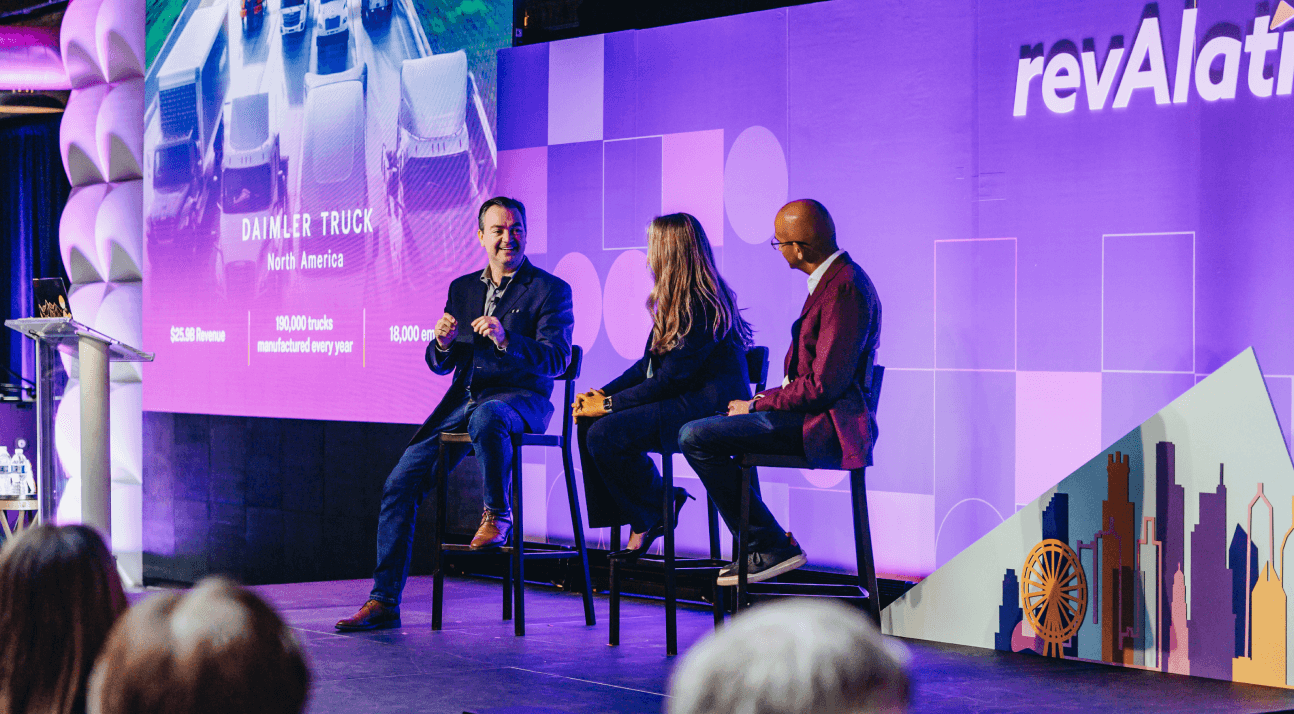
Join us in Chicago
If you are a current Alation customer, we are bringing the full end-to-end loop to life at revAlation Chicago on September 17. This is where we will show how Critical Data Manager, Data Quality, Curation Automation, and Ontologies work as one connected system.
If you are not yet an Alation customer, request a briefing with our product team.
Sources & notes
Every external claim on this page is independently verifiable. The public sources are listed here.
Only 17% of organizations have deployed AI agents to date; more than 60% expect to within the next two years — described as the most aggressive adoption curve among all emerging technologies measured in the 2026 Gartner CIO and Technology Executive Survey. — Gartner, "What the 2026 Hype Cycle for Agentic AI Reveals," Rajesh Kandaswamy, 15 April 2026 ↗ https://www.gartner.com/en/articles/hype-cycle-for-agentic-ai
63% of surveyed data management leaders either did not have the right data management practices for AI or were unsure whether they did; survey of 1,203 data management leaders, July 2024. — Gartner, "Lack of AI-Ready Data Puts AI Projects at Risk," 26 February 2025 ↗ https://www.gartner.com/en/newsroom/press-releases/2025-02-26-lack-of-ai-ready-data-puts-ai-projects-at-risk
At least 15% of day-to-day work decisions expected to be made autonomously through agentic AI by 2028, up from 0% in 2024; 33% of enterprise software applications expected to include agentic AI by 2028, up from less than 1% in 2024. — Gartner, "Gartner Predicts Over 40% of Agentic AI Projects Will Be Canceled by End of 2027," 25 June 2025 ↗ https://www.gartner.com/en/newsroom/press-releases/2025-06-25-gartner-predicts-over-40-percent-of-agentic-ai-projects-will-be-canceled-by-end-of-2027
As data volumes continue to grow, stewardship teams and manual processes cannot keep pace. — Alation, "Alation Ends the Era of Manual Data Governance," 9 March 2026 ↗ https://www.alation.com/news-and-press/alation-ends-the-era-of-manual-data-governance/
Large banks estimate the fully loaded cost of governing a single CDE manually at around $10,000 per CDE per year in people time; approximately $2 million annually for an institution with 200 CDEs. — Alation, "MAS Data Governance And Management: What The Latest Guidance Means For Financial Institutions," 27 April 2026 ↗ https://www.alation.com/blog/mas-data-governance-guidelines-compliance/
Early customers of CDE Manager report saving 3–10 days of effort per CDE annually; TPG Telecom reports 5–10 days per CDE saved annually. — Alation, 27 April 2026 ↗ https://www.alation.com/blog/mas-data-governance-guidelines-compliance/
Outcome-based governance connects three products within the Alation platform — CDE Manager, Data Quality, and Curation Automation; Curation Automation is generally available. — Alation, "Alation Ends the Era of Manual Data Governance," 9 March 2026 ↗ https://www.alation.com/news-and-press/alation-ends-the-era-of-manual-data-governance/
Transparent automation: every change is previewable before execution, existing values are preserved by default, and all actions are fully auditable. — Alation, 9 March 2026 ↗ https://www.alation.com/news-and-press/alation-ends-the-era-of-manual-data-governance/
Agentic AI governance, agentic AI security, and FinOps for agentic AI appear as profiles distributed across the 2026 Hype Cycle, alongside practices such as context graphs — indicating that the need for oversight becomes evident early in the adoption cycle rather than only after large-scale deployment. — Gartner, "What the 2026 Hype Cycle for Agentic AI Reveals," Rajesh Kandaswamy, 15 April 2026 ↗ https://www.gartner.com/en/articles/hype-cycle-for-agentic-ai
CNA Insurance's approach to starting an agentic AI rollout with data governance rather than underwriting. — Alation, "Agentic Data Governance: How CNA Insurance Started," August 2026 ↗ https://www.alation.com/blog/agentic-data-governance-insurance-cna/
revAlation Chicago 2026: September 16–17, 2026, The Old Post Office, 433 W. Van Buren St., Chicago, IL. — Alation ↗ https://www.alation.com/revalation/chicago/
- AI
- Alation News
- Data Governance
- Data Intelligence
- Data Quality
- Enterprise Data Catalog
- Engineering
GT Volpe is VP of Product at Alation, where he leads the product management team behind the Alation Intelligence Operating System (AIOS), spanning the full platform from catalog and lineage to data products and Agent Studio.
GT joined Alation as an early employee after several years in the business intelligence world, where he saw first-hand how hard it is to balance self-service access, shared semantics, and governance. He started as a sales engineer, helping customers evaluate and adopt the platform, and after moving from the US to the UK led Alation's go-to-market in EMEA before stepping into R&D in a product leadership role.
He is a Princeton graduate, lives in London, and grows bonsai trees, most of which are still alive.
Keep reading
More from the data desk