Season 4 · Episode 4
AI Governance in Public Media

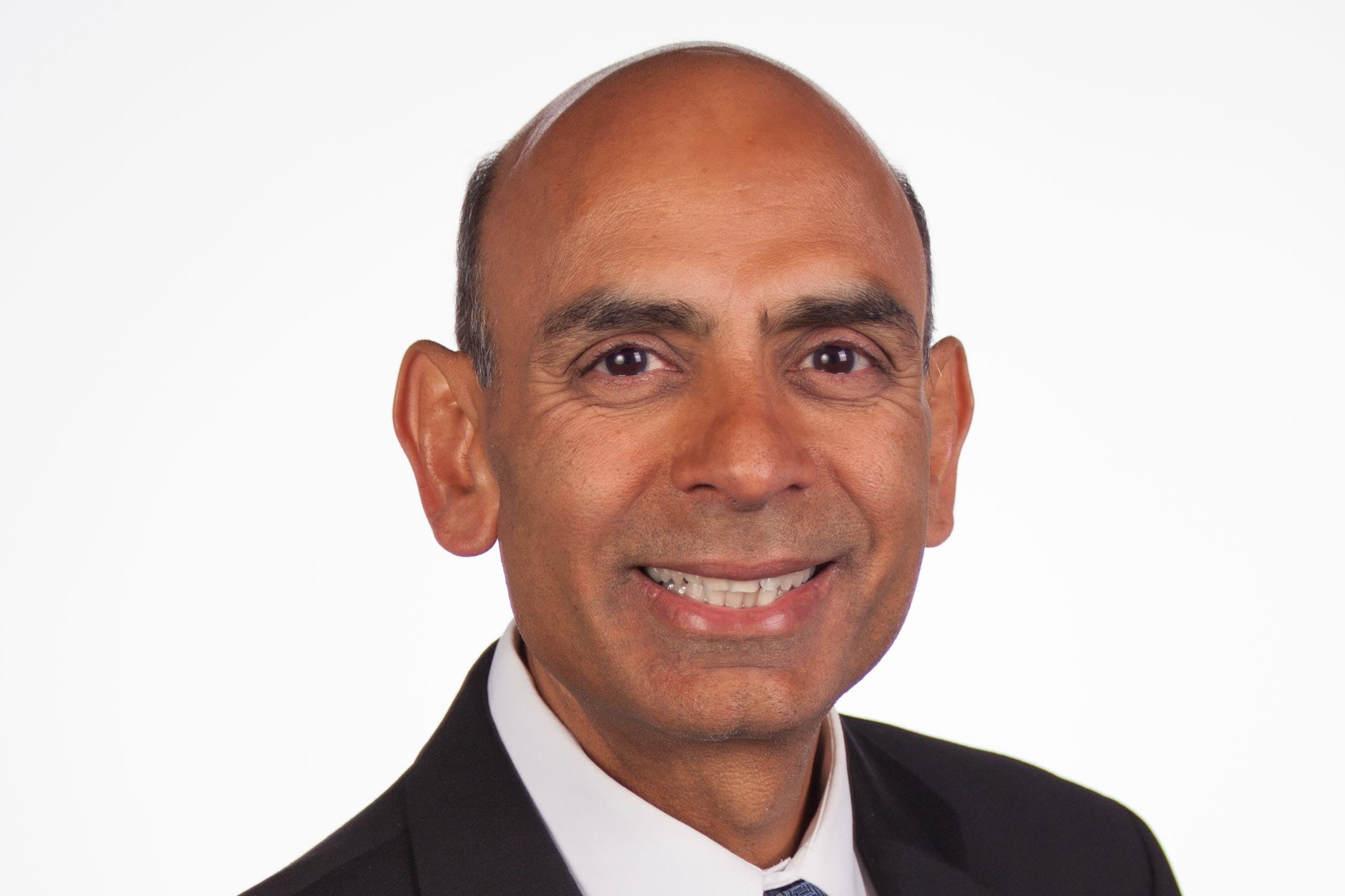
Nathalie Berdat
Data Director of Product, BBC
How do you build data trustworthy enough for AI at an institution built on public trust? Nathalie Berdat, Data Director of Product at the BBC, on killing duplicate metrics, why recommendations are editorial decisions, and what must be true before agentic AI earns a seat.

Satyen Sangani
CEO & Co-Founder, Alation
As the Co-founder and CEO of Alation, Satyen lives his passion of empowering a curious and rational world by fundamentally improving the way data consumers, creators, and stewards find, understand, and trust data. Industry insiders call him a visionary entrepreneur. Those who meet him call him warm and down-to-earth. His kids call him “Dad.”
Satyen Sangani, CEO of Alation [00:00]: Welcome back to AI Radicals. Today's guest sits at the intersection of two mandates that rarely coexist in peace: moving fast with AI and protecting public trust on a global scale. Nathalie Berdat is the Data Director of Product at the BBC, where she leads digital transformation for one of the world's most trusted media brands.
Sangani [00:22]: We get into what it really takes to rebuild confidence in data across a sprawling org, from killing off duplicate metrics to building certified data products people actually adopt. Nathalie unpacks why AI governance at the BBC has to satisfy not just regulators, but journalists, why personalization carries editorial weight, and what she believes must be true for agentic AI to earn a seat at the table.
Sangani [00:46]: If you're trying to figure out how to earn trust in your data before you scale AI on top of it, this episode is for you.
Producer [00:53]: This episode is brought to you by Alation. AI agents are only as good as the knowledge beneath them. Get it wrong and it shows up in production. Get it right with Alation at revAlation, coming to Chicago, London, and Sydney this fall, where data and AI leaders talk real measurable ROI. Save your seat at alation.com/revalation.
How is AI governance at the BBC different from a commercial enterprise?
Sangani asks Berdat, who joined the BBC from commercial organizations including Barclays, AVEVA, and Kraken, what makes AI governance at a public institution structurally different.
Sangani [01:15]: Our next guest is tackling a huge challenge in AI: building data systems trustworthy enough to power AI for an institution that powers trust worldwide. As the Data Director of Product at the BBC, Nathalie Berdat leads digital transformation for one of the world's most trusted media giants. With a track record of heavy hitters like Barclays, AVEVA, and Kraken, she knows how to modernize massive institutions without losing public trust.
Sangani [01:41]: Nathalie, welcome to the show.
Nathalie Berdat, Data Director of Product, BBC [01:43]: Thanks for having me, Satyen.
Sangani [01:44]: The BBC is known to probably almost everybody listening on the podcast, but my suspicion is that most people don't know how it operates or how it works. Tell us a little bit about the role of data and the role of AI at the BBC, and how it might be different or similar to a standard commercial institution.
Berdat [02:06]: I joined the BBC from commercial organizations, so a public institution was something that was very new to me. I would say the BBC is not just another enterprise in that sense. It really changes the way we think about AI governance. So I'll give you an example.
Berdat [02:24]: For a normal enterprise, the worst case outcome of bad AI governance is a bad customer experience or, worse, a fine from a regulator. But for the BBC, the worst case outcome is public trust — the thing that the entire institution is really effectively built on. We're funded at the BBC by a licence fee payer.
Berdat [02:48]: And effectively, they are holding us to account, and they didn't really choose to be, but they are. So the governance isn't a compliance checkbox. It's closer to editorial standards. It has to be defensible to a journalist. Why did the algorithm do that? And it has to be as defensible to a journalist asking that as much as to a regulator.
Berdat [03:09]: So this is where we differ. However, where we are very similar: we want to use data and AI to power our insights, to guide our decisions, and we are no different. We have a massive amount of data, and the challenge for us is not ingesting more data. It's knowing how to use that data, how to trust that data, and how to use it in a way that we can really make the decisions we need to make to keep our BBC running for the next 100 years.
How does the BBC licence fee change the stakes on data decisions?
Berdat explains the BBC's funding model — a mandatory annual licence fee paid by UK residents who watch live television or use iPlayer — and why it removes the optionality a commercial audience has.
Sangani [03:40]: It's a fascinating institution. You mentioned something that I think many people might not know about. You said that the BBC is funded by a licence fee payer. Tell us a little bit about how that works. What's the funding mechanism?
Berdat [03:53]: Sure. The BBC is funded by the UK licence fee payers, so anyone streaming live TV using our streaming platform called iPlayer has to pay a flat fee every year, and they become automatically entitled and allowed to use those platforms.
Berdat [04:16]: This is not an optional fee. If you use those streaming platforms, if you watch live TV and you are a UK resident, you will have to pay that fee. So that means that we have a big responsibility at the BBC to make sure what we deliver is value for the money paid by the licence fee payers.
Berdat [04:37]: When we make choices, they are scrutinized in a very different way than if we made choices just as a commercial organization, because there is less optionality for a licence fee payer. So we are very conscious of that responsibility. And the BBC also plays a big role in the creative industry in the UK, so it generates a lot of work and is a big part of the creative industry in the UK.
Berdat [05:06]: The BBC has always been also a pioneer of new technology. iPlayer as a streaming platform was very much revolutionary before Netflix and before the others. So there is a rich legacy there, but it's all paid for, again, by the licence fee payers, so by the public effectively.
How did the BBC rebuild trust in its data?
Sangani draws a comparison to publicly funded broadcasters in the United States, and asks Berdat — who joined the BBC into a newly created head of data and AI governance role — how the institution has held onto trust.
Sangani [05:23]: Which is pretty magical. Here in the United States, we have National Public Radio, NPR, and we also have the Public Broadcasting Service, PBS, and both of those institutions have been deeply politicized. And while there are differences on both sides of the spectrum, there are certainly elements of society that have questioned trust in these institutions.
Sangani [05:44]: Now, from afar it feels like the BBC has still maintained a level of trust both domestically within the UK and internationally. A lot of people reporting the news — on some level data teams report the news inside a company, and of course the BBC's doing that around the world — have a need to be able to deliver trust. Information without trust is on some level valueless, and everybody's overloaded with information. How do you think the BBC does that? You mentioned all of this data and maintaining these standards. Talk a little bit about the institution and how you seem to have maintained that trust, and how you may have struggled with it in this new era of media.
Berdat [06:26]: When I joined the BBC, I arrived as a newly created role called data governance. I was head of data and AI governance when I joined the BBC, and it was a new role in the sense that we used to use data. Data has always been important. There was a mission statement around we want to be data-driven, data-led, that most organizations do say.
What does low trust in data look like day to day?
Berdat describes the tell she watched for at the BBC: colleagues asking which team produced a number rather than whether the number was right. The metric in question is weekly active accounts — logged-in users across BBC platforms.
Berdat [06:41]: I think the issues we had — certainly the symptoms that I've seen that reflected a need to rebuild trust in data — was that the tell was when you talked about important metrics. For example, an all-star metric for us is weekly active accounts. How many people have logged into your platforms, have come to the BBC and logged in. That number was very dependent on where it was produced, and people stopped asking whether the number is right and started asking, "So who produced that number?" As in which team produced it, because then it really allowed them to go, "Oh, I can trust that number because that team produced it.
Berdat [07:38]: I'm not sure I can trust that number because it's used for a different purpose." So when you see that, it is a symptom. When two teams show up with two different charts for the same metric and no one questions that, it's a symptom that the trust in data is very low in an organization.
Berdat [07:56]: And this was one of my very first observations in my first few weeks joining the BBC. There is certainly something that needs to be done to address that low trust in data.
Why doesn't tribal knowledge scale as a substitute for trusted data?
Berdat, Data Director of Product at the BBC, explains why relying on institutional memory breaks down at the moment an organization has to make consequential decisions.
Berdat [08:18]: When you say it like this, it sounds — well, people will just have to use data. We know that metric. We know what to use and when to use it. We just rely on our own knowledge and gut feel and instinct. It doesn't scale, unfortunately. Tribal knowledge is not something that we can scale, or that we can actually rely on when we make big decisions. And there are some pretty big decisions that the BBC has to take these days. Making fundamental decisions around what we continue to run, what we stop running at the BBC, has to be based on data we can trust.
Berdat [08:46]: So overall, this is what I feel: at the BBC, we have massively improved in that space. And not just because there was a newly created role of head of data governance, but because there was a conscious effort, and there was a conscious program around data and data strategy that placed the ownership and the accountability around data back at the center of what we do at the BBC when it comes to rebuilding that data trust.
Berdat [09:15]: So that's really how we evolved in that space, Satyen. And you were part of that journey, right?
How do you decide which metrics are worth governing first?
With hundreds of metrics and thousands of tables in play, Berdat's team at the BBC started by narrowing the field. Her focus was audience data — the digital interactions that drive product decisions.
Sangani [09:22]: Tell us then, how did you and the team do it? You enter, and give us an example of what metrics were sort of strewn about and confusing people. And how did you — you mentioned centralization, but what was the work?
Berdat [09:37]: It started by identifying what matters to the organization. There are hundreds of metrics. There are thousands of tables, certainly if I take the example of audience data, which is key for us when we make product decisions — our digital interactions with our product.
Berdat [09:57]: And you can lose yourself by trying to make every single metric matter, to improve trust in that metric. What we had to do is very clearly identify what really matters when it comes to whether we report on performance or we actually make decisions inside our digital product, and we want to use those metrics as actionable insights.
Berdat [10:23]: So if we see a trend that moves up or down, we will know what's the next decision we need to make as part of our product development life cycle or feature development. So that's quite impactful. What we did, we identified those metrics. I've taken the example of weekly active accounts because it's such a key metric at the BBC.
Berdat [10:45]: That means we really rely on a user being logged into our platforms, a user being engaged with our content, and those metrics are really key for us. And the licence fee is fairly flat. It's very difficult to use that as a lever to increase revenue. You pretty much know how many users are going to pay.
How do you build a certified data product as a single source of truth?
This is where the BBC's data product work begins. Tracing a single metric back to its source, Berdat's team found not one dataset but many, each with slightly different filters, then rebuilt them as one certified product. Alation's guide to how to build data products covers the same pattern in more general terms.
Berdat [11:08]: So what we did, we really picked those metrics — and it's a real subset of metrics — and we tracked down how those metrics are being calculated. What's the source of truth? Who owns those data tables? So we started with datasets, data tables. Very quickly, we came to realize that there were many versions of the same dataset, slightly different filters, slightly different interpretation, slightly different calculation — what you exclude, what you include.
Berdat [11:40]: And what we did, we rebuilt a data product, because the concept of data product is something we feel really strongly about. We rebuilt that data product with a view that the data product will be the certified source of truth that feeds every calculation of weekly active accounts. And the difficulty is not so much building it, because we've had all the dimensions that could allow people to slice and dice as they wanted to. It is for people to let go of the old tables they're used to — things that are pulled together with a shoestring here and there, brittle, breaks — and yet it was very hard to convince data users to let go and rebuild using a certified data product.
How do you convince analysts to give up their own tables?
Berdat, Data Director of Product at the BBC, on the argument that actually landed: service-level agreements (SLAs), embedded quality checks, and less time spent repairing brittle pipelines.
Berdat [12:27]: The way we did it is that we provided very clear SLAs, quality checks embedded in those data products, clear ownership, and also we've proved — because that's how we can always land a good argument — that they will spend a lot less time fixing their broken tables, and they would do well just to hop on and use our tables, our data product, because those data products were maintained.
Berdat [12:53]: And it's hearts and minds that you have to change when you do it. There is a cultural change that is definitely needed. But we've certainly — I have to say, it's a journey worth taking, because we're not having those conversations anymore, certainly on the big metrics. We are there. We use those tables. Various teams use the same tables. It sounds quite trivial in a small organization, and I've worked in startups and scale-ups. But in a large organization that's grown by bringing a lot of divisions together, and some of those divisions use the same data, it's not easy to get them to use it.
Should you start with your most-used dashboards or your board scorecard?
Berdat's team tried the popular-dashboard route first and found it was the wrong signal. What changed the outcome was working down from the audience scorecard the BBC board reviews.
Sangani [13:31]: And how did you get them to agree to this finite set of critical metrics?
Berdat [13:37]: It was trial and error. So we started off by going, "Well, let's start with the most used dashboards." We can have those stats. And we went, "Okay, well, that means those dashboards are the key. That's what we're going to focus on."
Berdat [13:51]: But it was the wrong way to approach this, because the most used dashboards are the most used dashboards for a purpose — for maybe low-level analytics, or things that people want to see on a daily basis. But that's not necessarily the basis on which decisions are being made.
Berdat [14:09]: So we went back to what's used as a scorecard, an audience scorecard that the board actually looks at. And then we started top-down as well. We went, "Okay, well, those metrics are key here, because it's not just a performance metric. It also drives a lot of our strategic changes and decisions. So we have to nail those metrics."
Berdat [14:32]: We also wanted to use that as a proof point, because as I said, it's not easy for people to let go of what they think works reasonably okay. So the proof point was: go where it has the most impact, the most visibility, and build on that basis. That's the approach we took.
Is it worth chasing the last 0.1% of discrepancy between datasets?
Berdat describes the trade-off decision the BBC made when its new certified data product didn't reconcile perfectly against the legacy tables it was replacing.
Sangani [14:49]: And that top-down approach is obviously quite powerful, because it aligns the organization around a set of objectives and metrics, in addition to also being a mechanism to select what matters, which I think is critical. And I love the fact that you pointed out that what's popular doesn't actually reflect what really matters to the organization. So you built these data products. How long did the process take of socializing to the right metrics? And then from there, how long to actually construct the data products and the tables that you needed?
Berdat [15:22]: So we started off being very optimistic, thinking, well, building a data product is packaging very well a set of data, applying the right dimensions, and people will come. Build and they will come. It's not the case. So the build itself didn't take that long — a few sprints, and we had a first prototype, and then we had a couple more sprints, and then we started socializing to data users.
Berdat [15:36]: I think what took a long time to get to is we still had discrepancies with the other tables, and there was a trade-off decision to go, "Are we going to invest or spend much longer addressing those small differences?"
Berdat [16:08]: We're talking about 0.1%. Every number matters. Every active user matters. But then there is diminishing returns. You could spend a long time trying to figure out where the differences are, and we knew roughly where the differences were from, and it wasn't something systematic that we would worry about.
How do you make the business case for adopting a certified data product?
Berdat, Data Director of Product at the BBC, took the case division by division. Alation's data products marketplace exists to make the same move — governed data products at scale — a platform capability rather than a campaign.
Berdat [16:28]: So we had to then go and campaign, really talk to the various divisions and directors of divisions to go, "This is the value you're getting from adopting that product. The discrepancy is that. It's explainable. But what you're getting in return is a set of a data product, and you have a team that supports and maintains that data product with SLAs."
Berdat [16:55]: And also, more practically, we rebuilt a pipeline that was falling over every Monday morning. By rebuilding the pipeline, they avoided all the issues they had with the pipeline falling over, being out of action for a few hours. But it took a few months.
Berdat [17:16]: The first proof point took, I want to say, nine to twelve months until we could reasonably say that adoption is happening, and we have solid evidence of adoption — rather than "we're committing to adopt, but we don't have time now, we'll do it in six months," which we had a lot of.
Why does scaling data products depend on the platform underneath?
The BBC runs a few dozen data products today. Berdat explains why the number is smaller than she'd like, and why a migration to a new AWS-based enterprise data platform is the gating factor.
Sangani [17:33]: And it was really adoption of that data product — the variety of people using it and the number of queries hitting it, those are the things that you're looking at primarily. How many different data products do you have now that you're further along the journey?
Berdat [17:47]: So we do have a few dozen products. However, we are completing a large migration now to our new enterprise data platform. It's AWS-based, but it's a very different, upgraded technology that allows us then to build data products, but also allows us to socialize and to give access to those data products in a frictionless way — something that we didn't have with our legacy platform. So I would have loved to be further along the journey than we are.
Berdat [18:20]: But again, in order to scale, you also have to have the technology that supports it, and this is why the journey has taken quite some time.
Should data products be built centrally or by the business domains?
Sangani asks whether the BBC intends to push data product ownership out to the business. Berdat's answer maps onto the broader question of decentralized and federated governance models — with one term she deliberately avoids.
Sangani [18:28]: Makes a ton of sense. And now that you've done this work — in the idealistic kind of view of data products, the function that owns the business process also happens to own the data. And you started from a central place, and now have these data products that are being built. Do you aspire to move to a world where data products are being built and published by the business? How do you see that journey moving forward, and what do you aspire to do moving forward?
Berdat [18:57]: So, Satyen, this is exactly at the core of our data strategy: decentralizing more, empowering the divisions and the business — the data domains, as we've described them — to do more with their data. And I don't want to use the term data mesh. I think it's been used and overused. This is not a data mesh as such, what we're building.
Berdat [19:20]: We are not standing up end-to-end teams in every single data domain. That's not the ambition. I think also it's not really practical from a resourcing model perspective. But what we are certainly doing — and this is why everything had to come together, the data product, the data platform that allows us to decentralize by being able to set up discrete domain spaces and accounts for the divisions to be able to come and build their own data products.
Why does the BBC need a data product just to count its own staff?
A live example from Berdat: headcount at the BBC is complicated by contingent staff, and getting it right is the precondition for measuring return on investment on programming. This is the domain-owned pattern that data mesh architecture describes, applied selectively.
Berdat [19:52]: So all this is coming together. If we start, for example, ingesting an HR data feed, then human resources can start building a data product on our enterprise data platform. They can then use that data product, or expose and open that data product to be used for other use cases. So a good example of that, something that's quite live for us, is: how many people work at the BBC?
Berdat [20:22]: It sounds very simple, right? You would go, "Well, do you need a data product to tell you how many employees you have?" But we do. The BBC is an organization where you have a lot of contingent staff. A cameraman will work here for two days and then go. Someone will come here for a two-month contract, then go.
Berdat [20:42]: It's very hard to track this, and also to link them to a cost center in a way that we can actually measure how much each cost center costs us from a staff and headcount perspective. So building a data product that gives you a very trusted source of truth when it comes to that cut of who works where and what cost center, allows you to then expose this product and build on top something like return on investment for a piece of content or a program — because then you'll know who has worked on it, how much it cost us to build and develop a program. Considering that commissioning a program takes a three-year process, you need to know your return on investment for something you'll be commissioning. You'll be investing a lot of effort and time and people on it.
Berdat on stacking data products: HR data, cost centers, and content ROI
Berdat, Data Director of Product at the BBC, describes the modular ambition — one data product built on another — and the three things that had to exist first.
Berdat [21:20]: So this is really where the vision is. If we had those modular — it's like Lego, right? If you have one data product that you can then build another data product on top of, it just unlocks so many possibilities for us in terms of what we can do with the data. But we needed to have, A, the platform that builds that, the concept of data product, and also the people and the skills, who can actually come and build those data products, show and upskill.
Berdat [22:01]: And it's not the least part of it: it's the governance that binds everything together, and that's something that we've worked very hard in the last three years to build as well.
What does data governance actually mean beyond standards?
Sangani asks Berdat to define governance as the BBC practices it. Her answer runs past standards into ownership, lineage, and access control — the territory of active metadata management.
Sangani [22:11]: That's brilliant. Tell us a little bit about that governance process. When you say governance, what does that mean at the BBC and how does that work?
Berdat [22:19]: If I think about data governance, there are a few aspects to that. Naturally, when I talked about data governance, the natural tendency was to think: are you talking about standards? Are you talking about how you want data to be ingested from a standards perspective, in what format, what quality checks you want to apply on that data?
Berdat [22:44]: What's the minimum metadata you need — those standards. I think when I talk about governance, this is more than that. This is more than just standards. There is an ownership conversation. We have a data product, for example, that uses a lot of data coming in, being packaged as a data product, and metadata.
Berdat [23:06]: Who owns this? Who owns the data? If something breaks in that data product, who fixes that? And it's not simple if you haven't actually tracked the source of that data, the lineage, who owns that data, who is responsible for access controls over that data. All this is data governance.
Berdat's rule: define what you want from your data before you choose governance tools
Berdat is explicit that tooling comes last in the sequence, after the outcomes and safeguards are defined. She also names where a data governance platform fit into the BBC's own procurement.
Berdat [23:31]: And on top of that is how then you build that at scale. Building at scale usually involves an element of technical support to do that, whether it's tools, whether you embed a new existing development process. This is where the tools come. So I never start with tools when it comes to data governance. I start with: what do we want to do with our data?
Berdat [23:54]: What are the safeguards and standards, and how do we want to use it? Then you map your tooling requirements in order for you to be able to do that at scale. Because human data governance doesn't really scale very well, does it? And that's how we've approached that. When it comes to tooling, we've had obviously our data governance experts.
Berdat [24:13]: I've embedded some data governance experts into the platform development, our data platform development. So they were there as part of the teams, part of all the sprint ceremonies. They contribute as experts, and they make those decisions with the platform teams. And then from a tooling perspective, as you know, Satyen, we looked, and we went for a large procurement, and we procured Alation to support our metadata requirements, and we are looking to do more obviously with Alation. And we also looked into data quality and observability, and we also procured another tool for that. I would say people, process, technology, as in everything strategically that you want to implement. It's been very much the case for data governance.
Sangani [25:02]: Yeah, for sure. I think most governance professionals say that. And even though there's so much hype around AI and everybody talking about it, it still seems like those classic problems still exist. AI might help accelerate some of the work, but it doesn't necessarily change the game very much.
Producer [25:19]: We're brought to you by Alation, the data intelligence platform trusted by 40% of the Fortune 100. Here's the problem they solve. Your catalog helps people find data, but it doesn't actually deliver business outcomes. Alation's Data Products Marketplace changes that. Teams can build governed, AI-ready data products in a single session using plain English, no code, no SQL. And business users can literally chat with the data to get trusted answers. Governance is baked in, not bolted on. Want to see how it works? Grab the free data sheet at alation.com/data-products.
Why do data foundations have to come before AI?
Sangani raises the idea of the data product as a container of context for AI. Berdat, Data Director of Product at the BBC, describes what the foundations work unlocked — recommendation algorithms, content curation tools, and a BBC tone of voice.
Sangani [26:00]: As we bridge to the topic of AI, everybody's talking now about this idea of context. At Alation, we've basically said, "Well, look, as far as data is concerned, the data product is the container of context." Tell us a little bit about how you expect consumption to change with AI, and this idea of a data product as a context container. Where are you in this journey? Talk to us a little bit about the delivery of data in an AI-driven, AI-filled world.
Berdat [26:29]: Yeah. So this is something that won't surprise you to hear. It's been top of mind for me in the last few months. I needed to nail the fundamentals, the data fundamentals first. You don't start AI without your data foundations. You have to have your data in a place that you can then overlay AI on top.
Berdat [26:41]: And this has been very much the driver as well for our data strategy, our data platform, the whole data product piece. That work really is allowing us then to scale our implementation of AI. What has been key for us, whether it's developing AI for recommendations, for algorithms that recommend content, or tools like assisting us in curating content, for example, and giving a BBC tone of voice — something we've recently done.
How the BBC uses AWS AI Unlocked boot camps to test AI ideas
Berdat describes AWS AI Unlocked, an accelerated boot-camp format the BBC has used to explore what's possible with AI before anything is production-grade.
Berdat [27:28]: We've been doing a lot of work with AWS on a path that's called AWS AI Unlocked, which is very much an accelerated boot camp type of work where you bring solution architects and engineers together and you find a way to crack a problem. And you do that in a way that it's not so much production grade yet, but it's in a place that it teaches you a lot about the art of the possible with AI.
Berdat [27:57]: So in the context of data, we've certainly worked on this concept with AWS support, because we are an AWS ecosystem. We have gold datasets, we have those data products. How can we then have a conversational layer, if you like, over those gold datasets to start a journey towards a low-code environment, a no-code environment, so we are a lot more self-serve when it comes to analytics.
What does a conversational layer over gold datasets enable?
Berdat on self-serve analytics, and on accuracy as a variable rather than an absolute — because accuracy is expensive.
Berdat [28:28]: That's the goal, right? Self-serve analytics without also compromising on the accuracy of the data. And there are degrees. You always scale in terms of how accurate do I need to be for certain users based on the use, right? You're not going to want the same degree of accuracy. Accuracy is expensive. So that's been really fascinating, because the only reason we could do that is because we have those gold data products. Putting a context layer is important, and I think, like you said, Satyen, it has to be wrapped into your data product. So this is some of the work we've done recently.
Berdat [29:05]: We are very early in the journey. There is a lot more to do, certainly in the data space. But culturally, I think we are in a much better place with that.
Why the BBC feels the same pressure to deploy AI as commercial streamers
Sangani asks about the political dynamic around AI inside a public broadcaster. Berdat's answer starts from a point of similarity with commercial organizations before turning to the differences.
Sangani [29:16]: Is there a lot of pressure from the board to deploy AI? In standard commercial institutions, a lot of boards of directors have been — I think less so maybe even in the very recent past, in the last two months with all of the token maxing and AI expense. But certainly it's the case that there's a lot of pressure to deploy AI. Do you feel that within the BBC, that you need to come up with these case studies? Maybe talk to us a little bit about what you've done. You mentioned recommendation, you mentioned this curation use case. Tell us a little bit about these use cases, and what is the political dynamic around AI as well?
Berdat [29:53]: We're the same as a commercial organization in that of course you need to look into the practical applications of AI. We're competing with other streaming platforms to an extent, right? On certain levels we are. So you don't want to be left behind. You do want the BBC to also leverage AI for a lot of good applications.
Why does AI-driven personalization carry editorial weight at the BBC?
This is the governance complexity Berdat says is specific to the BBC: a recommendation is a judgment call about what content someone sees, which puts it up against editorial values like impartiality and range of perspective.
Berdat [30:05]: I think what the BBC has is more governance complexity around AI, and I'll explain why. So for example, anything that touches personalization or recommendation — because we are making a judgment call about what content someone can see, and at the BBC that's right up against editorial values like impartiality, range of perspective.
Berdat [30:41]: You mention in the US you have a lot of politicized news outlets. At the BBC, we always have this tricky balancing act of: if you are going to recommend content, make sure it's impartial, make sure you've considered, you've provided a range of judgment and perspective. So it's not like a retailer recommending a product.
Berdat [31:03]: So when we recommend content, it's almost close to an editorial decision. So it needs that justification, not just an engagement metric. Great, we've presented something, they've engaged, job done.
How comfortable are audiences with generative AI in media?
Berdat cites recent BBC audience surveys on where viewers are and aren't comfortable with a public broadcaster using generative AI.
Berdat [31:20]: But having said that, I think in general it's fair to say that our audience's comfort with gen AI in media has become more, I would say, discerning. We've done recent surveys at the BBC around audience awareness of gen AI — where they are more comfortable, less comfortable with a public broadcaster like the BBC using AI.
Berdat [31:44]: And I think what we found: they remain most comfortable where it operates behind the scenes. As soon as it starts touching expression or editorial judgment, they grow a bit wary, and news is the least forgiving territory, I would say. There is a lot of emotional, if you like, and editorial stakes when it comes to content and content recommendation.
How does the BBC keep AI decisions transparent to its audience?
Two commitments, per Berdat: published transparency guidelines, and an editorial review before any automated experience goes into production.
Berdat [32:08]: So it's really important for us to do two things at the BBC: to be very transparent how we use AI and where we use gen AI in particular, and we have transparency guidelines that we are very clear on where we need to inform our audience. But also, in every decision we make when it comes to automated experiences, we work with editorial.
Berdat [32:32]: So there is an editorial judgment before the recommendations go into production. And that's something that's adding an overhead in a way at the BBC, but what it also adds is more trust. It builds a layer of trust that maybe other organizations don't have so much. We're never going to get this 100% right, I want to say this, but we certainly try, and we certainly have guidelines and editorial guidelines that we want to stick to when we make judgment calls around AI.
Berdat [33:03]: The BBC has always used AI behind the scenes, I would say. Whether it's basic AI object recognition in natural history, to sift through footage and identify, for example, animal species. So we've always used that. Or transcribe and condense radio coverage into text, for example, for live sports blogs.
How does the BBC use AI to rewrite local news feeds in its own style?
Berdat describes Style Assist, a BBC pilot that repackages copy filed by non-BBC local journalists into BBC house style, with a human journalist reviewing every output.
Berdat [33:28]: That's something. More recently, we've had a lot of success with AI in our editorial workflows. So we had pilots like — well, we called that Style Assist. Effectively, we get a lot of news feeds wired from a local network of journalists, not BBC journalists, but they are very local. They cover a gap that the BBC doesn't have in reporting on very local matters, and they send that to the BBC.
Berdat [33:59]: And before we implemented Style Assist, we had senior journalists repackaging that content so that, A, it still follows editorial guidelines, but also it's in the style of the BBC. What we do today, we have Style Assist that just repackages that content, makes it sound like the BBC. We still have a human journalist review the output before publication, but the model is proving really successful and we've piloted that with certain feeds.
The BBC's hard limits on generative AI in news content
Berdat, Data Director of Product at the BBC, sets out what generative AI is not permitted to do, and why the bar rises further for anything audience-facing at a scale of nearly 24 million weekly active accounts.
Berdat [34:31]: So we went very slow deliberately, so editorial could always review the output of the model. That's one example of an application of AI. We do have some limitations and very strict guidelines. So gen AI is not permitted to create news content or primary factual research, for example. And we always have a human in the loop, and we are also very transparent about where we've used AI in the creation of any piece of content.
Berdat [35:03]: Obviously, it's a lot stricter when AI is used in audience-facing output. We have 24 million, or close to 24 million, weekly active accounts — so users — and messing up on that scale is quite public and it's difficult. The BBC being in the public eye is something that we are very careful about when we start using AI, and that's why it adds a lot of overhead, but we're still doing it.
Berdat [35:31]: And to your earlier question, we are absolutely determined to embrace the technology and have the right guardrails around it.
Should you build your own models or build on top of LLMs?
Sangani asks how the BBC arrived at its standards work. Berdat draws a line between the models the BBC still develops itself and the large language models (LLMs) it builds on top of.
Sangani [35:40]: Did you use a commercial product to come up with these standards, or did you simply build a set of skills and use them in order to review these documents? What did you do to do this work?
Berdat [35:53]: We have used external products to support gen AI content generation. So yes, we do, when we think we don't have the expertise to build. And when it comes to gen AI, we used to build — we still build, we still develop our own models — but when it comes to gen AI, less and less are you going to develop your own models. What we do mostly, we use large-scale LLMs, and then we build on top of that. We have teams of data scientists and engineers who do that. But yes, if we need to, we would use third-party products.
Can AI be used to apply editorial and brand standards?
Sangani frames Style Assist as a form of content governance — AI applying standards rather than creating content.
Sangani [36:35]: It's a pretty strong and emerging use case to effectively apply standards and even brand standards, that we are seeing with many customers, and we're certainly doing it internally as a review step. You don't want, to your point, AI to create the content, but you absolutely can use AI to apply a set of standards, which is a form of, in some sense, content governance. So it seems like a really useful use case.
What has to be true before you deploy agentic AI?
Berdat sets three preconditions before an agent gets autonomy at the BBC. Two of them — ownership and documented data lineage — are data governance fundamentals; the third is that governance rules become machine-readable.
Sangani [37:03]: Now, I guess tell us a little bit about the intersection of AI and data. You mentioned this idea of self-service and interrogation. Where do you aspire to move in the intersection of data being leveraged by AI? What are the next steps and projects there, and how do you think about where you aspire to go?
Berdat [37:20]: Yeah. So I think, look, there is definitely a vision. I'm going to use agentic as a word, but I think there are a number of steps before we get there. I know there is a lot of excitement around agentic AI, and that's no different at the BBC. We do want to also look at the art of the possible. What needs to be true, though, before we can consider an agentic AI deployment? I think what needs to be true is that an agent really acts on the basis of what it's given, right?
Berdat [37:56]: So before we would hand an agent autonomy, even to a small degree, we absolutely need clear ownership of the data it would touch. We need that documented lineage so we can trace a bad decision back to its source. We need machine-readable governance rules and not just a policy. It has to be embedded.
Why does agentic AI need to be deployed horizontally across an organization?
Berdat argues that the value case for agents depends on process design, not just data readiness: agents deployed inside one team don't deliver the benefit.
Berdat [38:25]: And I think also we need to rethink how an organization works. To make the most of agentic, very often you need to deploy them horizontally. Deploying them in a small team wouldn't give you the benefit of agentic. So you want a process that goes end-to-end. You deploy agentic on top, and it's frictionless. Agentic doesn't stop to ask a department. It has to be able to run across.
Berdat [38:45]: So there is a lot of thinking that needs to be done, not just on the data foundations, which is a given — we know this, and we are working on this — but also about where do you want to deploy agentic to give you the best return on your investment. Agentic doesn't come for free. It's not cheap. So if we are to deploy it, it has to have value.
What comes before agentic AI on the BBC's roadmap?
Berdat's medium-term priorities are unglamorous: the data platform, the data foundations, and templatized AI deployment — the components of what Alation calls an AI operating system layer.
Berdat [39:05]: It's very soon for us to have a view on — I don't have, we don't have necessarily an agentic AI project that's live today. But have we explored it? Are we exploring it? Absolutely. We are exploring where would we get value out of agentic AI, and what does agentic AI mean? There are different degrees of autonomy when it comes to an agent. So this is where we are.
Berdat [39:30]: To bring it back more to the medium-term horizon, I absolutely am very determined to now obviously our platform, our data foundations, and also how we deploy AI. So we have some work around AI platform — templatize, and having AI being deployed in a much easier way. Today, it's still hard work to deploy a model. So having some form of the classic AI platform components. So we are definitely upgrading our platform for AI deployment as well. So there are a number of things that need to be prioritized first, but we are certainly looking into a future where agentic will have to be part of what we would consider.
Sangani on why enterprise data leaders are cautious about agentic AI
Sangani places Berdat's position against what Alation sees across its customer base: expensive plus unreliable is a hard combination to justify.
Sangani [40:26]: I think it's funny because obviously there's a whole bunch of real value, and of course also hype, around AI right now. But the substantial majority of enterprise data leaders — and leaders in general — are looking at agentic with a very cautious perspective, because obviously there's potential value, but to your point, it's quite expensive, and it's also unclear what the risk is that you're taking on. So paying for something that's pricey but also unreliable is not a great combination. So it's certainly the case that your stance is consistent with what we're seeing with a whole bunch of other customers.
What should a new data leader tackle first?
Asked what she'd tell a leader starting a data and governance role today, Berdat, Data Director of Product at the BBC, starts by ruling out the approach that sounds most impressive on paper.
Sangani [41:07]: You've had this incredible journey at the BBC. Maybe round out for us the top two or three learnings that you might communicate to a data leader coming in. Somebody saying, "Look, I'm starting a new job running products and governance and data in this AI-driven moment" — what would you tell them?
Berdat [41:25]: I would just say, don't try and solve everything that's broken in your data landscape. You're going to have to prioritize what you want to tackle first, and what you want to tackle first has to be strategically important enough to matter to whoever will sponsor your data program.
Berdat [41:49]: Because let's make no mistake. I've been in organizations where I've come in and launched big data governance programs, all sounded amazing on paper — rebuild the foundation, start from scratch, and you go, "Well, you won't see very much for the next two years, but when it's done, it's going to be amazing."
Berdat [42:06]: That doesn't sell. You have to sell a vision that directly answers a business priority. And it has to be a combination of what we can solve now and what's the vision in the future. So I would say to a leader: go start work on Monday, and for example, pick one metric — we talked about one metric that has more than one version, that's causing such a headache for your leaders, that is talked about, that creates a lot of overhead trying to reconcile and agree.
Berdat [42:42]: Pick that one and go with that as your example. Showcase the art of the possible with it. I would say that sounds very simple, but I got a lot more out of bringing this to life than selling a vision that won't happen for the next two years and will require a lot of money in the meantime.
How do you sell a data strategy that enables AI?
Berdat's second lesson: translate AI for your own organization, and make the dependency between data governance and AI governance explicit — repeatedly.
Berdat [43:00]: The second is, when it comes to AI, I think we also need to understand what AI means. Translate AI for your own organization. What is AI and what does it give you? What could it give you in your own organization? Where would you start with AI? Understand the relationship between good AI governance and good data governance. That's forgotten, and I had to repeat that time and time again, and I've made this a fundamental part of my vision when I had to go and sell the data strategy.
Berdat [43:38]: It was about enabling AI to be built on top of trusted data foundations. It's something that now everyone knows at the BBC — when we talk about data strategy, that's something. But don't underestimate the amount of cultural shift, and how much you have to repeat a message until it actually lands, and repeat that in many different forums and many different ways.
Sangani [44:02]: Brilliant. Well, I don't know that we should leave with anything else but that excellent advice. Nathalie, it's been really fun, because you talk about many of the classic problems that exist in data governance and data enablement, but you do so in such a structured, methodical, and thoughtful way that I think everybody — whether they've been in the space for years or just starting — can get a lot out of this conversation. So thank you very much for your generous time.
Berdat [44:28]: Thank you. It's been a pleasure.
Satyen's takeaways: trust in data is earned one reconciled metric at a time
Sangani closes with what he draws from Berdat's account of the BBC's data and AI governance work.
Sangani [44:32]: If Nathalie leaves us with one lesson, it's this: trust in data is earned one reconciled metric at a time. At the BBC, that meant resisting the urge to rebuild everything at once. Instead, she zeroed in on the handful of numbers that actually shape decisions, gave them a single certified source of truth, and let adoption, not a mandate, do the convincing.
Sangani [44:54]: That same instinct shapes how she thinks about AI. For Nathalie, AI governance and data governance aren't separate conversations. You can't hand an agent autonomy over data that no one truly owns or can trace. It's why the BBC is deliberate, holding off on agentic AI until ownership, lineage, and machine-readable rules are actually in place.
Sangani [45:14]: The lesson for the rest of us: the teams that pull ahead with AI won't be the ones with the boldest roadmap. They'll be the ones who quietly make their data trustworthy enough to build on. I'm Satyen Sangani, CEO of Alation. Thanks for tuning into AI Radicals. See you next time.
Producer [45:33]: Today's episode was brought to you by Alation. If you're in data or AI leadership right now, you've probably got a graveyard of pilots that never made it to production. You're not alone. MIT research shows only 5% of enterprise AI pilots from 2025 delivered real ROI. The gap isn't capability, it's focus. Alation's Agentic AI Opportunity Discovery Guide is a strategic framework built to help you cut through the noise. It walks you through the six AI primitives, the friction-meets-value sweet spot for identifying the right processes, how to build your opportunity backlog, and how to use an impact-effort framework to prioritize what to build first. There's even a five-step launch checklist to get your first pilot off the ground. The organizations winning AI right now aren't the ones with the biggest budgets. They're the ones asking the better questions. This guide helps you ask them. It's free at alation.com/ai-guide.