




Data quality has a direct impact on business decisions, yet maintaining it remains a persistent challenge. When records are incomplete, inconsistent, or outdated, critical systems lose reliability and teams lose confidence. Experian’s latest Global Data Management Research found that 85% of businesses say poor-quality customer data harms operational efficiency—a reminder that weak data foundations affect both strategy and execution.
Data enrichment addresses this by improving the accuracy and completeness of existing information. These tools verify details, correct outdated entries, and align sources so data stays consistent across systems. For technical teams, enrichment preserves metadata and lineage as information moves through connected environments. For business users, it delivers clarity and confidence in the insights they rely on every day. When enrichment becomes routine, organizations stop managing data as a problem and start using it as an advantage.
Key takeaways
Data enrichment tools strengthen the reliability of business data by verifying accuracy and completing missing records. They also standardize inputs across systems, giving teams information they can trust.
Scalable enrichment depends on automation and validation that maintain accuracy as systems expand and regulations evolve.
Alation enables data enrichment through context, metadata management, and integration. It makes enriched data easy to locate, measure, and manage within governed environments.
When enrichment supports data products, organizations gain dependable assets that strengthen analytics and long-term business outcomes.
5 popular data enrichment tools for enterprises
The right data enrichment solution depends on your specific use case and integration requirements. These five platforms represent leading solutions across different enterprise needs:
Clearbit
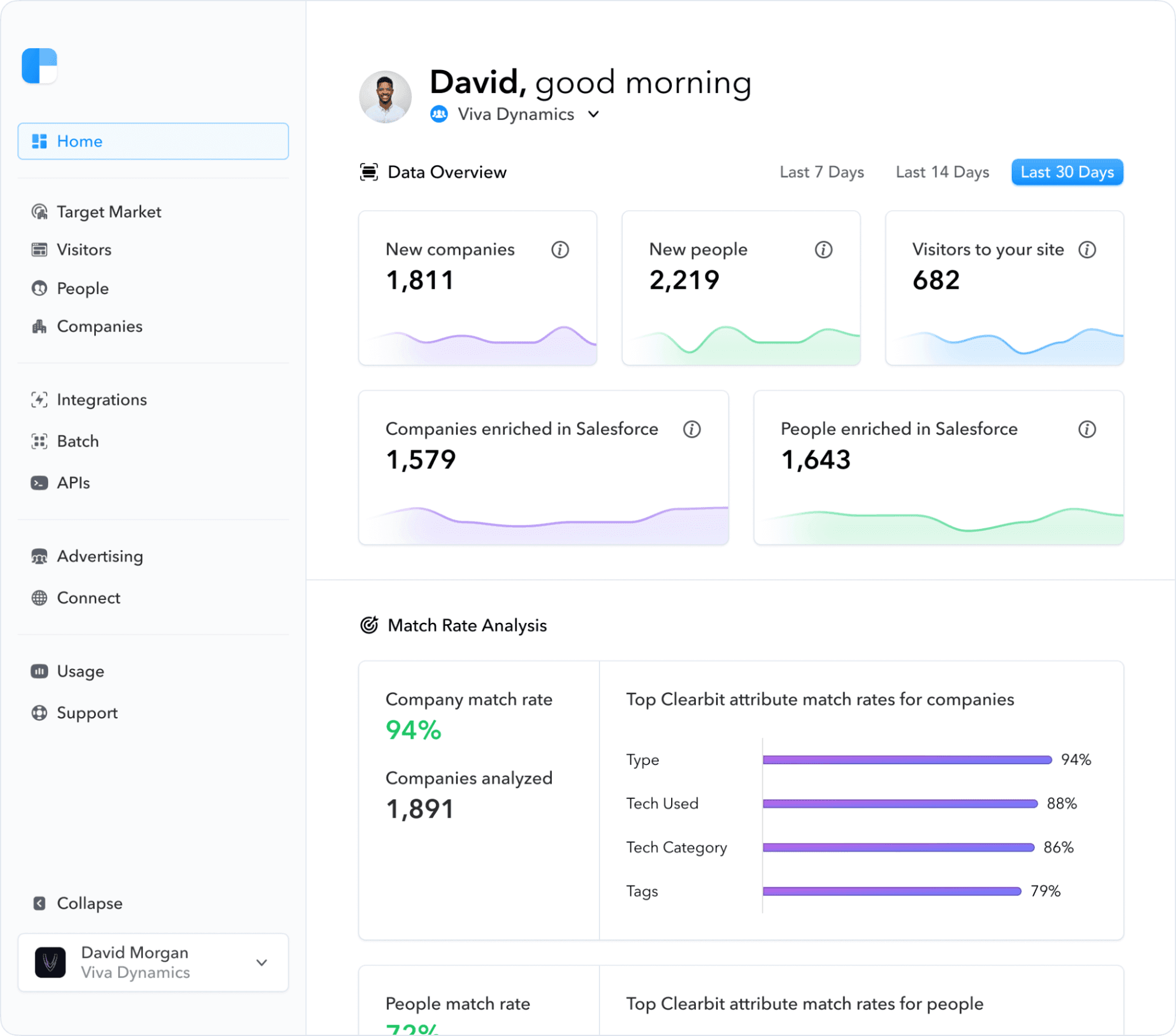
Clearbit helps marketing and sales teams enrich B2B data directly in HubSpot. The platform adds verified firmographic and contact details, turning partial records into complete profiles. Teams use it to qualify leads faster and personalize outreach with greater accuracy.
Key features and benefits:
Real-time B2B contact and company enrichment: Clearbit adds over 100 verified attributes, such as job title, company size, and tech stack. Teams use this information to keep records current and strengthen outreach accuracy.
Form shortening and auto-population: Clearbit dynamically hides or fills form fields. This capability improves the user experience and boosts conversion rates.
Global coverage expansion: Clearbit includes data on more than 250 million decision-makers worldwide. This gives organizations dependable access to verified contacts across diverse markets and regions.
Limitations:
Some reviewers note that the user experience could be simpler. One person said, “Clearbit has gone through a number of UX changes recently, and not all have been for the better [...] Their credit-based system is fairly unintuitive.”
Teams may need technical expertise to manage API integrations effectively.
ZoomInfo
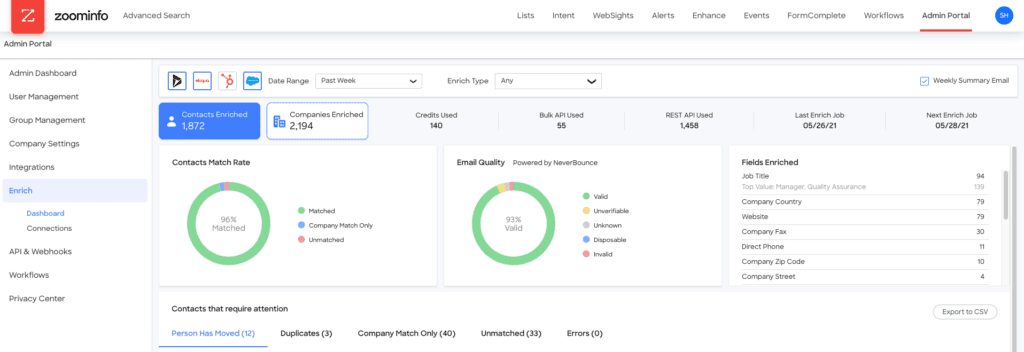
ZoomInfo provides B2B sales intelligence that helps revenue and marketing teams find and qualify target accounts. The platform combines verified company data with intent signals to support precise outreach. Teams use it to improve targeting accuracy and align sales and marketing on shared, trusted information
Key features and benefits:
Extensive B2B database access: The platform leverages a large repository of company and contact information. This data includes corporate hierarchies and technologies. Teams use this information to build accurate account structures and uncover decision networks.
Bulk enrichment for large datasets: The tool processes extensive data volumes through batch APIs. This lets enterprises update customer information quickly, reducing time spent on manual maintenance.
Advanced data cleansing: ZoomInfo removes duplicates, standardizes formats, and aligns records to the right accounts. Clean and organized data supports more accurate segmentation and forecasting.
Limitations:
Pricing and licensing costs remain high, which can limit adoption for smaller teams.
The amount of data available by region may be limited. For instance, one enterprise user commented, “At times, I’ve felt that the data coverage for APAC and EMEA regions could be more extensive.”
FullContact
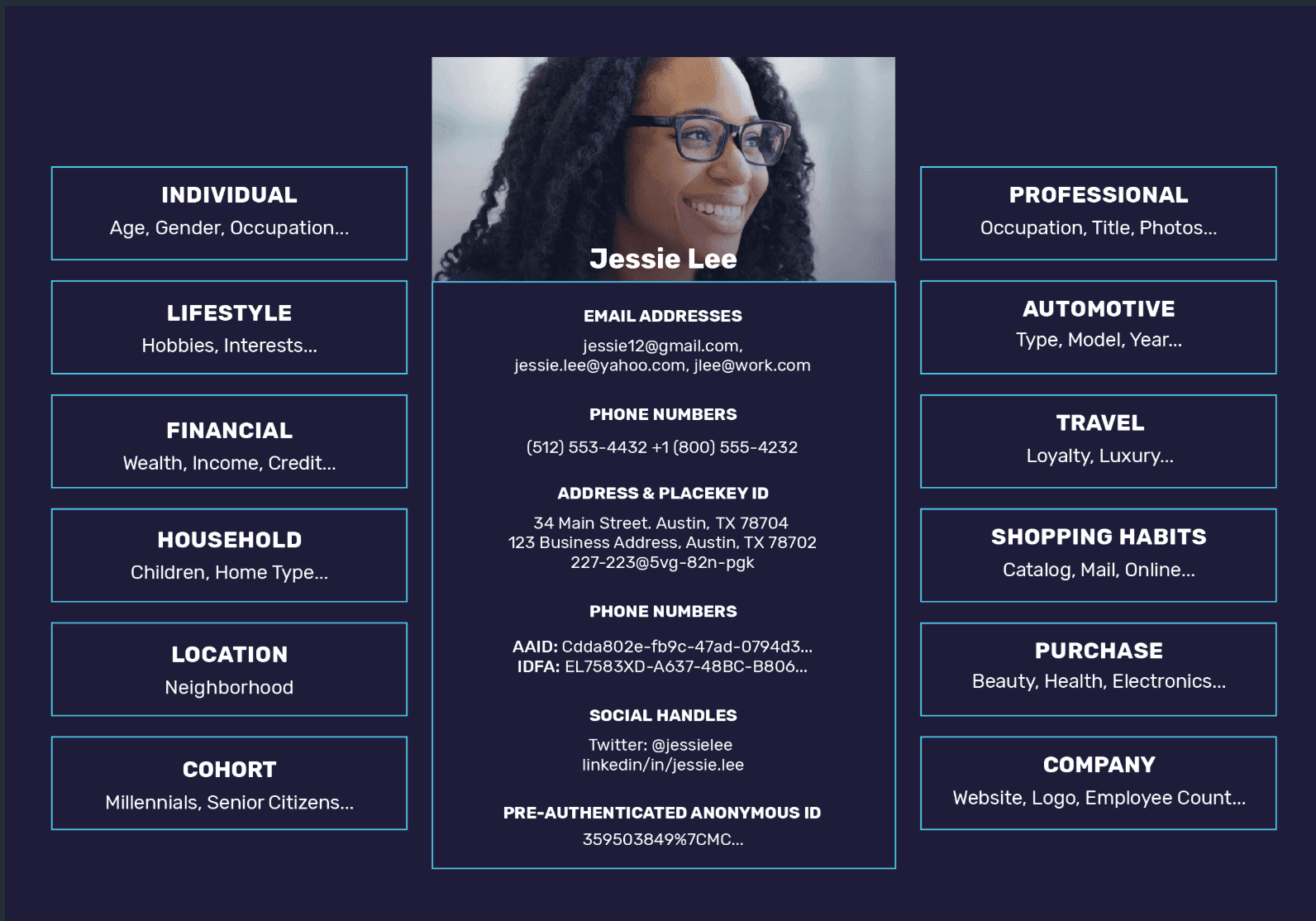
FullContact helps organizations link customer identities across channels to form unified profiles. It connects emails, phone numbers, and device IDs so teams can remove duplicates, track engagement, and personalize interactions with greater accuracy.
Key features and benefits:
Multi-channel identity resolution: FullContact links identifiers such as emails, phones, and devices to create unified customer profiles. This helps teams maintain consistent records and analyze engagement more accurately.
Privacy-centric data practices: The platform provides consent management and validation capabilities that support responsible data use and compliance with GDPR, CCPA, and similar regulations.
Social profile enrichment: It supplements existing records with verified social and demographic data, giving analysts a clearer view of customer interests and behavior patterns.
Limitations:
G2 user reviews indicate that perceived cost is high, with one person also saying that “the pricing model is complicated.”
The platform maintains stronger regional coverage in North America and Europe than in other areas.
Cognism
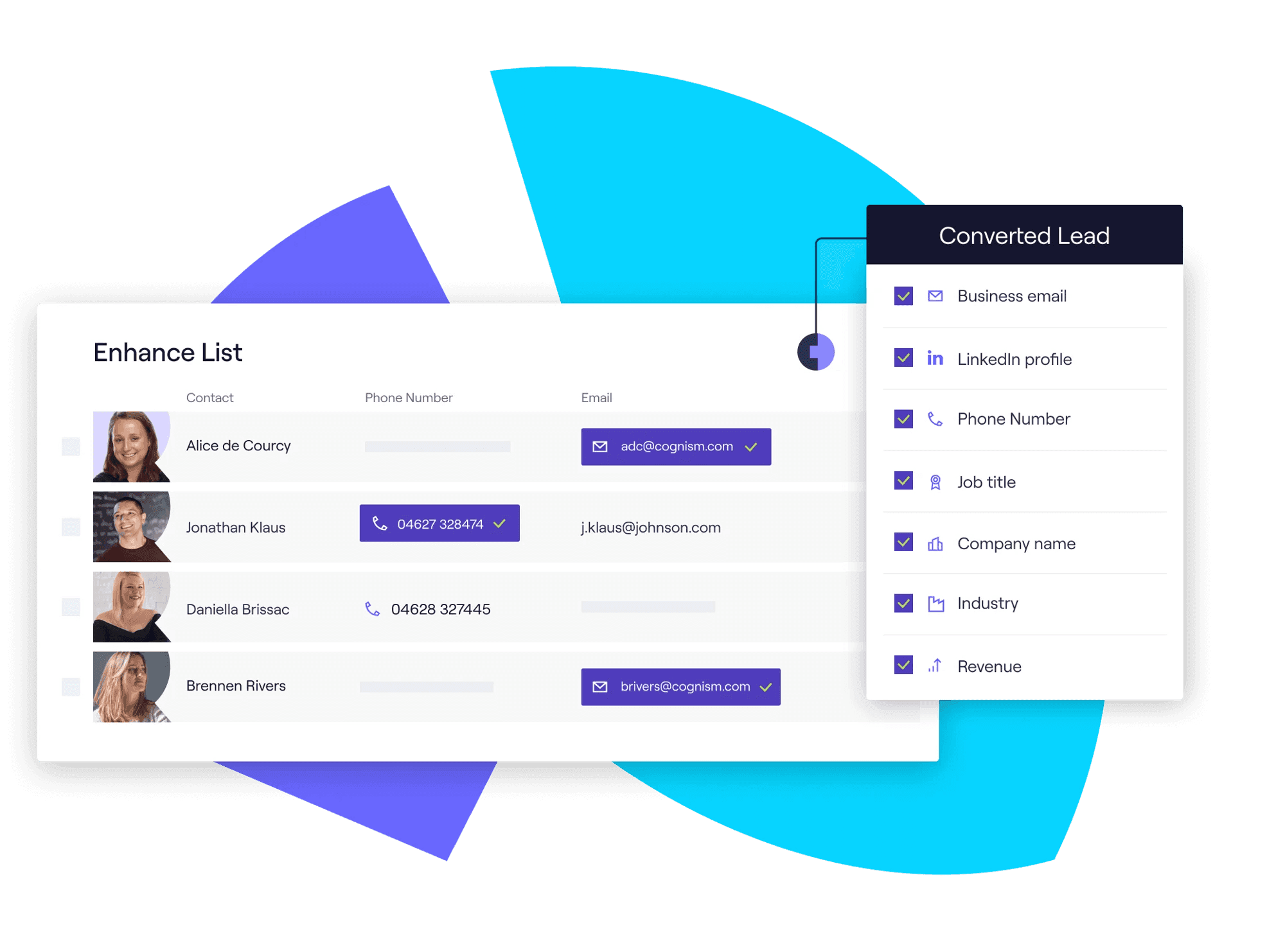
Cognism offers B2B sales intelligence for teams that need accurate, compliant contact data. It emphasizes verified records and regional privacy standards, making it especially useful for companies prospecting in Europe or managing data under strict regulatory oversight.
Key features and benefits:
Verified contact data: Cognism’s in-house research team performs human verification alongside algorithmic checks for phone numbers and emails. This process improves data accuracy and increases outbound connection rates.
GDPR compliance by design: Its core architecture focuses on compliance with European privacy regulations. This feature helps organizations reduce regulatory and reputational risk.
Manually verified premium phone data: Cognism’s research team validates each phone number before adding it to the database. This additional verification step enhances contact accuracy and improves connection rates for outbound teams.
Limitations:
A common thread in user reviews is limited data for certain regions, with several users noting that coverage outside Europe still trails larger global providers. One individual said, “The data coverage for North America [...] can sometimes be less comprehensive compared to competitors,” and various other reviews also call out US data coverage specifically.
Integration limitations may also exist. One user mentioned that teams may need higher-tier plans or additional setup to get the maximum benefit from some integrations, like HubSpot and Salesforce.
Apollo.io
Apollo.io combines an extensive contact database with integrated sales engagement functionalities. In this way, it serves as an all-in-one marketing automation and outreach platform.
Key features and benefits:
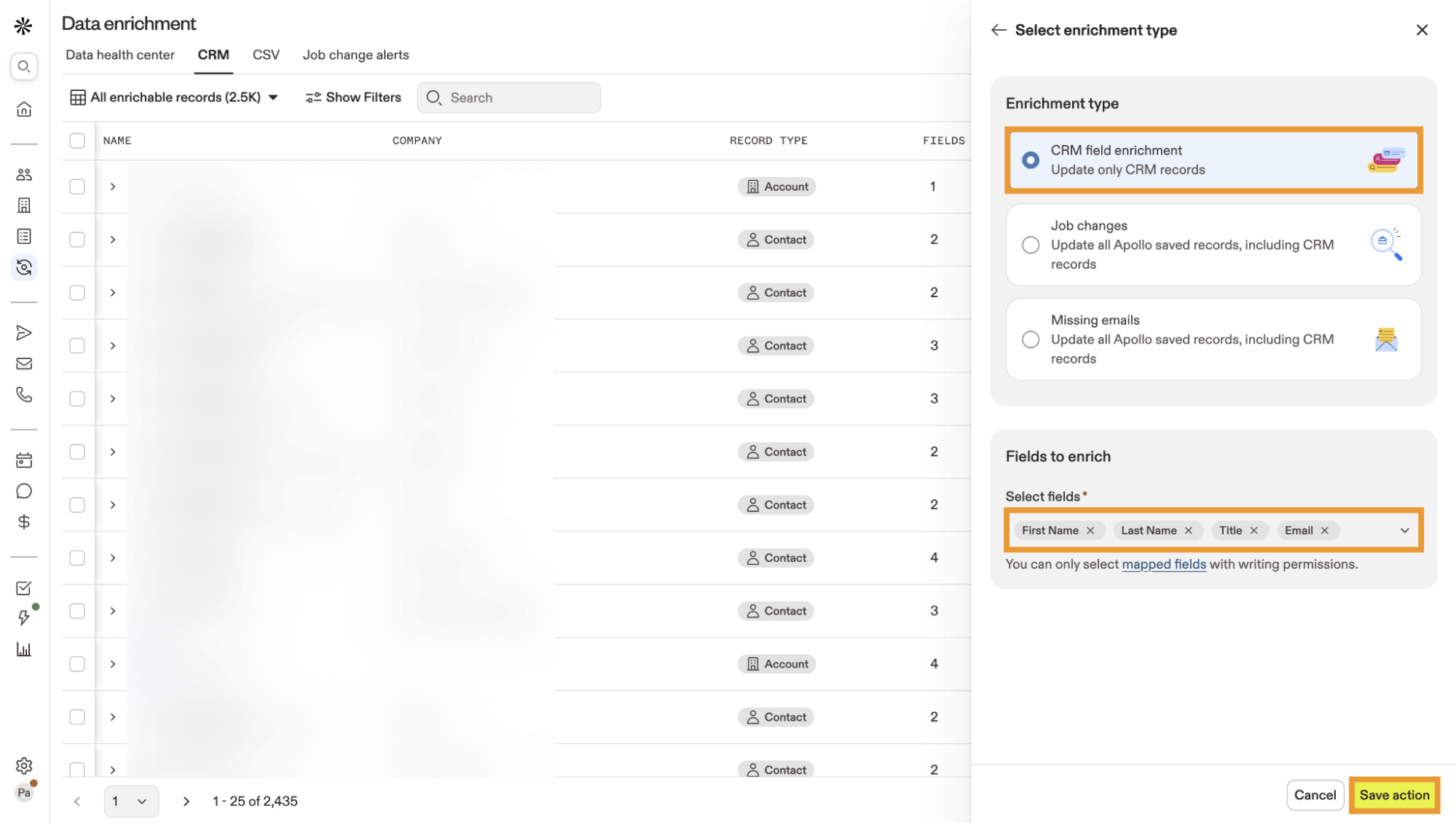
Integrated prospecting and engagement: Apollo.io combines lead and data enrichment with email sequencing and task management. It reduces the need for multiple sales tools and simplifies daily outreach.
CRM integration and enrichment: The platform automatically refreshes contact and account information within connected CRM systems. This capability keeps information up to date and lowers the effort required for manual updates.
Job change tracking: The platform detects when contacts move to new roles or companies. Teams can then re-engage valuable leads at the right stage of a new buying cycle.
Limitations:
The platform delivers less depth in enrichment than vendors that are dedicated solely to enrichment.
According to one enterprise user, “Phone number accuracy is lower than email accuracy.” Other G2 reviews also point to phone number accuracy concerns.
It’s helpful to compare and contrast the features, pros, and cons of each of the above enrichment tools. A certain tool may have already caught your eye, perhaps based on your data coverage requirements or other needs, like bulk enrichment. However, it’s also important to know the top features to look for in general. That way, you can make the best choice for your organization, even if you choose to test a different enrichment solution.
What are the most important capabilities of a good data enrichment tool?
Selecting an enrichment tool requires evaluating its capabilities and comparing them to your organization’s data quality challenges and operational requirements. While needs may vary by industry and data maturity, the following five capabilities represent the essential baseline that most enterprise-grade enrichment platforms should provide.
Real-time contact and company data enrichment
Real-time enrichment keeps data accurate from the moment records enter a system by adding missing attributes and preventing errors from moving through pipelines. By validating information at capture, it also ensures that every record reaches downstream teams complete and ready for action. However, performance depends on API availability and vendor rate limits—factors that can limit scalability for enterprise workloads. Real-time enrichment also raises compliance considerations, particularly when appending personal data that requires user consent.
This capability reshapes how sales and marketing teams work together. Instant enrichment feeds verified information directly into outreach and campaign systems, giving sales teams immediate insight to engage new leads. At the same time, marketing routes prospects more precisely within seconds of form submission. Both teams operate from synchronized, trustworthy data, which improves coordination, reduces friction, and shortens response times.
Bulk enrichment capabilities for large datasets
Bulk enrichment addresses a major challenge for enterprises—incomplete or outdated records that accumulate over years of data collection. It operates at scale to refresh entire databases without slowing performance, ensuring legacy data receives the same accuracy and structure as new entries.
This capability is important because:
Updating only new data leaves historical gaps unresolved, limiting analytical accuracy.
Retrospective enrichment restores quality to older records by repairing missing or inconsistent details.
Scalable processing supports millions of updates simultaneously, maintaining database stability as volume grows.
By continuously enhancing existing data, bulk enrichment keeps large datasets relevant and usable for analytics, reporting, and AI training. It transforms static databases into living, dependable assets that reflect the organization’s current reality.
Data cleansing and validation
Validation ensures enriched data meets accuracy standards and removes duplicates before they spread through systems. Without it, enrichment can introduce errors that weaken analytics and decision-making. This capability remains essential because it addresses these persistent challenges that affect reliability:
Duplicate records often appear when company names vary slightly or use alternate domains. Master Data Management (MDM) strategies address this by creating a single, trusted record—often for customers—that serves as the source of truth.
Matching algorithms work best when they assess multiple identifiers, not just exact text matches.
Weak deduplication wastes enrichment credits and allows inconsistencies to persist in databases.
Strong validation and cleansing transform raw or enriched data into consistent, trusted records. This process preserves accuracy and keeps downstream workflows aligned with reliable, governed information.
Support for compliance with data privacy regulations
Regulations such as GDPR and CCPA mandate how organizations must collect and use personal information. For data leaders, this means selecting enrichment software that enables them to demonstrate compliance through transparent data handling. Platforms must support consent management, provide clear data processing agreements, and include deletion controls that uphold individual rights.
Strong compliance depends on visibility. Effective systems document how organizations collect, process, and share data, giving teams the transparency needed for audits and risk assessments. Vendors operating in Europe must also include privacy safeguards that align with GDPR’s strict standards for lawful processing.
Without these controls and proper implementation, enrichment activities can expose organizations to serious financial penalties and lasting reputational damage.
API access and integrations
Enrichment delivers value when it integrates directly into existing business workflows, such as CRMs or analytics platforms, where teams already operate. APIs make this possible by automatically transferring enriched data between systems. For example, customer attributes captured in a web form can instantly flow into a CRM, updating records and triggering personalized outreach without manual input.
Effective integration keeps data synchronized across departments and reduces fragmentation. It also shortens the time between data acquisition and insight, allowing teams to make faster decisions. When enrichment metadata flows through a shared environment, teams can trace data sources, confirm accuracy, and apply enriched insights with confidence.
How does Alation enable enrichment workflows?
Alation automates data enrichment through its metadata management tools, giving enriched data the context and visibility teams need to use it effectively. Although it doesn’t modify or append values to raw datasets, it does provide the foundation that makes enrichment consistent and valuable across the organization.
Here’s how Alation's powerful capabilities strengthen enrichment processes:
Automated metadata capture
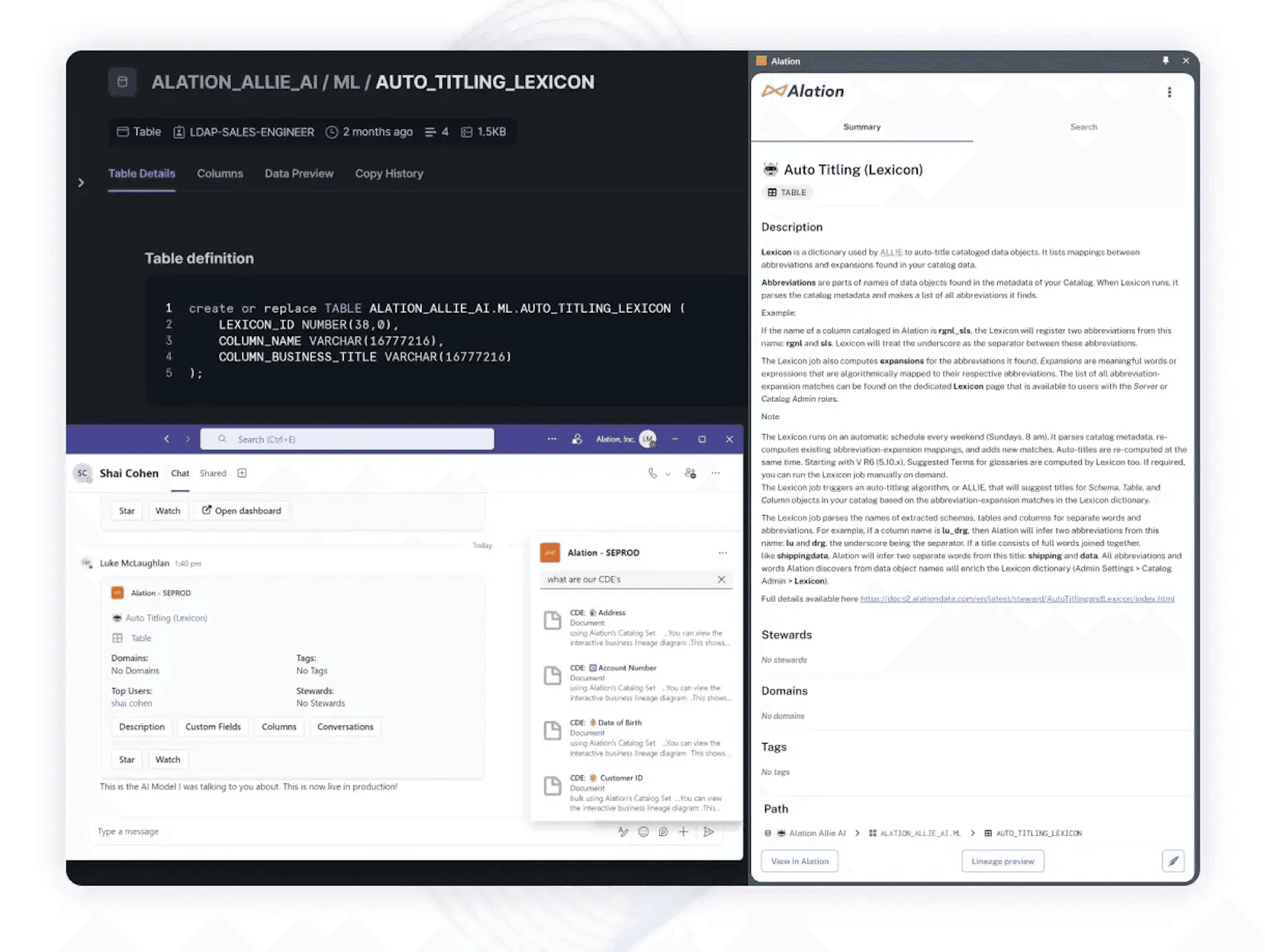
Alation automatically discovers and records technical metadata from connected sources. It tracks schema structures, data types, and lineage to keep enriched assets visible and consistent across the data landscape. As teams add new attributes to customer records or expand product data, Alation immediately reflects those changes and maps how information moves through pipelines. Through this continuous discovery, enrichment efforts remain aligned with governance and data quality standards.
Collaborative context addition
Accurate data alone doesn’t guarantee useful insights. For enrichment to drive real understanding, teams need shared context that explains what data means and how it should be used. Alation supports this collaboration by connecting stewards, analysts, and domain experts in the catalog. It also uses AI to document metadata, define terms, and apply policies through tools such as the Alation Documentation Agent.
This collaboration extends enrichment beyond technical accuracy to shared understanding. Through the catalog, AI and human users together can:
Document enrichment methods and explain the purpose of new attributes automatically.
Detect and flag data quality concerns or limitations that could affect downstream use.
Generate explanations that clarify business terms and relationships, reducing interpretation errors.
This shared curation layer enables everyone to use enriched data with confidence and without needing to revalidate its source. It also balances governance precision with enrichment depth, helping teams keep new data both well-defined and meaningfully enriched.
Intelligence through usage patterns
Alation’s behavioral intelligence analyzes how users search, access, and apply data to reveal where enrichment creates the most business value. These insights align enrichment priorities with real usage trends rather than assumptions. The platform’s AI copilot, Allie AI, supports this by analyzing user behavior to suggest enrichment opportunities and flag missing context. This feedback loop helps teams focus on datasets that drive meaningful outcomes instead of enriching information that’s rarely used.
Integration ecosystem
Alation connects enrichment with data quality, governance, and transformation tools through an open integration framework for metadata orchestration. These connectors bring specialized enrichment capabilities into one governed environment. That way, enriched assets become searchable and their quality measurable—all from within Alation.
By linking automation, human context, and AI-driven insight, Alation transforms enrichment from an isolated activity into a continuous, organization-wide discipline. It also makes sure that enrichment efforts translate into data products that people can trust and use with clarity and accountability.
How data enrichment powers trusted data products
Data products are curated datasets created to meet specific business goals such as reporting, forecasting, or AI training. Their usefulness depends on how reliable and well-structured the underlying data is. Enrichment improves that reliability by validating records, adding missing context, and standardizing terminology across sources. These actions make it easier for organizations to trust and apply their data with precision.
When enrichment occurs early in the data lifecycle, it limits duplication and captures ownership details accurately. Teams gain a clearer view of how datasets connect to business operations and outcomes. This visibility improves the quality of both analytical and predictive results.
Effective enrichment turns data products into dependable resources that deliver consistent value. It reinforces the accuracy that analytics and AI systems require, allowing organizations to make confident, measurable decisions built on trusted metadata. Alation supports this model by linking enriched metadata to governed data products within a unified environment. Its platform connects integration tools, quality systems, and published products so enrichment stays transparent, measurable, and aligned with enterprise objectives.
Are your teams ready to turn enriched data into dependable intelligence that drives real business outcomes? See how Alation’s Data Intelligence Platform can help—request a demo today.
- Key takeaways
- 5 popular data enrichment tools for enterprises
- What are the most important capabilities of a good data enrichment tool?
- How does Alation enable enrichment workflows?
- How data enrichment powers trusted data products
Contents
FAQs
How can we use data enrichment tools to improve the accuracy of customer profiles across regions?


Businesses can use enrichment tools and third-party sources to unify customer information from different regional systems. These tools verify external data, update missing details, and align records under one structure. With consistent profiles, teams can understand customers in their local context while maintaining accuracy across markets.
How does automated data enrichment maintain data quality and compliance
Manual updates struggle to keep pace as enterprise data grows in volume and complexity. Automation resolves this challenge by validating records, refreshing attributes, and applying privacy rules continuously across systems. These workflows remove human delays and maintain consistency between compliance requirements and operational needs. As automation becomes routine, organizations preserve reliable, well-governed data even as their environments expand.
How do businesses measure the ROI of investing in B2B data enrichment services?
Organizations measure ROI by comparing data quality and performance before and after enrichment, establishing a clear baseline for improvement. They then assess gains in conversion rates, efficiency, and overall data reliability to determine the business impact. As accuracy improves, teams shift their focus from fixing errors to making informed decisions that strengthen long-term growth.
Tagged with
Loading...