INDUSTRIES · FINANCIAL SERVICES
Data your regulators, risk teams, and AI agents can trust
Examiners expect proof that data and AI are under control, and many institutions still build it by hand. Certification stalls, deadlines slip, and AI stays in pilot while risk teams wait for evidence.
Alation helps banks, insurers and lenders define critical data once, trace the numbers that matter to their source, and certify them, so the evidence is ready when an examiner asks. As AI agents take on financial crime, operations and underwriting, AIOS feeds them trusted data and gives risk one place to see every agent and its evidence.

TRUSTED BY:






Use Cases
What financial services teams do with Alation
- Alation Data Catalog
01
Report from numbers you trust
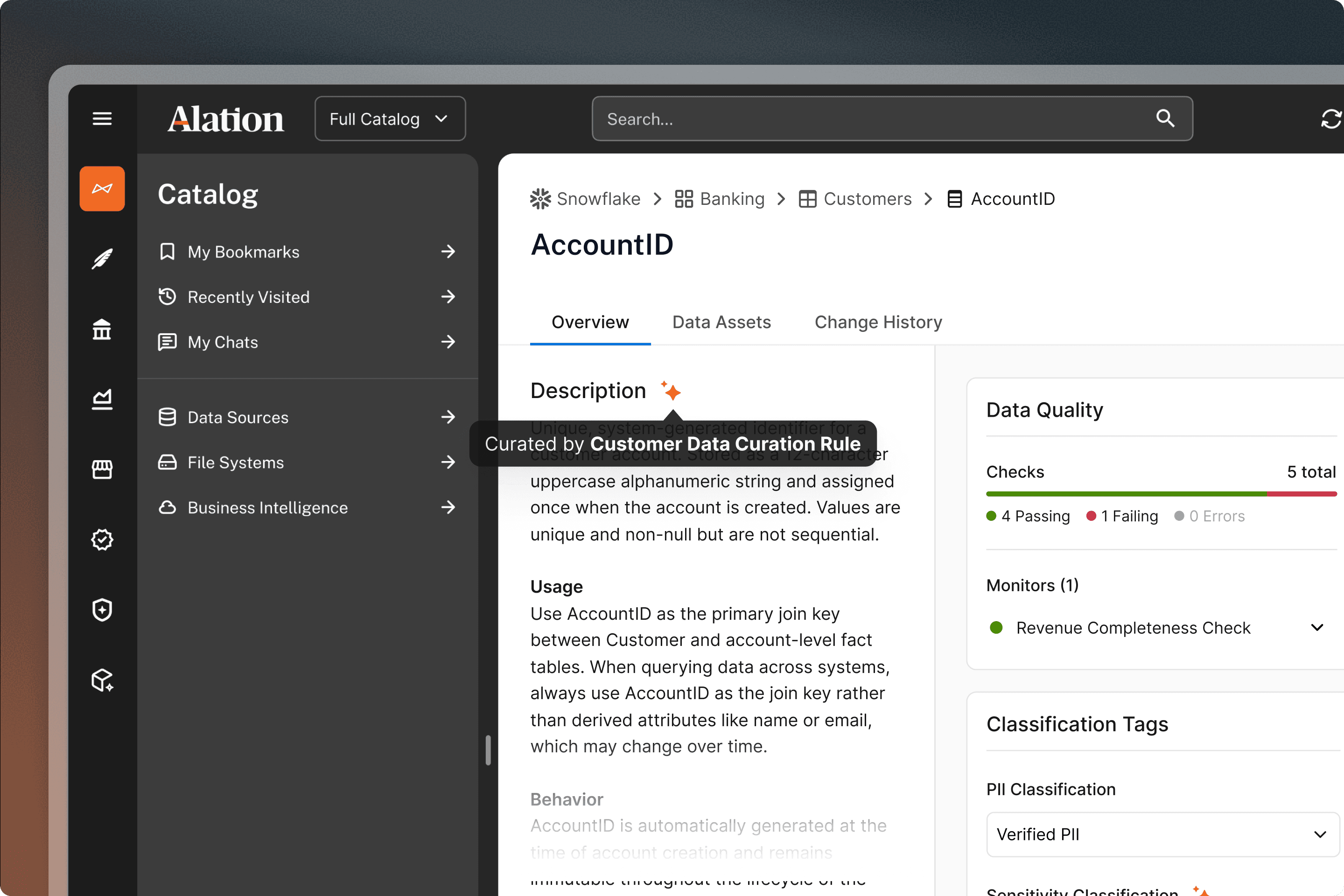
Analysts spend too much time asking around, and the same customer, account or exposure number can differ between regulatory reports. Put definitions, owners and lineage in one place to search, and the number means the same thing in every report.
- Lineage
- Critical Data Manager
02
Keep exam evidence ready
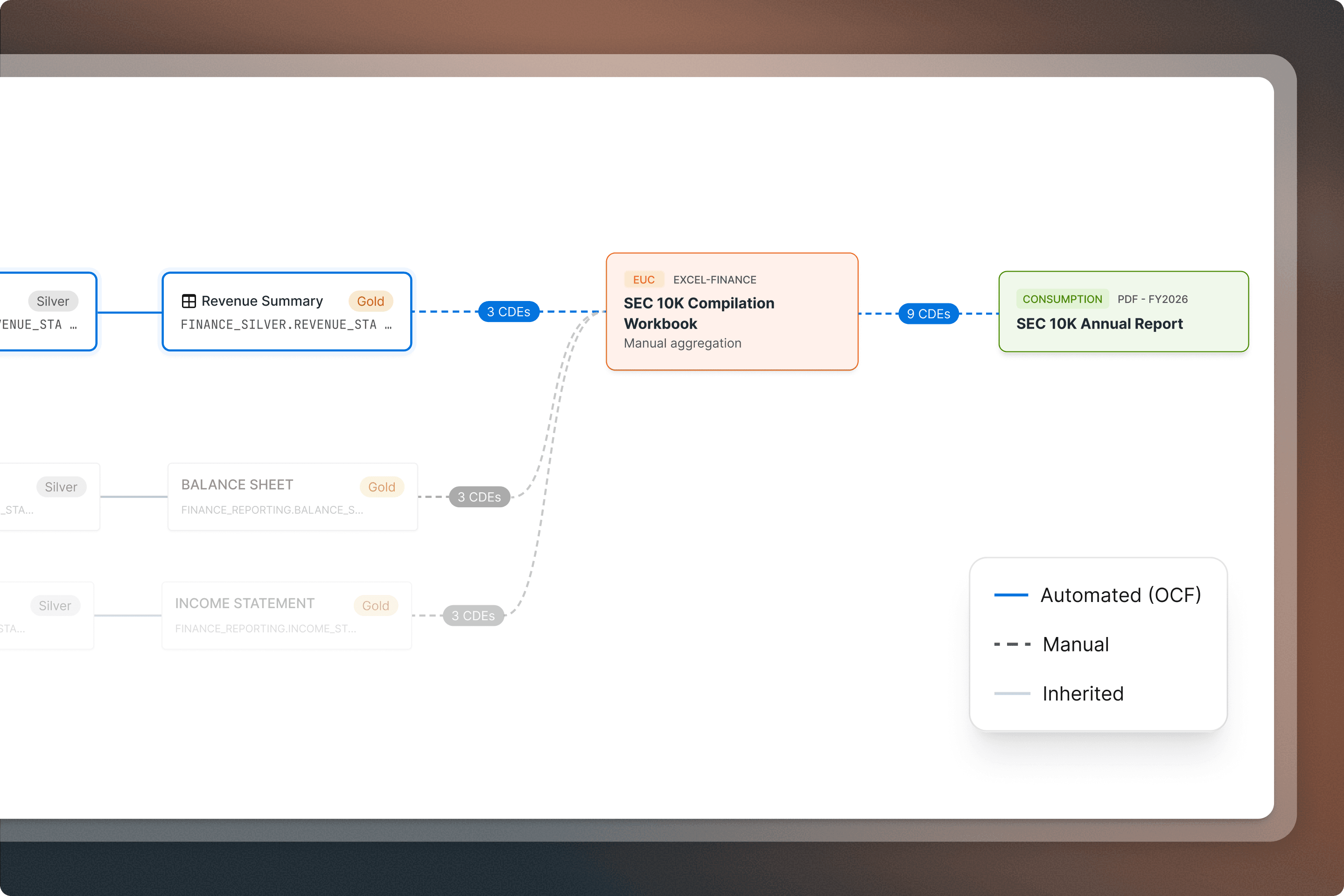
When an examiner asks where a figure in a regulatory report or filing came from, tracing it back is often a manual reconstruction. Follow it back to its source instead, with each critical data element's quality, ownership and control status alongside it, so the lineage works as audit evidence and not as a diagram.
- Curation Automation
- Critical Data Manager
03
Certify critical data with agents
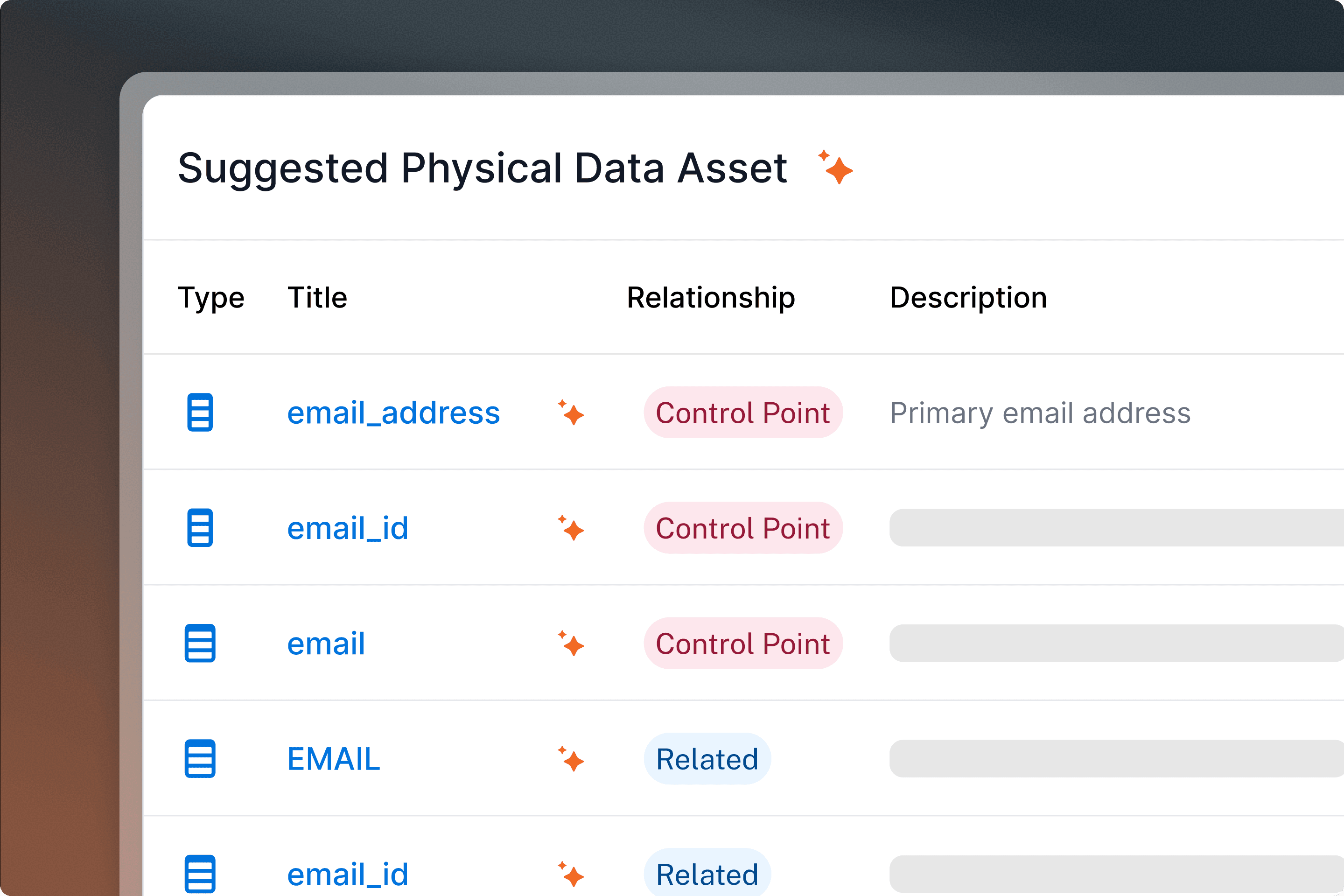
Stewards map cryptic field names and write thousands of descriptions by hand. Let agents draft the descriptions, definitions and critical data element candidates, and have the right steward review and approve each one. Pointed at a raw source system, such as a core banking platform, agents turn tens of thousands of cryptic, abbreviated names into plain-language descriptions so certification doesn’t wait on manual mapping.
- Data Products
- Marketplace
04
Give one customer view for people and agents
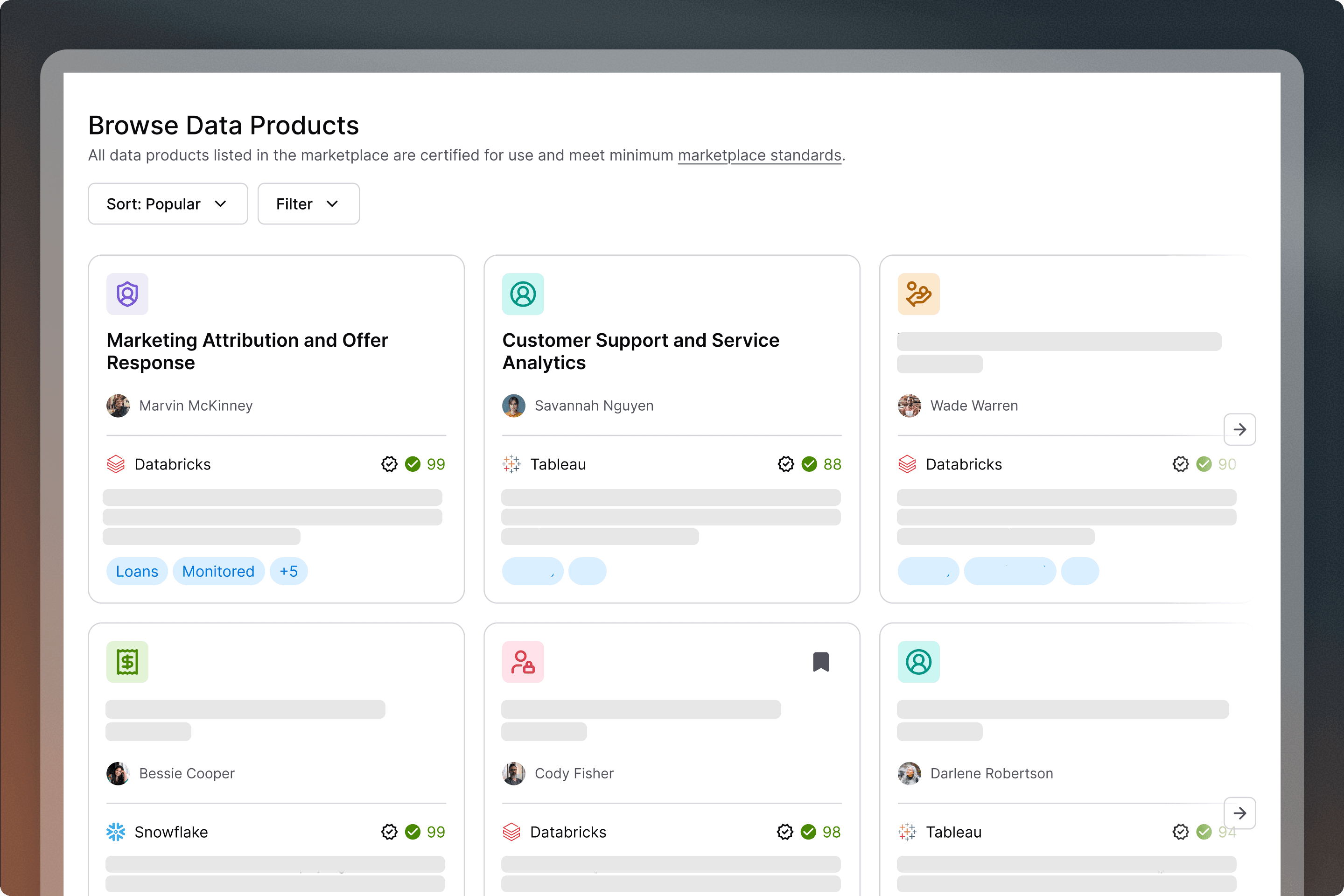
Relationship managers, marketing, operations and risk each work from their own copy of customer data, so they get different answers about the same customer. Publish an approved single customer view once, as a data product any team can find and agents can use. Each product carries its definitions, quality, ownership and contract, and nothing is listed until it clears an approval.
- Agent Studio
- Data Products
05
Build agents on defensible data
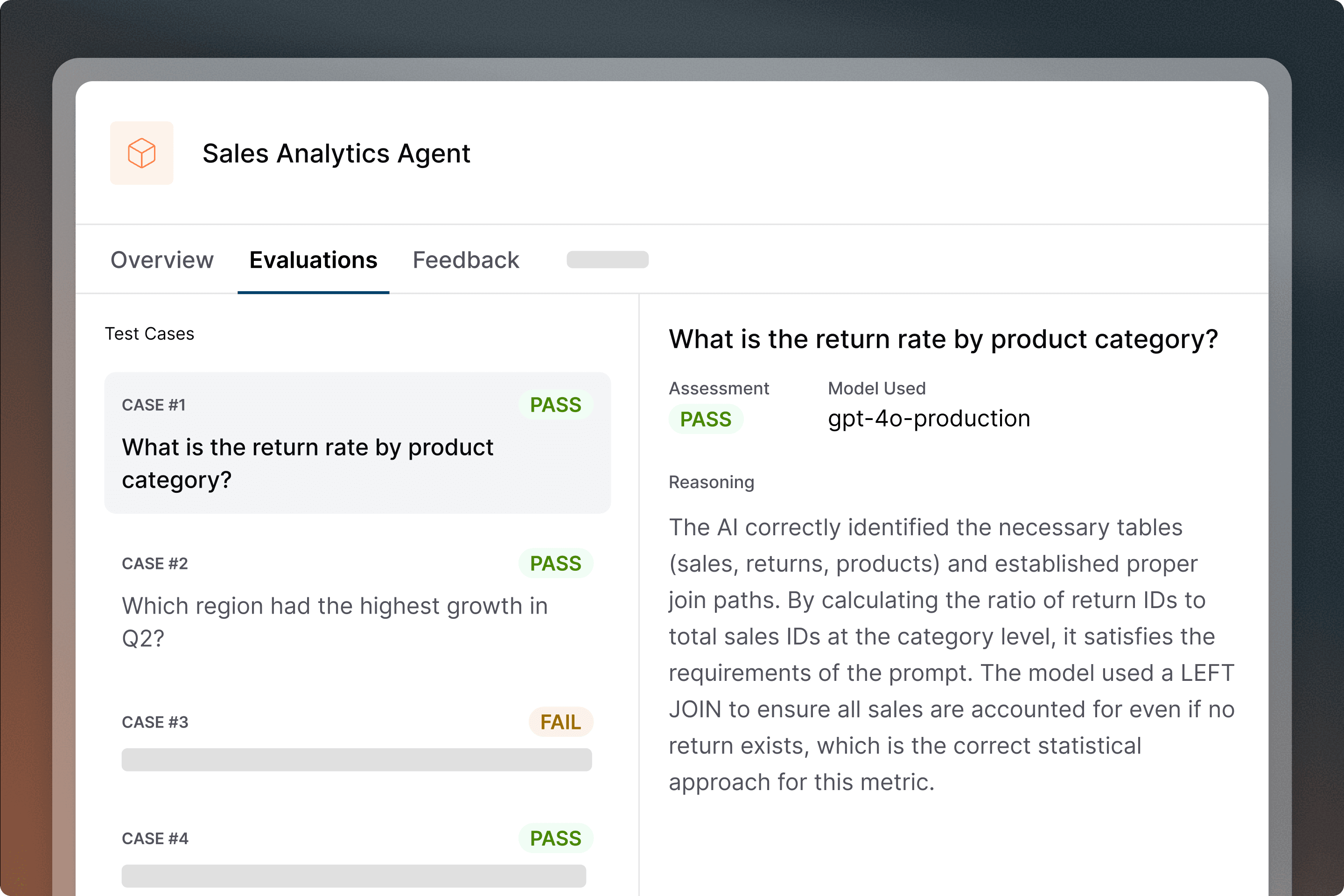
Financial crime teams lose hours assembling evidence from core systems, and agents can do that work if they know which data to rely on. Build agents in Agent Studio or bring them from the platforms you already use, point them at data that’s certified, owned and passing quality checks, and prove they work with evals before production, so investigators start from sources they can defend.
- AI Governance
06
Get agents approved
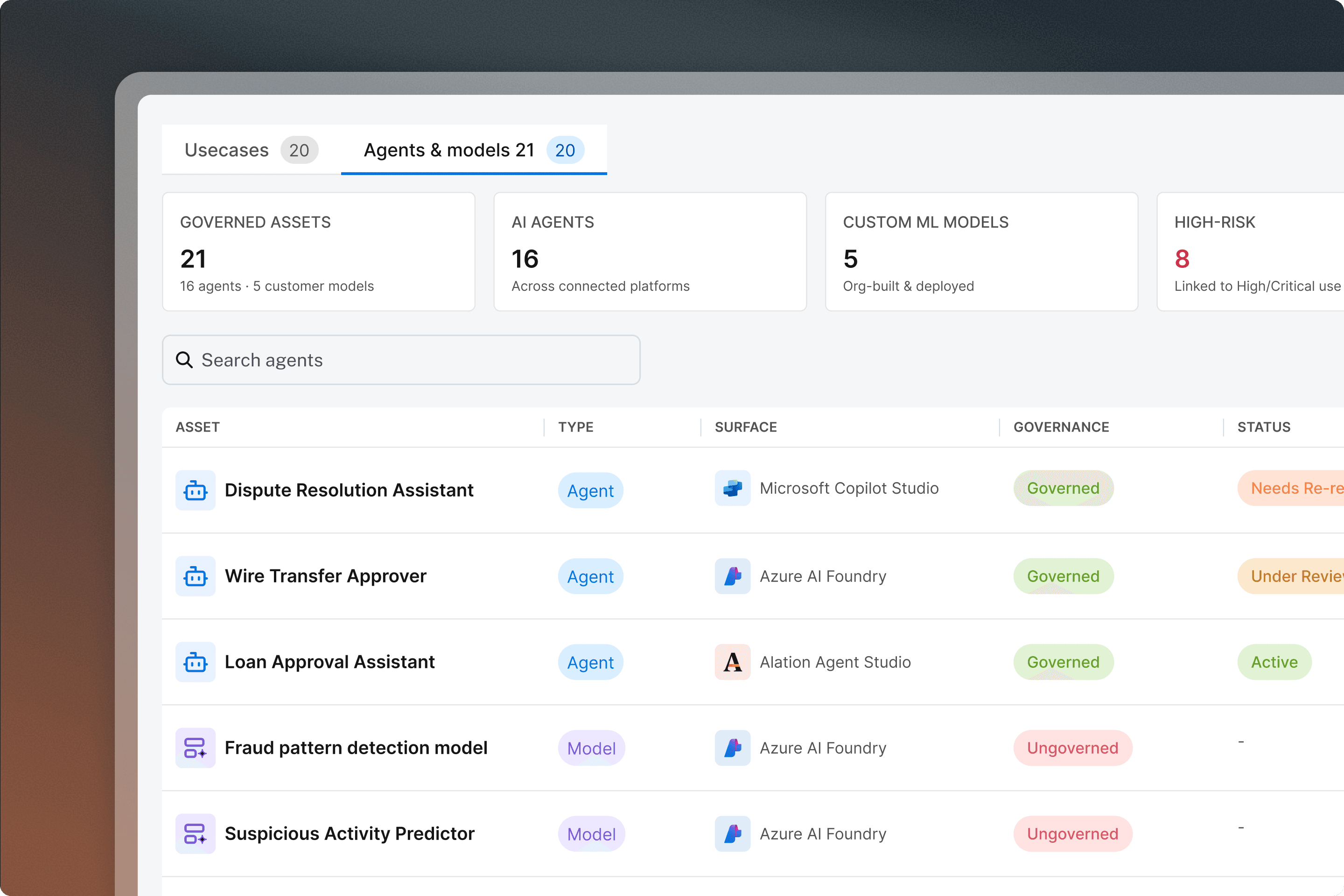
Agents and models are showing up across platforms, and your model risk team can't approve what it can't see. Give it one place to see every agent and model, wherever it was built, the use case it serves, and the data it relies on. Each use case is governed against frameworks such as NIST AI RMF and ISO/IEC 42001 and your own policies, and approval is gated on verified evidence, so answering an examiner is a report you pull.
Compliance
Show regulators where every number comes from
Examiners expect proof of where every number and AI model comes from. Alation builds that record as your teams govern data, so you answer from evidence, not a reconstruction.
BCBS 239
Critical Data Manager ties each risk data element to its glossary definition, owner, source-to-report lineage and Data Quality checks, so accuracy is monitored.
Model Risk Management
AI Governance registers each model and agent with the data behind it, maps it to frameworks like the EU AI Act, NIST AI RMF, ISO 42001 or your own, and gates approval on evidence.
NAIC Model Bulletin
One inventory of every model, agent and tool, each use case risk-tiered, with lineage to the data behind it and an exportable audit trail for regulators.










Slide 1 of 4
FAQ
Questions financial
services teams ask
Q1 —
What is data and AI governance for financial services?
Data and AI governance for financial services is how banks, insurers and lenders make sure the data behind their reports, models and AI agents is accurate, owned and traceable. It covers shared definitions, data quality, lineage, access to sensitive data and the documentation regulators ask for. Alation brings these together so teams can find trusted data, show where it came from, and register the models and agents that use it.
Q2 —
What are the top data and AI use cases in financial services?
The most common are regulatory and risk reporting, model and AI governance, customer data for personalization, fraud and anti-money-laundering analytics, finding sensitive customer data, and AI agents that support investigations, onboarding and claims. Alation helps teams trace figures to source, certify critical data, ground agents in governed data, and register every agent and model.
Q3 —
How does Alation help with BCBS 239?
BCBS 239 sets 14 principles for risk data aggregation and reporting, applying first to systemically important banks. A catalog alone does not make a bank compliant, but Alation supports the data dictionary, named owners, documented aggregation processes, and monitored accuracy and completeness the principles expect, through a glossary and catalog, stewardship, lineage tied to critical data elements, and quality monitoring.
Q4 —
Does Alation work with our data stack?
Yes. Alation has 120+ connectors and open standards such as OpenLineage and MCP, so it reads across the platforms financial institutions already run, including Snowflake, Databricks, AWS, Oracle, SQL Server, Tableau and Power BI, and passes governed context to your AI agents. A source without a connector can be added through the SDK. Share your stack and we’ll map it to what you need.
Q5 —
How do we catch bad data before it reaches a report or a model?
Alation Data Quality agents propose quality rules from your catalog's metadata, lineage and usage, and stewards review and approve them. Checks run continuously, and when one fails, the trust signal updates in lineage views and on data product pages. That lets analysts and AI agents see whether data has passed before they use it in a financial report or model.
Q6 —
Do we need Alation if our data platform has its own catalog?
Alation helps financial institutions whose data spans several platforms, such as Snowflake, Databricks, legacy systems and BI tools, and who need one place for definitions, owners, lineage and certification across all of them. Alation reads across platforms and masters shared definitions that sync back into Snowflake and Databricks.
Q7 —
How is AI feature usage measured and priced?
Alation measures usage of its AI-powered features in Alation Consumption Units (ACUs), a single unit across products. ACUs meter Data Quality, Chat with Data Product, Agent Studio and Curation Automation, and administrators can track consumption in a usage dashboard. Pricing depends on your agreement, so ask your Alation team for an estimate before turning features on.
Q8 —
Can we use agents we’ve already built with Alation?
Yes. Alation gives agents governed context, such as certified definitions, owners and lineage, through open standards like MCP, so agents built on other platforms can work from the same trusted data. You can also build agents in Agent Studio. Either way, register them in AI Governance so risk can see each agent and the data it uses.
Q9 —
How does Alation govern AI agents and models?
Alation AI Governance gives financial institutions one registry of every model and agent, wherever it was built, with the use case it serves and the data it relies on. Approval is gated on evidence, and built-in frameworks cover the EU AI Act, GDPR's AI subset, NIST AI RMF and ISO 42001, with room to add your own. Connectors cover Amazon Bedrock, SageMaker, Databricks MLflow, Copilot Studio, Foundry and Snowflake Cortex.