




Your SaaS platform just landed its first enterprise customer in Germany. Revenue is climbing, and expansion feels inevitable. But here's the catch: that customer's data needs to stay in the EU. Their financial records can't cross certain borders, and one misstep could cost you millions in fines.
Data residency isn't just a technical checkbox anymore. It's the foundation of how you build, scale, and operate across borders. For SaaS founders and executives, understanding where your data lives and which laws govern it determines whether you can enter new markets or get locked out entirely.
This article shows you how to build compliance into your architecture from day one. You'll learn which regulations matter most, how to avoid expensive retrofits, and why treating data residency as a strategic advantage beats scrambling to fix it later.
Key takeaways
Data residency requirements differ dramatically by region: GDPR in Europe, CCPA in California, HIPAA for healthcare, and China's Cybersecurity Law each impose unique rules on where and how you store personal data.
Non-compliance carries severe financial penalties, with individual violations reaching hundreds of millions.
Strategic architecture beats reactive geo-duplication: Purpose-built data residency infrastructure scales more efficiently than creating separate data centers in each market.
Cloud service providers offer regional deployment options: AWS, Azure, and Google Cloud provide region-specific solutions, but configuration requires careful planning to meet local data protection laws.
Data residency affects more than storage location: Tax compliance data, customer location intelligence, and cross-border data flows all fall under data residency rules.
What is data residency, and why does it matter for SaaS companies?
Data residency refers to the physical or geographic location where your organization's data is stored. When your customer content sits on servers in Paris, that's where your data resides.
Data residency vs data sovereignty vs data localization
Data sovereignty goes deeper. It defines which country's laws and regulations control your organization's data based on where it's stored and processed. A German customer's information stored in Frankfurt falls under European Union law and GDPR requirements, even if your company is based in California.
Data localization takes this further with mandates that certain types of data must remain within specific geographic boundaries. Russia requires complete data localization for Russian citizens' personal data. China's Cybersecurity Law requires critical information infrastructure operators to store personal information collected in China on servers within the country.
The business impact of data residency requirements
The financial stakes of data residency are enormous. GDPR violations can reach 4% of global revenue or €20 million, whichever is higher. Meta alone faced a $1.3 billion penalty in 2023 for improper data transfers between the EU and the US.
But the costs go beyond fines. Some regions simply won't let you operate without local data storage. Customer trust takes a hit when data breaches make headlines, and enterprise buyers increasingly demand proof of proper data governance before signing contracts.
Companies that build data residency into their architecture from the start can enter new markets faster than competitors who need to retrofit their systems.
Global data residency regulations organizations must navigate
Regulations don’t work the same everywhere. What’s acceptable in one region can be noncompliant in another. This leaves compliance teams dealing with a patchwork of rules they actually have to understand, not just skim.
European Union: GDPR and cross-border data flows
The General Data Protection Regulation sets strict rules for handling the personal data of EU residents. GDPR doesn't explicitly require data to stay within EU borders, but it does restrict transfers to countries without adequate data protection standards.
Standard Contractual Clauses provide one path forward. These legal agreements between data controllers and processors ensure that transferred data receives protection equivalent to GDPR standards.
The EU-U.S. Data Privacy Framework offers another option for transatlantic data flows. Companies relying on this framework need to stay current as courts continue reviewing cross-border transfer mechanisms.
United States: State-by-state complexity
The United States takes a sectoral approach instead of comprehensive federal data privacy laws. HIPAA governs healthcare records, financial regulations protect financial data, but general privacy rules vary by state.
The California Consumer Privacy Act and its successor, the California Privacy Rights Act (CPRA), create the most comprehensive state-level privacy framework. The Virginia Consumer Data Protection Act follows a similar model with slight variations.
This state-by-state complexity means you're juggling different requirements even within a single country. Plus, federal requirements add another layer. DoD requirements and FedRAMP authorization matter too, if you're selling to government agencies.
Other key jurisdictions
China's Cybersecurity Law and Personal Information Protection Law create some of the strictest data localization mandates globally. India's Digital Personal Data Protection Act brings similar rigor with penalties up to $30 million for the most severe violations.
Australia’s Privacy Principles tend to emphasize data protection standards more than strict localization. Brazil’s LGPD looks a lot like GDPR, but it comes with its own requirements. Saudi Arabia’s PDPL came fully into effect in 2024, bringing a more complete data protection framework to the region.
The tricky part is that each jurisdiction defines data residency, sovereignty, and protection in its own way. Your architecture needs enough flexibility to keep up as those rules evolve.
The hidden costs of poor data residency planning
Treating data residency as an afterthought creates problems that compound over time.
Direct financial penalties and operational disruption
The average data breach cost reached $4.88 million in 2024, representing a 10% increase from the prior year.
Data breaches involving information stored across multiple environments cost over $5 million on average and took 283 days to identify and contain. That's nearly a year of exposure before you even know there's a problem.
Customer and revenue loss
Customer churn hits hard after compliance failures. Enterprise buyers walk away from vendors who can't provide proper data governance frameworks. Service interruptions during emergency compliance fixes damage your reputation.
Plus, customers who walk away are unlikely to come back, especially in B2B. These clients have to protect themselves and their own customers from potential breaches, even if it means paying more for a solution from someone else.
Technical debt from reactive solutions
Retrofitting data residency into existing systems costs far more than building it correctly from the start. You're rewriting core data flows and rebuilding integrations. You might need to change fundamental architecture decisions.
Geo-duplication without strategic planning creates expensive, fragmented infrastructure. You end up maintaining multiple codebases, debugging region-specific issues, and struggling to keep environments synchronized.
Shadow data emerges when teams can't easily access the information they need across regions. Thirty-five percent of data breaches now involve shadow data, creating a 16% higher cost on average.
Building data residency into your architecture from day one
Smart SaaS companies treat data residency as a core architectural decision rather than a feature they'll add later.
Assessing your current data landscape
Start by mapping what data you collect and where it flows. Identify which information qualifies as personal data under various regulations. Customer content, account information, financial information, and healthcare records each carry different requirements.
Classification systems help you understand sensitivity levels. Not all data needs the same protection. Usage data and telemetry might move freely while personal information and financial data require strict controls.
Data lineage tracking shows how information moves through your systems. You can't build compliant systems without understanding these flows.
Key design principles for compliant infrastructure
Location-aware routing ensures requests land in the right region based on customer location. A French user's data stays in EU infrastructure while American customers' information flows through US systems.
Automated compliance controls prevent human error. Build automated checks that verify data stays in approved regions, flag potential violations before they occur, and create audit trails for regulators.
Encryption protects data throughout its lifecycle. Data in transit needs TLS certificates and secure protocols. Data at rest requires encryption that meets standards such as FIPS 140-2 Level 1 or higher.
Access controls limit who can touch sensitive data. Multi-factor authentication, role-based permissions, and the principle of least privilege all matter for compliance. Your cloud data governance strategy should define exactly who can access data in each region.
Data lifecycle management clarifies retention and deletion. Different regulations impose different retention requirements. Build systems that can handle these varying requirements without manual intervention.
Leveraging cloud service providers for regional compliance
Major cloud platforms offer tools specifically designed to help with data residency, though you'll need to configure them thoughtfully.
AWS operates in dozens of regions worldwide, each consisting of multiple availability zones. You can specify exactly which region stores your data. Compliance certifications vary by region. Some AWS regions carry FedRAMP authorization for government workloads.
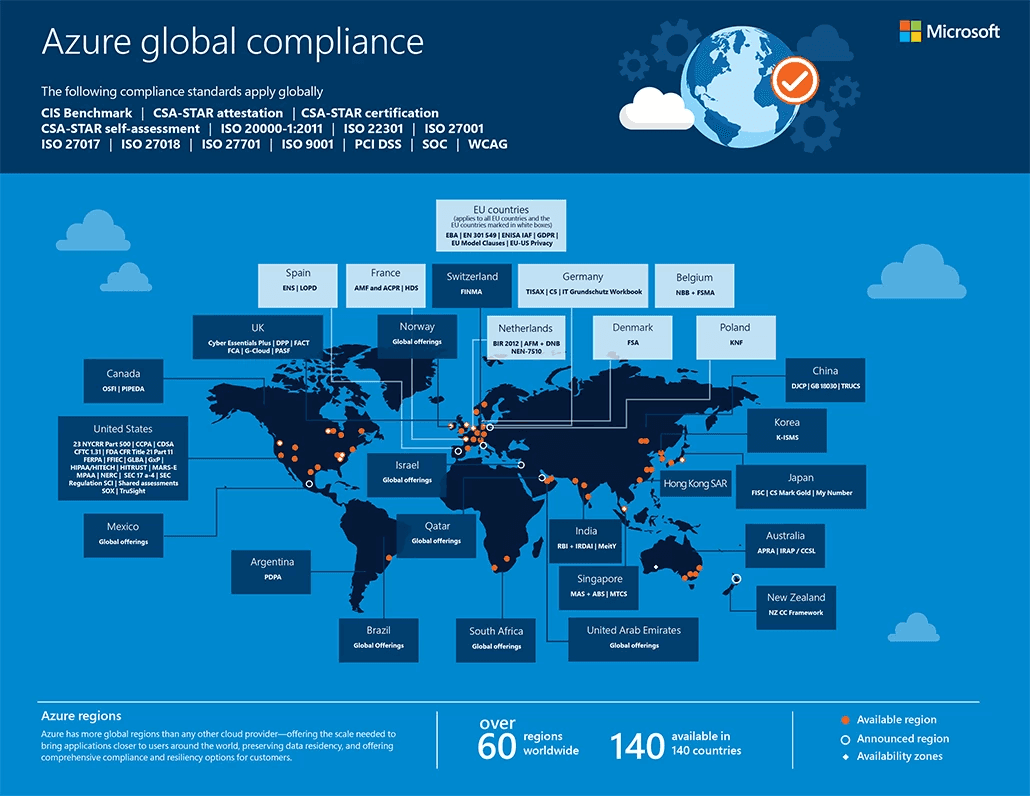
Azure organizes its infrastructure into geographies aligned with data residency boundaries. The European geography keeps data within EU borders. Azure Government Cloud serves the US public sector needs with infrastructure meeting FedRAMP High and other government standards.
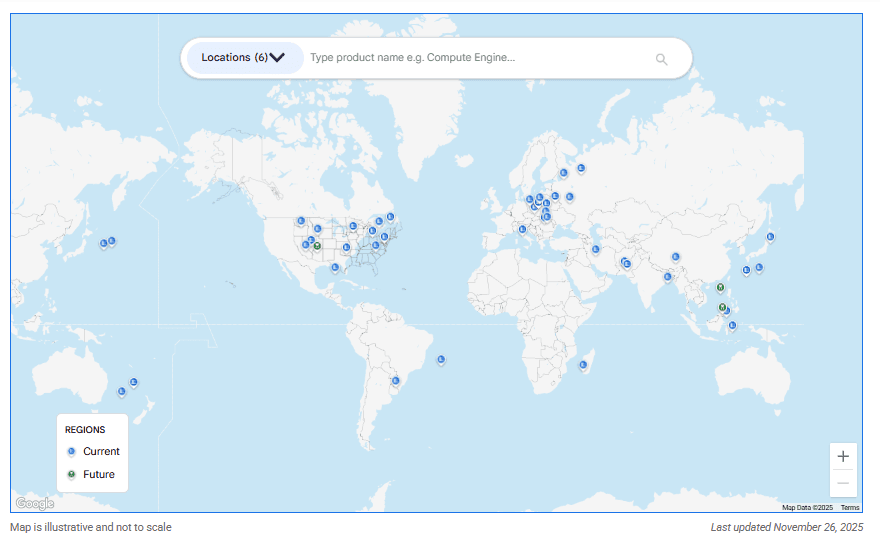
Google Cloud regions provide similar geographic control. You pick where your Compute Engine instances run and where your data warehouse stores information
Here's something most SaaS teams miss when planning their data residency strategy: the customer location data used for tax compliance is itself subject to data residency regulations.
When a platform determines that a customer is in Texas versus California to figure out whether SaaS is taxable in that state, it's collecting and processing geographic identifiers that data protection laws care about just as much as application data.
This is because a customer's location isn't just metadata for the billing system. It's personal data that needs to stay within the right jurisdictional boundaries. The challenge is that most companies build their tax compliance systems separately from their data residency infrastructure, treating them as unrelated problems.
But they're not unrelated. Both systems need the same customer location intelligence, and both need to respect the same geographic boundaries. The smarter approach is recognizing upfront that financial transaction data and core application data need to flow through the same location-aware architecture.
Operational best practices for ongoing compliance
Architecture gets you started, but operations keep you compliant as your business evolves.
Implementing data governance and team alignment
Clear data ownership prevents gaps where no one is responsible for compliance. Assign specific teams or roles to manage data in each region. Region-specific policies acknowledge that one global policy doesn't work everywhere.
Different roles need different training. Engineers need technical details about encryption and data flows. Sales teams need to understand what commitments they can make to prospects. Support staff need procedures for handling data subject requests.
Security and monitoring
Security deserves regular attention. You can scan your systems before launching in a new region to spot things like open data paths, misconfigured storage, or settings that could put your data rules at risk. Once you fix the issues and scan again, you have clear proof that everything is handled properly. Regular vulnerability scanners help you stay ahead of potential problems.
Real-time data location tracking shows where information actually lives across your infrastructure. Automated systems check continuously rather than relying on periodic manual audits. When data appears in unauthorized regions, alerts trigger immediately.
Compliance dashboards give leadership visibility into your posture across frameworks. Track metrics like percentage of data properly classified, time to resolve data subject requests, and number of regional policy violations detected.
Special considerations for platform startups
Growing companies face unique challenges when building compliance programs.
Plan for future market expansion when building your initial architecture. Adding data residency support later means rewriting systems under pressure. Build flexibility into your data layer from the start, even if you're only serving one region initially.
As SaaS companies expand into new markets, maintaining compliance with data residency laws across multiple regions becomes increasingly complex. Partnering with experts who specialize in Oracle managed services can simplify this challenge. These services help startups design and maintain compliant cloud architectures, manage regional data centers, and enforce security policies that align with local regulations.
Compliance teams should use a data compliance framework calendar. This tracks renewal dates for certifications, scheduled assessments, and regulatory reporting deadlines. Missing these dates can invalidate your compliance status or trigger penalties.
Common pitfalls and how to avoid them
Even well-intentioned companies make predictable mistakes when implementing data residency programs.
Regional nuance beats generic templates every time. What satisfies Spanish regulators might not pass in Singapore, because each market draws the compliance line in a different place. Build your strategy around where you actually operate, not where you hope to expand someday.
Also, don’t treat compliance like a quick checklist. These projects usually take longer than planned, so budget for real timelines. A proper regional deployment can take months of planning, development, and testing. A phased rollout is often the safest path.
Right to access requests require systems that can find all data about an individual across your infrastructure. Build search capabilities that work across regions and services. Deletion rights create technical challenges when data lives in backups, logs, and data warehouses. So design systems that can purge information completely while maintaining business continuity.
Conclusion
Data residency used to be a narrow compliance topic. Now it’s a strategic choice that shapes how SaaS companies scale across borders. If you build location-aware architecture early, it’s cheaper than retrofitting later—and it can unlock markets your competitors struggle to enter.
Companies treating data residency as a competitive advantage move faster into new regions, win enterprise deals requiring strict compliance, and avoid the expensive scrambles that plague reactive approaches. Your infrastructure decisions today determine which markets you can serve tomorrow.
Learn more about how Alation's data intelligence platform helps you maintain visibility and control over your data across all regions and cloud environments, ensuring you stay compliant as you scale.
- Key takeaways
- What is data residency, and why does it matter for SaaS companies?
- Global data residency regulations organizations must navigate
- The hidden costs of poor data residency planning
- Building data residency into your architecture from day one
- Leveraging cloud service providers for regional compliance
- Operational best practices for ongoing compliance
- Special considerations for platform startups
- Common pitfalls and how to avoid them
- Conclusion
Contents
Tagged with
Loading...